Sports Equipment Market Calculator
Market Projection Calculator
Estimate the 2025+ sports equipment market size
Projection Results
Market Breakdown
Key Buyers
The sports equipment industry isn’t just about running shoes and basketballs anymore. It’s a $500 billion global machine that touches everything from backyard pick-up games to Olympic podiums. In 2025, it’s bigger than ever-and it’s changing faster than most people realize.
What’s the real size of the sports equipment market?
In 2024, the global sports equipment market hit $497 billion, according to data from Statista and IBISWorld. By mid-2025, it’s projected to cross $510 billion. That’s more than the entire automotive aftermarket industry in North America. And it’s growing at about 5.2% annually, which is faster than retail as a whole.
This isn’t just driven by pro athletes. The real engine is everyday people. More than 2.5 billion people worldwide play sports regularly, and nearly 70% of them buy at least one piece of equipment each year. That’s not a trickle-it’s a flood.
What’s driving the growth?
Three things are pushing this market higher: health awareness, tech integration, and accessibility.
After the pandemic, people didn’t just go back to gyms-they kept buying gear. Home workouts stuck. People bought dumbbells, resistance bands, yoga mats, and smart scales. Even in countries with lower incomes, like Indonesia and Nigeria, demand for affordable fitness gear jumped 22% between 2022 and 2024.
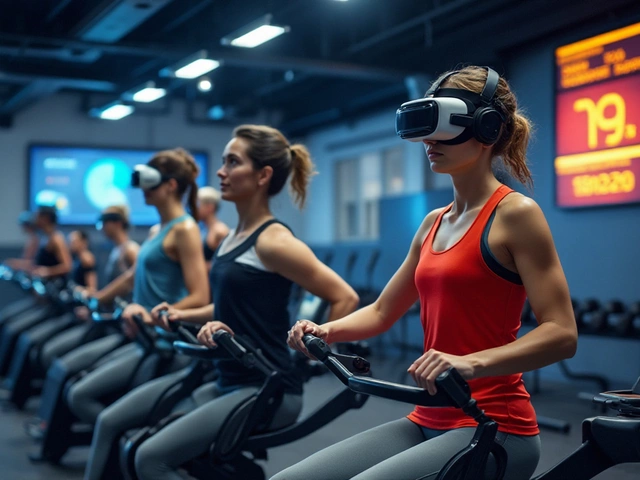
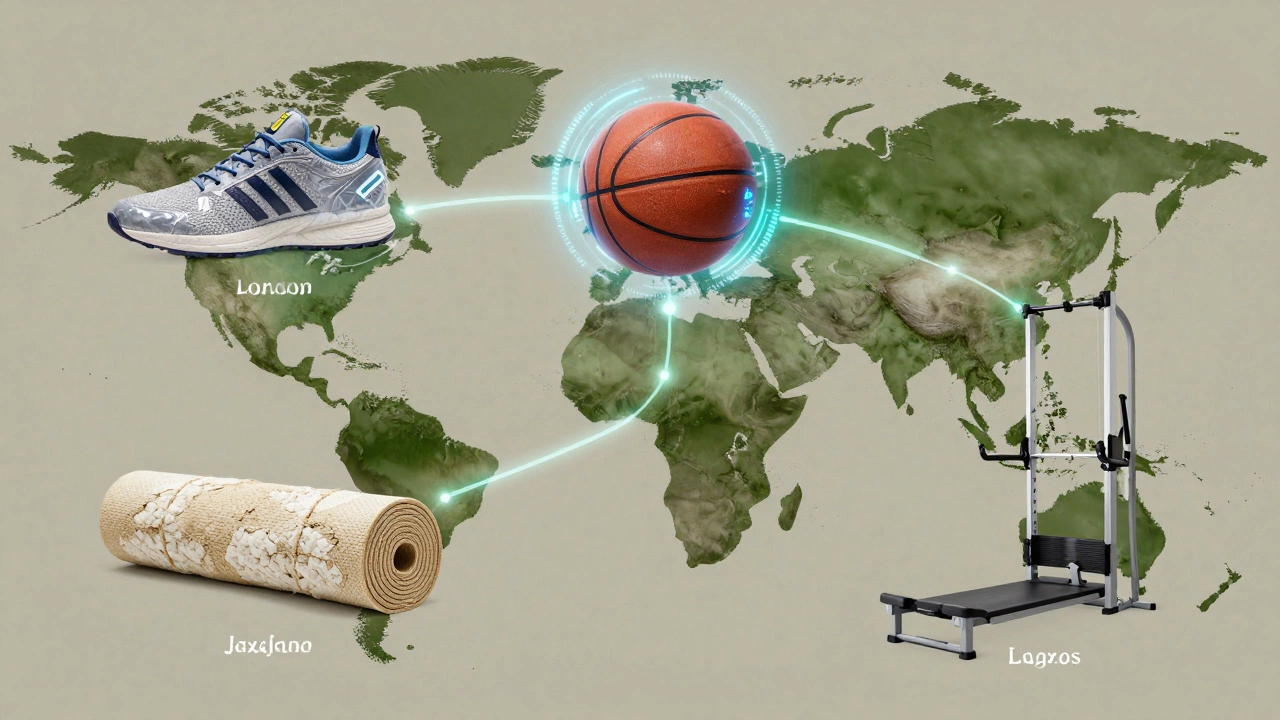
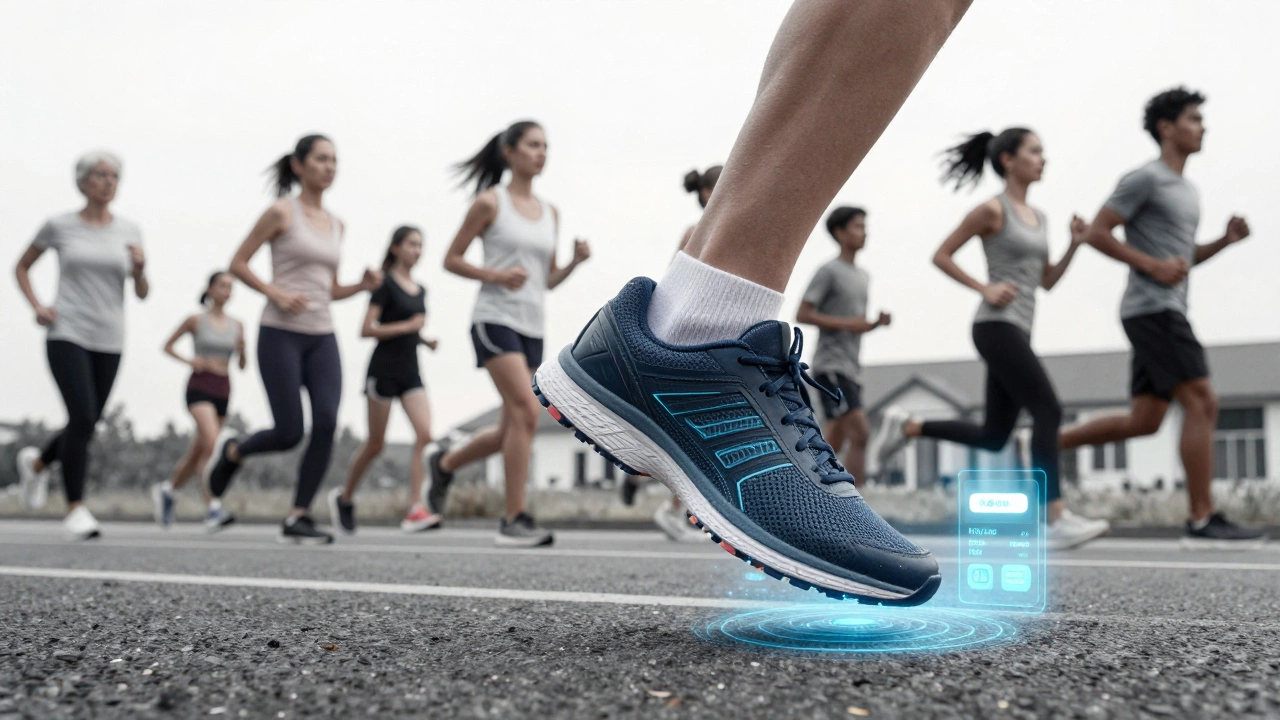
Technology is another big piece. Smart equipment isn’t a novelty anymore-it’s standard. Smart basketballs that track spin and release, connected treadmills that sync with apps, GPS-enabled running shoes that give real-time form feedback-these aren’t luxury items. Brands like Whoop, Garmin, and Polar have made performance tracking part of the product. In 2025, over 38% of all sports equipment sold includes some kind of digital sensor or app integration.
And then there’s accessibility. Online shopping made gear easier to find. Subscription services like Peloton and Tonal turned equipment into a monthly expense. Even in rural areas, you can order a pair of running shoes and have them delivered in two days. No more waiting for the local sports store to restock.
What are the biggest categories?
Not all sports gear is created equal. Some segments are booming; others are shrinking.
Footwear leads the pack. It makes up nearly 30% of the total market-about $150 billion. Running shoes still dominate, but basketball, soccer, and training shoes are growing fast. Nike, Adidas, and New Balance control about 65% of this space, but smaller brands like Hoka and On Running are stealing market share with niche designs and better cushioning tech.
Apparel comes second. Jerseys, shorts, sports bras, compression gear-this segment hit $120 billion in 2024. What’s interesting? People aren’t just buying for performance anymore. They’re buying for style. Athleisure isn’t a trend-it’s a lifestyle. Brands like Lululemon and Under Armour now sell more casual wear than actual workout gear.
Equipment like balls, rackets, and protective gear is third. This includes everything from tennis rackets to hockey sticks to boxing gloves. It’s a $90 billion market. Growth here is slower, but innovation is happening. Carbon-fiber rackets, impact-absorbing helmets, and smart gloves that measure punch force are pushing prices up-and sales along with them.
Then there’s the wild card: home gym equipment. This category exploded from $18 billion in 2019 to $62 billion in 2024. It’s the fastest-growing segment. People aren’t just buying dumbbells anymore. They’re buying full racks, rowing machines, smart mirrors, and even AI-powered personal trainers built into treadmills. Peloton’s revenue from hardware alone hit $2.1 billion in 2024.
Who’s buying this stuff?
It’s not just men in their 20s. The buyer profile has changed.
Women now make up 53% of all sports equipment purchases-up from 41% in 2015. They’re buying yoga mats, running shoes, resistance bands, and even boxing gear. Brands that used to ignore women’s sizing and design are now redesigning entire product lines. Nike’s women’s line now accounts for 40% of its footwear revenue.
Gen Z is the most active segment. They’re not loyal to brands-they’re loyal to values. If a company doesn’t use sustainable materials or support local athletes, they’ll skip it. A 2024 survey by McKinsey found that 68% of Gen Z buyers would pay 15% more for gear made from recycled plastic or organic cotton.
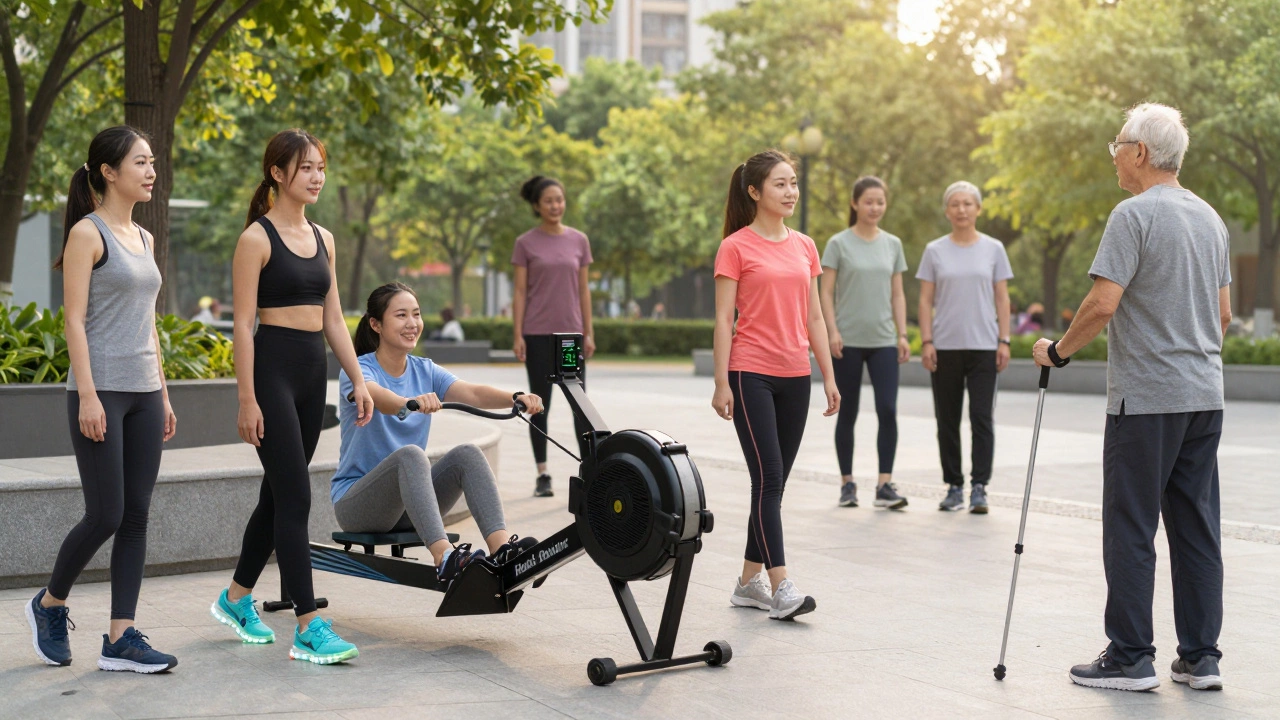
And seniors? They’re a hidden growth engine. In the U.S. and Europe, people over 65 spent $28 billion on sports equipment in 2024. Walking shoes, balance trainers, low-impact bikes, and even smart golf clubs are flying off shelves. The aging population isn’t slowing down-they’re upgrading their gear.
Where is the industry headed?
The next five years will be defined by three shifts.
First: sustainability. By 2027, every major brand will be required to disclose the carbon footprint of their products. Adidas already makes shoes from ocean plastic. Puma’s Futurecraft.Loop is a fully recyclable running shoe. If you’re not doing this, you’re falling behind.
Second: personalization. AI-driven custom gear is coming. Imagine a running shoe molded to your exact foot shape, pressure points, and stride pattern-printed in 72 hours. Companies like 3D Systems and Carbon are already testing this. Custom-fit gear won’t be a luxury in 2026-it’ll be expected.
Third: access over ownership. Why buy a $2,000 rowing machine when you can rent one for $50 a month? Subscription models are expanding beyond fitness apps. Companies like Fitbit and MyProtein are testing equipment rental programs. In cities like Tokyo and Berlin, you can now rent a full home gym for a week. This could shrink the equipment market-but increase total spending.
What does this mean for you?
If you’re buying gear, you have more options than ever. You can get high-performance tech at lower prices. You can support eco-friendly brands. You can rent instead of own. You don’t need to spend $200 on running shoes-there are solid options under $80 that still track your stride.
If you’re selling gear, the rules have changed. You can’t just make a better shoe. You need to make a better experience. That means data, sustainability, and community. The days of selling a product and walking away are over.
The sports equipment industry isn’t just about what’s inside the box anymore. It’s about what happens after you put it on. The gear is just the start.
How big is the sports equipment industry in 2025?
The global sports equipment industry is estimated to be worth $510 billion in 2025. This includes everything from footwear and apparel to home gym gear and smart equipment. The market has grown steadily since 2020, fueled by rising health awareness, tech integration, and easier access to products online.
What’s the biggest segment in sports equipment?
Footwear is the largest segment, making up nearly 30% of the market-about $150 billion in 2025. Running shoes still lead, but basketball, soccer, and training shoes are growing fast. Brands like Nike and Adidas dominate, but smaller players like Hoka and On Running are gaining ground with better cushioning and design.
Is the sports equipment market growing?
Yes, it’s growing at about 5.2% per year. The fastest-growing areas are home gym equipment, smart gear with sensors, and sustainable products. Even in developing countries, demand is rising as more people adopt active lifestyles. The pandemic permanently changed how people think about fitness-and gear.
Who are the main buyers of sports equipment today?
Women now make up over half of all buyers, and Gen Z is the most active demographic. They care about sustainability, performance, and style. Seniors over 65 are also spending more than ever-on walking shoes, balance trainers, and low-impact bikes. The old idea of a sports equipment buyer as a young male athlete doesn’t fit anymore.
Are smart sports gadgets worth it?
For serious athletes or people tracking progress, yes. Smart running shoes that analyze your stride, connected dumbbells that adjust resistance automatically, and heart-rate monitors built into shirts can help prevent injury and improve performance. But for casual users, basic gear works fine. You don’t need a $300 smart basketball to shoot better-you need practice.
Can I rent sports equipment instead of buying?
Absolutely. In cities like Tokyo, Berlin, and Melbourne, equipment rental services are booming. You can rent a full home gym for a week, borrow a mountain bike for a weekend, or even lease a smart treadmill for $50 a month. This model is growing fast, especially among renters, travelers, and people trying new sports before committing.