
Workout Frequency Calculator
How often should you go to the gym?
Based on science and your lifestyle, find your optimal workout frequency.
Your Optimal Workout Plan
Your Recommendation
Going to the gym every day sounds like the ultimate commitment to fitness. You see people posting their daily sweat sessions online, and it’s easy to think that more is better. But here’s the truth: hitting the gym seven days a week doesn’t automatically make you stronger, leaner, or healthier. In fact, for most people, it can do the opposite.
Why Daily Gym Sessions Can Backfire
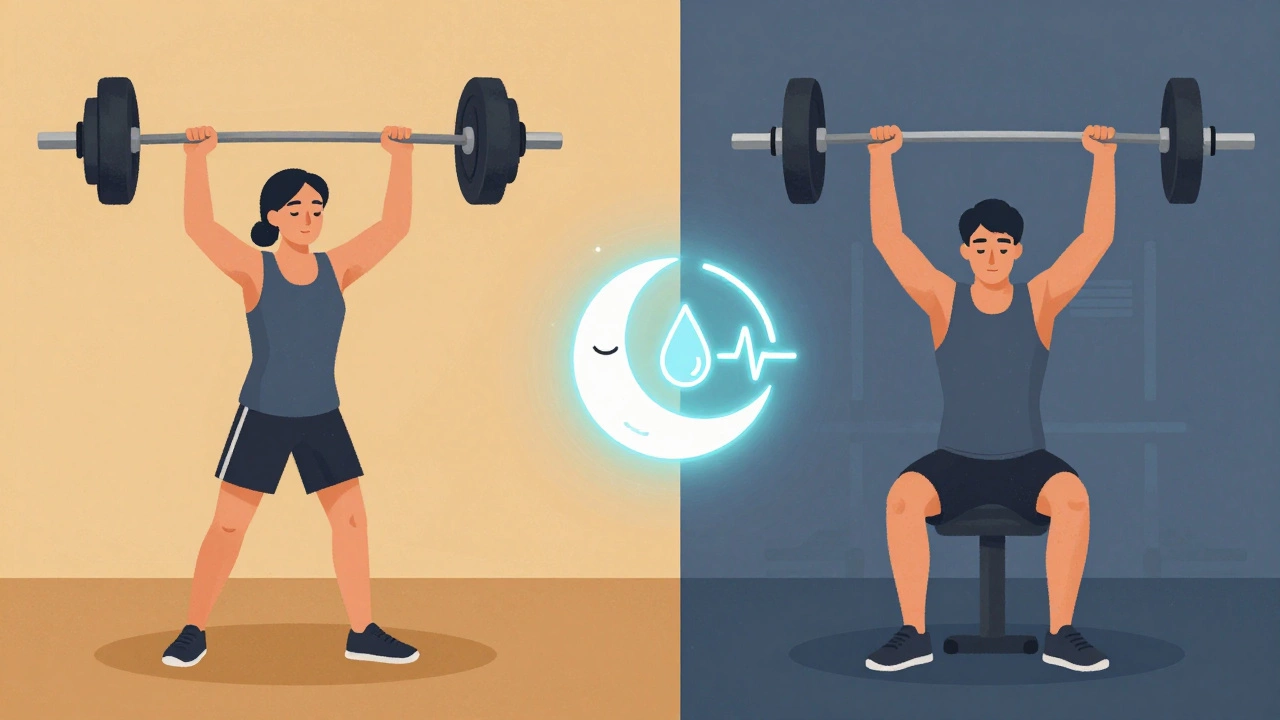
Your muscles don’t grow when you lift weights. They grow when you rest. That’s not a myth-it’s biology. Every time you train, you create tiny tears in your muscle fibers. Recovery is when your body repairs those tears and makes them stronger. Skip recovery, and you’re not building muscle-you’re breaking it down.
Research from the Journal of Strength and Conditioning Research shows that training the same muscle group every day leads to diminished strength gains after just three weeks. The body adapts to constant stress by slowing repair. That’s called overtraining syndrome. Symptoms? Constant fatigue, poor sleep, irritability, and even a weakened immune system. I’ve seen it in clients: someone who starts strong, trains daily, and by week four is barely dragging themselves out of bed.
And it’s not just muscles. Your central nervous system gets fried too. Lifting heavy or doing high-intensity workouts every day taxes your nerves the same way running a computer at 100% all day burns out the processor. You start feeling sluggish, unmotivated, and mentally drained-even if you’re not sore.
Who Actually Benefits from Daily Gym Days?
Not everyone. But some people do train daily-and they’re not breaking rules, they’re following a smarter system.
Professional athletes, elite bodybuilders, and competitive powerlifters often train daily. But here’s what they do differently:
- They split their workouts by muscle group or movement pattern. One day it’s legs, next day it’s upper body pull, then upper body push, then mobility or light cardio.
- They never train the same major muscle group two days in a row.
- They track recovery: heart rate variability, sleep quality, mood, and performance metrics.
- They have planned deload weeks every 4-6 weeks.
Most regular people don’t have the time, recovery capacity, or training experience to pull this off. If you’re working a 9-to-5, raising kids, or dealing with stress, your body doesn’t have the luxury of elite-level recovery.
What Does the Science Say About Optimal Frequency?
Let’s cut through the noise. The American College of Sports Medicine (ACSM) recommends resistance training 2-3 times per week for beginners and 3-5 times per week for intermediates. That’s it. Not seven.
Why? Because studies show that training each major muscle group 2-3 times per week leads to the best muscle growth and strength gains. Training more than that doesn’t add much benefit-it just adds risk.
Here’s a real-world example: two people start at the same weight, same fitness level. Person A trains legs on Monday and Thursday. Person B trains legs every day. After 12 weeks, Person A gains 8% more leg strength. Person B gains 3%. Why? Person B was too sore to push hard on day 3, 5, and 7. They were just going through the motions.
Frequency matters-but only if you’re training with intensity. Doing 10 minutes of light dumbbell curls every day isn’t the same as doing 3 sets of 8 heavy squats twice a week. Quality beats quantity every time.
What Should You Do Instead?
Here’s a simple, proven plan that works for 90% of people:
- Train 3-4 days per week. That’s enough to stimulate growth without burning you out.
- Split your workouts: upper body on Day 1, lower body on Day 2, full body or cardio on Day 3, rest or active recovery on Day 4.
- Include at least one full rest day each week. No cardio, no stretching-just sitting, walking, or napping.
- On non-lifting days, move your body. Walk 8,000 steps. Do yoga. Ride a bike. Move for joy, not punishment.
This isn’t a fancy program. It’s what works for real people with real lives. I’ve had clients in Adelaide go from never working out to consistently gaining strength and losing fat using this exact structure. One woman, 42, mom of two, lost 14kg in 6 months without ever training every day.
What About Cardio? Should I Do It Every Day?
Cardio is different. You can do light to moderate cardio daily-walking, cycling, swimming-without risking overtraining. In fact, daily low-intensity movement helps with recovery, circulation, and mental health.
But if you’re doing HIIT, sprinting, or long runs every day? That’s a problem. HIIT is intense. It spikes cortisol. It taxes your nervous system. Doing it daily leads to burnout, injury, and stalled progress.
Here’s a better approach: 2-3 days of high-intensity cardio (like sprints or circuit training), and 2-3 days of walking or cycling. That’s enough to improve heart health, burn fat, and keep your energy up-without wrecking your body.

Signs You’re Training Too Much
Ask yourself these questions:
- Do you feel tired all the time, even after sleeping 8 hours?
- Have you stopped enjoying your workouts?
- Are you getting sick more often?
- Have your strength or performance gone down instead of up?
- Do you feel anxious or irritable after workouts?
If you answered yes to two or more, you’re likely overtrained. The fix isn’t more gym time. It’s less.
Recovery Isn’t Lazy-It’s Strategic
Rest days aren’t wasted time. They’re when your body transforms. When you rest, your muscles rebuild. Your hormones reset. Your mind resets. You come back stronger.
Think of it like charging your phone. You don’t leave it plugged in 24/7. You plug it in when it’s low, and you unplug it when it’s full. Your body works the same way.
On rest days, you’re not doing nothing. You’re doing recovery. Foam rolling. Stretching. Walking. Eating well. Sleeping. That’s the secret sauce most people ignore.
Final Answer: No, You Don’t Need to Go Every Day
Going to the gym every day isn’t a badge of honor. It’s a recipe for burnout for most people. The goal isn’t to be in the gym the most. The goal is to get stronger, healthier, and feel better over time.
Train hard. Train smart. Rest hard. That’s the real formula. Three to four focused days a week, with real recovery, will outperform seven half-hearted ones every time.
And if you’re still unsure? Try this: skip the gym for two days next week. Walk instead. Sleep more. Eat better. Then come back and lift heavier. You’ll feel the difference.
Is it bad to go to the gym every day?
It’s not inherently bad, but for most people, it’s unnecessary and counterproductive. Training the same muscle groups daily prevents recovery, increases injury risk, and can lead to burnout. Unless you’re an elite athlete with a structured split routine and recovery plan, daily gym sessions do more harm than good.
How many days a week should I go to the gym?
For most people, 3-4 days a week is ideal. This allows you to train each major muscle group 2-3 times weekly, which science shows is optimal for muscle growth and strength. Include at least one full rest day and use other days for light movement like walking or stretching.
Can I do cardio every day?
Yes, but only if it’s low to moderate intensity. Walking, cycling, or swimming daily is great for health and recovery. Avoid high-intensity cardio like HIIT or sprints every day-it’s too taxing on your nervous system. Stick to 2-3 intense cardio sessions per week, and keep the rest easy.
What should I do on rest days?
On rest days, focus on recovery: take a walk, stretch, foam roll, hydrate, sleep well, and eat nutrient-dense food. Avoid structured workouts. The goal is to let your body repair, not to stay busy. Light movement is fine-just don’t push yourself.
Why am I not getting stronger even though I go to the gym every day?
You’re probably not giving your muscles time to recover. Constant training without rest leads to overtraining, where your body can’t repair muscle tissue effectively. You might also be training with low intensity because you’re too tired. Strength comes from progressive overload + recovery-not just frequency.
If you’re serious about results, stop chasing daily gym sessions. Start chasing smart, consistent, recoverable workouts. That’s how real progress happens.