Sports Equipment Material Selector
Find the best materials for your sport
Select your sport to see what materials are used in professional gear, why they're chosen, and what to look for when buying.
Select Your Sport
Key Performance Factors
Select your priority for best results:
Material Recommendations
Ever picked up a baseball bat, slipped on a pair of running shoes, or gripped a tennis racket and wondered what it’s actually made of? It’s not just rubber, plastic, and metal-though those show up a lot. The materials in your sports gear are chosen with extreme precision. They’re engineered for weight, durability, grip, shock absorption, and sometimes even to help you move faster or hit harder. This isn’t guesswork. It’s science, tested in labs and proven on fields, tracks, and courts around the world.
Why materials matter more than you think
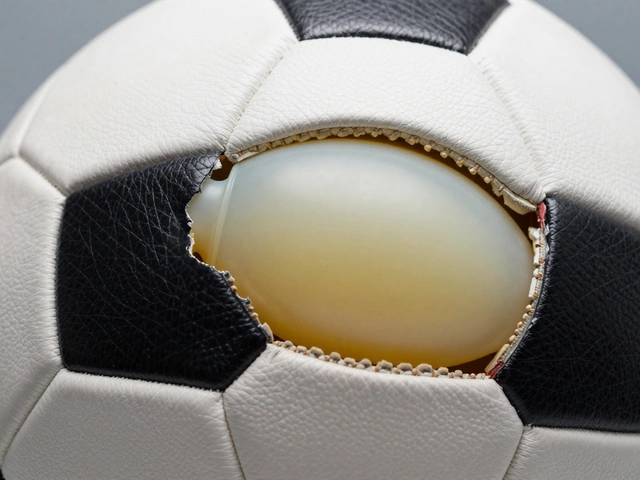
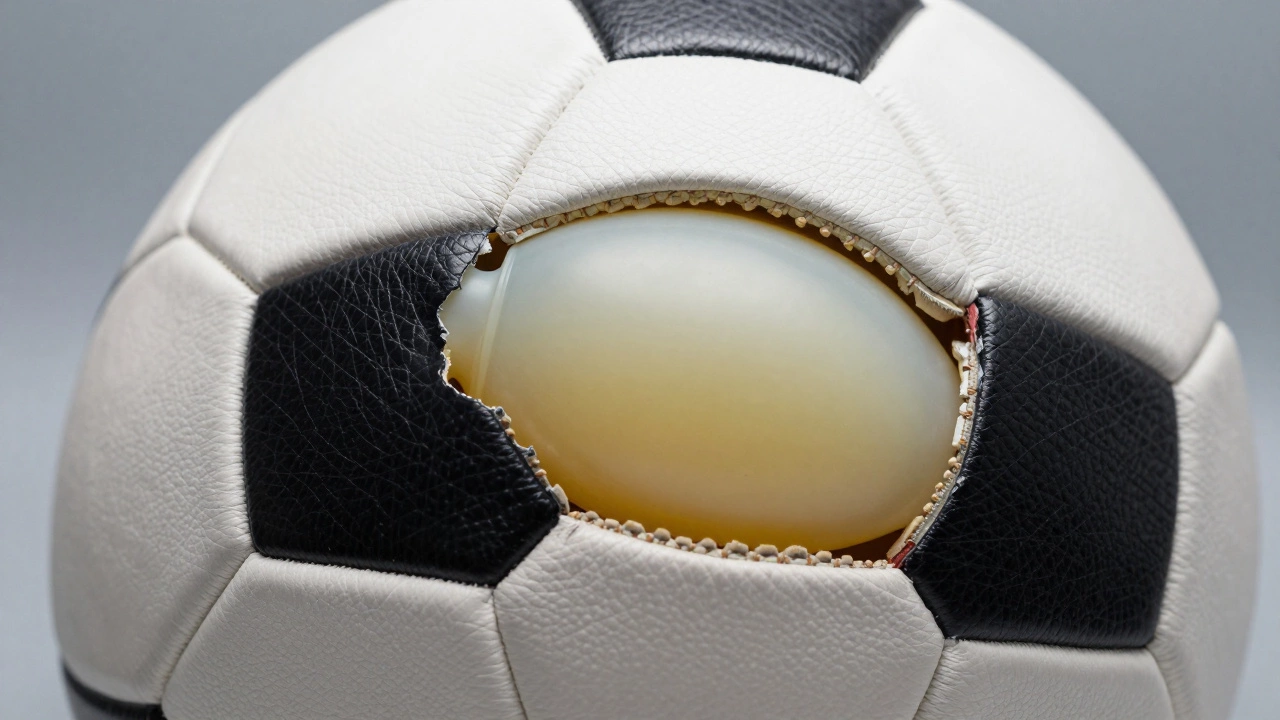
Think about a soccer ball. You might assume it’s just leather and air. But modern match balls use synthetic polyurethane (PU) or thermoplastic polyurethane (TPU). Why? Because real leather swells when it rains, gets heavy, and loses shape. PU doesn’t. It stays light, bounces predictably, and lasts longer. That’s why FIFA-certified balls have used synthetic materials since the 1980s. The material change didn’t just make the ball more durable-it changed how the game was played.
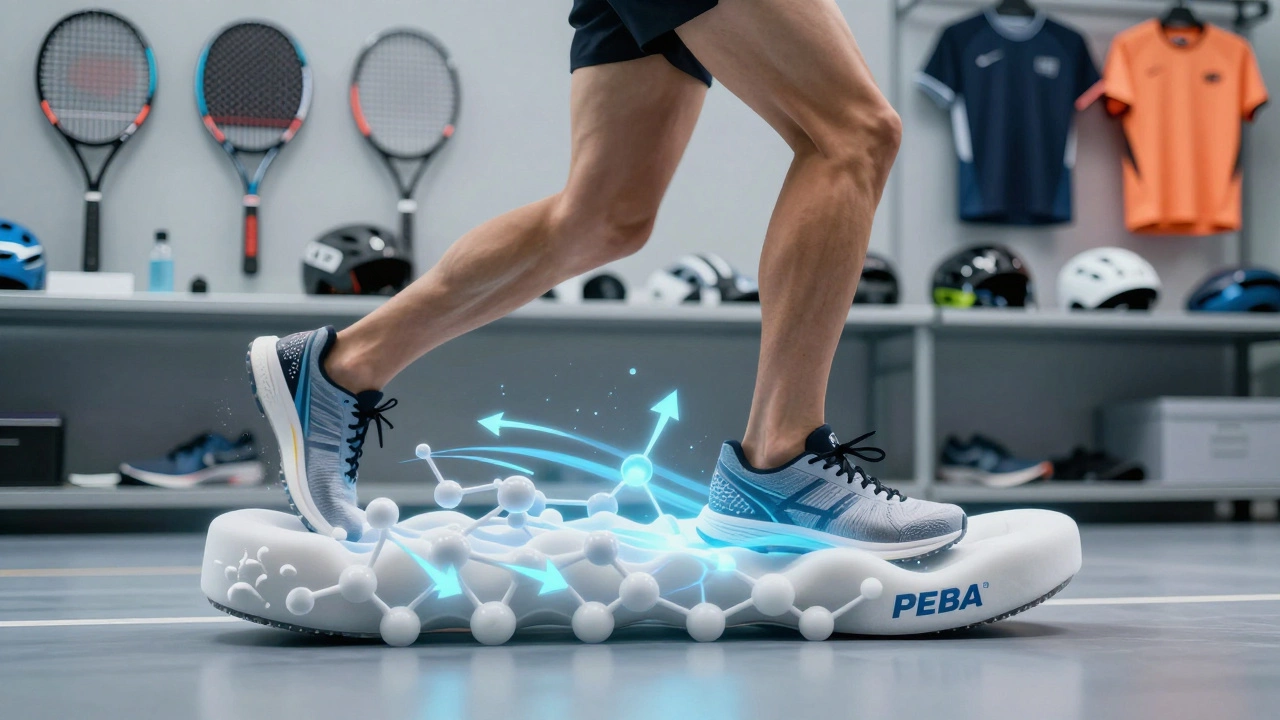
Same goes for running shoes. The midsole isn’t foam like your couch. It’s usually EVA (ethylene-vinyl acetate) or PEBA (polyether block amide). Nike’s ZoomX is PEBA-based. It’s 30% lighter than traditional EVA and returns 85% of the energy you put in. That’s why elite runners break records in them. The difference between good and great performance often comes down to the molecular structure of the foam under your foot.
Common materials in sports equipment
Here’s what you’re likely holding or wearing right now, broken down by material:
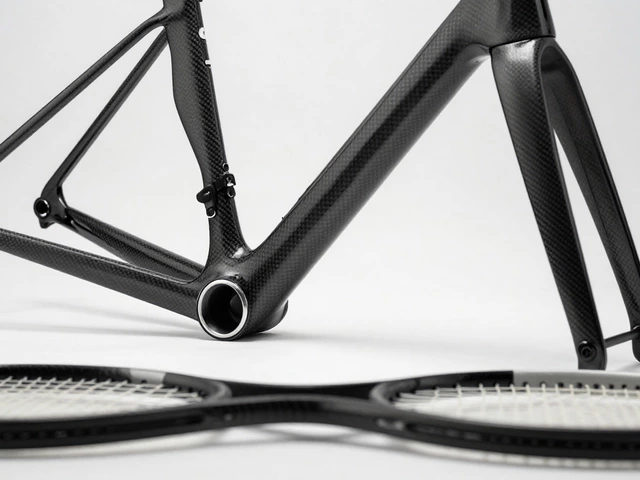
- Carbon fiber - Used in tennis rackets, cycling frames, hockey sticks, and golf clubs. It’s five times stronger than steel but weighs a fraction. A carbon fiber tennis racket can weigh under 300 grams and still deliver power and control you can’t get with aluminum.
- High-density polyethylene (HDPE) - Found in helmets (football, hockey, cycling). It’s tough, impact-resistant, and molded into shapes that absorb and distribute force. Modern helmets don’t just protect-they redirect energy away from your skull.
- Nylon and polyester - The backbone of athletic apparel. Nylon resists abrasion, polyester wicks sweat, and blends of both are used in everything from soccer jerseys to compression shorts. Many now include recycled plastic bottles-over 60% of performance wear in 2025 contains some recycled content.
- EVA foam - The soft cushioning in shoe midsoles, yoga mats, and padding in protective gear. It’s cheap, lightweight, and gives decent shock absorption. But it breaks down over time, which is why runners replace shoes every 500-800 kilometers.
- Aluminum and titanium - Used in baseball bats, ski poles, and some bike frames. Titanium is stronger and lighter than aluminum, which is why high-end mountain bike frames use it. But it’s expensive, so aluminum still dominates entry-level gear.
- Silicone and rubber - Grips on golf clubs, handles on dumbbells, outsoles on running shoes. Natural rubber gives better traction on wet surfaces, while synthetic rubber lasts longer and resists UV damage.
How gear is built for specific sports
Not all equipment is made the same. A basketball isn’t just a ball-it’s a carefully layered structure. The inner bladder is butyl rubber (holds air better than latex). The cover is composite leather (synthetic, no animal products) for grip and consistency. The panels are heat-sealed, not stitched, to reduce seams and improve bounce.
Swimming goggles? The lenses are polycarbonate-shatterproof and UV-resistant. The seal is medical-grade silicone, soft enough to form to your face without leaking. The strap? Elastic polyester with a quick-release buckle. Every piece has a job.
Even something as simple as a jump rope changes based on material. A speed rope uses thin, lightweight PVC or nylon cable. A fitness rope for strength training? Steel wire wrapped in PVC. The difference? One lets you spin 180 times a minute. The other weighs 1.5 kilograms and builds muscle.
The rise of smart and sustainable materials
Today’s gear isn’t just about what it’s made of-it’s about how it’s made. Brands are moving away from virgin plastics and petroleum-based synthetics. Adidas partnered with Parley for the Oceans to make over 50 million pairs of shoes from recycled ocean plastic. Under Armour’s UA Fleece uses 100% recycled polyester. Even baseball gloves now use vegan leather made from mushrooms or apple waste.
And then there’s smart gear. Sensors woven into fabrics can track your heart rate, muscle activation, and even posture. Nike’s Adapt line uses tiny motors and pressure sensors in shoes to auto-lace based on your movement. These aren’t gimmicks-they’re built with conductive fibers, microchips, and flexible batteries embedded directly into the material.

What you should look for when buying gear
Don’t just buy based on brand or color. Ask yourself:
- What’s the primary stress point? If you’re a heavy runner, look for shoes with EVA or PEBA midsoles, not cheap EVA that flattens out.
- Will it handle your environment? If you play in the rain, avoid leather gloves or cotton jerseys. Go for synthetic, quick-dry materials.
- How long will it last? Carbon fiber lasts decades. Cheap plastic gear cracks after a season. You pay more upfront, but save money long-term.
- Is it certified? For helmets, check for ASTM or CE standards. For soccer balls, look for FIFA Quality Pro. These aren’t just logos-they mean the material passed real-world impact and durability tests.
And don’t ignore the small stuff. The stitching on your jersey? It’s often polyester thread, stronger than cotton. The zipper on your jacket? It’s probably YKK-industry standard for reliability. These details matter more than you think.
What’s next for sports materials?
Researchers are testing graphene-infused fabrics that are stronger than steel and conduct heat better than copper. That could mean jerseys that cool you down during intense play. 3D-printed midsoles are being customized to your foot shape and running gait. Even the foam in your running shoes might one day be grown in a lab from algae.
One thing’s clear: the future of sports gear isn’t about bigger, heavier, or flashier. It’s about smarter, lighter, and more responsible materials. The next time you grab your gear, take a second to think-what’s it really made of? And why does it work so well?
Are sports equipment materials safe for long-term use?
Yes, regulated sports equipment uses materials tested for skin contact, toxicity, and long-term exposure. Helmets, pads, and apparel must meet international safety standards like ASTM, CE, or ISO. Brands that skip testing risk lawsuits and recalls. Reputable companies disclose material safety data sheets (MSDS) on request. If you have sensitive skin, look for gear labeled "hypoallergenic" or made with OEKO-TEX certified fabrics.
Can I recycle old sports equipment?
Many brands now offer take-back programs. Nike Reuse-A-Shoe turns old sneakers into playground surfaces. Adidas partners with TerraCycle to recycle worn-out gear into new products. Even broken tennis rackets can be processed-carbon fiber can be ground and reused in non-sport items like bike frames or phone cases. Check your local sports store or brand website for recycling options. Don’t just toss it in the bin.
Why do some sports gear cost so much?
High-end gear uses advanced materials that are expensive to produce. Carbon fiber requires precise layering and high-temperature curing. PEBA foam is 10x more costly than standard EVA. Smart textiles with embedded sensors need microelectronics integration. You’re not paying for the logo-you’re paying for lab-tested performance, durability, and weight savings that can make a real difference in your training or competition.
Is natural material better than synthetic?
Not necessarily. Natural materials like leather or cotton have benefits-breathability, comfort-but they’re inconsistent and degrade faster. Synthetic materials are engineered for performance: they’re lighter, more durable, and often more moisture-wicking. A cotton jersey will soak up sweat and weigh you down. A polyester blend dries in minutes. For sports, function beats tradition.
How do I know if my gear is wearing out?
Look for signs: shoes lose cushioning (press the midsole-it should spring back), grips feel slick or cracked, helmet liners flatten or smell musty, and seams start to fray. If your gear feels different-slower, heavier, less responsive-it’s probably past its prime. Don’t wait for it to break. Replacing gear before it fails is part of staying safe and performing well.
Whether you’re a weekend warrior or a competitive athlete, your gear is your partner. Understanding what it’s made of helps you choose better, use it longer, and get the most out of every workout, game, or race.