
75 Rule Calculator
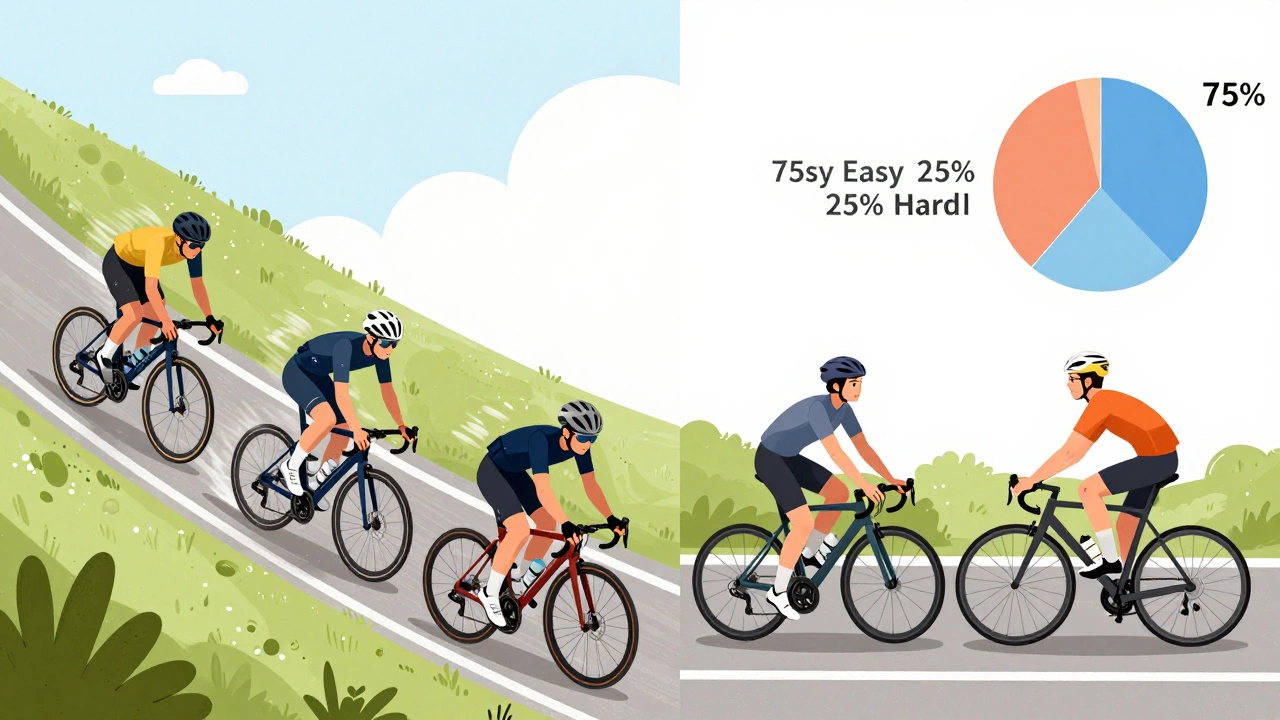
The 75 Rule means 75% of your weekly cycling time should be easy/moderate intensity, while 25% should be hard efforts. Calculate your ideal weekly split below.
Easy: 0 hours
Hard: 0 hours
What Counts as Easy?
Your heart rate should stay below 70% of max. Use power zones (55-75% FTP) or the "talk test" (can hold a conversation). Easy rides still build fitness!
Ever heard of the 75 rule in cycling and wondered if it’s just another fitness myth? It’s not. This rule is a proven, no-fluff method used by amateur riders and pro teams alike to build endurance without burning out. If you’ve ever pushed too hard on a weekend ride, felt wrecked for days, or hit a plateau in your progress, the 75 rule might be the missing piece you’ve been ignoring.
What Exactly Is the 75 Rule?
The 75 rule in cycling says: 75% of your weekly riding time should be done at low to moderate intensity. That’s it. No fancy gear, no complex math. Just ride easy most of the time, and save the hard efforts for the rest.
Think of it like this: if you ride 10 hours a week, at least 7.5 of those hours should feel comfortable. You should be able to hold a conversation, breathe steadily, and not feel like you’re about to collapse. The remaining 25%? That’s where you push hard - intervals, climbs, sprints - the stuff that makes you faster.
This isn’t new. It’s based on decades of research in sports science. Studies from the Journal of Sports Sciences and coaching data from teams like Team Sky and Jumbo-Visma show that riders who stick to this ratio improve endurance, recover faster, and stay injury-free longer than those who go all-out every ride.
Why Does It Work?
Your body adapts to stress. But it needs time to rebuild. When you ride hard every day, you’re constantly damaging muscle fibers without giving them a chance to repair. That’s when fatigue piles up, performance drops, and you start dreading your bike.
The 75 rule fixes that by letting your body recover while still building fitness. Easy rides improve your aerobic system - your heart, lungs, and capillaries get better at delivering oxygen to your muscles. That’s the foundation of endurance. Hard rides? They teach your body to handle high stress, boost your lactate threshold, and sharpen your speed. But they only work if you’re not already tired from the last hard ride.
Here’s a real example: A rider in Adelaide rides 5 days a week. If they do 3 hard rides (intervals, hill repeats) and 2 easy spins, they’re at 60% hard effort. That’s too much. They’ll plateau. But if they cut one hard ride and replace it with a 90-minute easy spin, they hit 75% easy. Within 4 weeks, they’re climbing faster, recovering between rides, and even sleeping better.
How to Apply the 75 Rule
Start by tracking your weekly ride time. Use any app - Strava, Garmin, Zwift - it doesn’t matter. Then break it down:
- Calculate your total weekly riding time.
- Multiply that number by 0.75. That’s your easy ride target.
- Subtract that from your total. The rest is your hard effort time.
For example:
- Weekly total: 8 hours
- Easy target: 8 × 0.75 = 6 hours
- Hard target: 8 − 6 = 2 hours
Now plan your week. Maybe you do:
- Monday: 90-minute easy spin (1.5h)
- Tuesday: 45-minute intervals (0.75h)
- Wednesday: 60-minute easy ride (1h)
- Thursday: 30-minute hill repeats (0.5h)
- Saturday: 3-hour long ride (3h)
- Sunday: Rest
Total easy: 1.5 + 1 + 3 = 5.5 hours
Total hard: 0.75 + 0.5 = 1.25 hours
Total weekly: 6.75 hours
You’re at 81% easy - slightly over, but close enough. Next week, add 30 minutes of easy riding and cut 15 minutes from your intervals. You’ll find your sweet spot.
What Counts as ‘Easy’?
Easy doesn’t mean slow. It means controlled. Your heart rate should stay below 70% of your max. If you use a power meter, aim for Zone 1 or 2 (55-75% of FTP). If you don’t have gear, use the talk test: if you can sing a song without gasping, you’re in the right zone.
Don’t confuse easy with lazy. Easy rides still build fitness. They improve fat-burning, circulation, and neuromuscular efficiency. Many riders skip them because they feel ‘too slow,’ but that’s exactly why they work. You’re training your body to do more with less.
What Counts as ‘Hard’?
Hard means pushing into zones that make you uncomfortable. This includes:
- Interval sessions (e.g., 5x4 minutes at 90% FTP with 3-minute rests)
- Hill repeats (3-6 climbs at race pace)
- Tempo rides (20-40 minutes at 80-85% FTP)
- Group rides with surges
Keep hard sessions short. Two to three per week max. One session should be your longest hard effort - maybe a 60-minute tempo ride. The others can be 20-30 minutes. More than that, and you’re crossing into overtraining.
Common Mistakes
Even smart riders mess this up. Here are the top three:
- Doing hard rides every day. You think you’re getting faster, but you’re just getting tired. Your body needs recovery to adapt.
- Confusing distance with intensity. A 50-mile ride on flat roads at 15 mph is still easy. A 20-mile ride with 2,000 feet of climbing at race pace is hard. Don’t judge effort by miles.
- Ignoring easy days. Skipping easy rides because you ‘don’t have time’ is like skipping sleep. You’ll crash sooner.
One rider I know in Adelaide trained hard every day for months. He lost 6 pounds, got slower, and quit cycling. He didn’t realize his easy rides were just too hard. Once he fixed the ratio, he gained 8 mph on his long rides in 8 weeks.
Who Should Use the 75 Rule?
This rule works for almost everyone:
- Beginners building base fitness
- Mid-level riders stuck in a plateau
- Competitors prepping for races
- Older riders wanting to stay strong without injury
It’s less useful for elite racers doing multiple daily sessions or those in peak race season. But for 90% of cyclists, it’s the most reliable path to steady improvement.
How Long Until You See Results?
Most riders notice changes in 3-4 weeks. You’ll feel less tired after rides. Your legs will recover faster. You’ll start climbing hills with less effort. After 8 weeks, your FTP (functional threshold power) often jumps 5-10%. Your endurance improves even more.
One study tracked 120 recreational cyclists over 12 weeks. Those following the 75 rule improved their 40k time trial by 11%. Those who trained hard every day improved by only 2% - and had 3x more injuries.
Tools to Help You Stick to It
You don’t need expensive gear, but a few tools make it easier:
- Heart rate monitor - cheapest way to track intensity
- Power meter - most accurate, especially for intervals
- Training app - Strava, TrainingPeaks, or Zwift can auto-calculate your easy/hard ratio
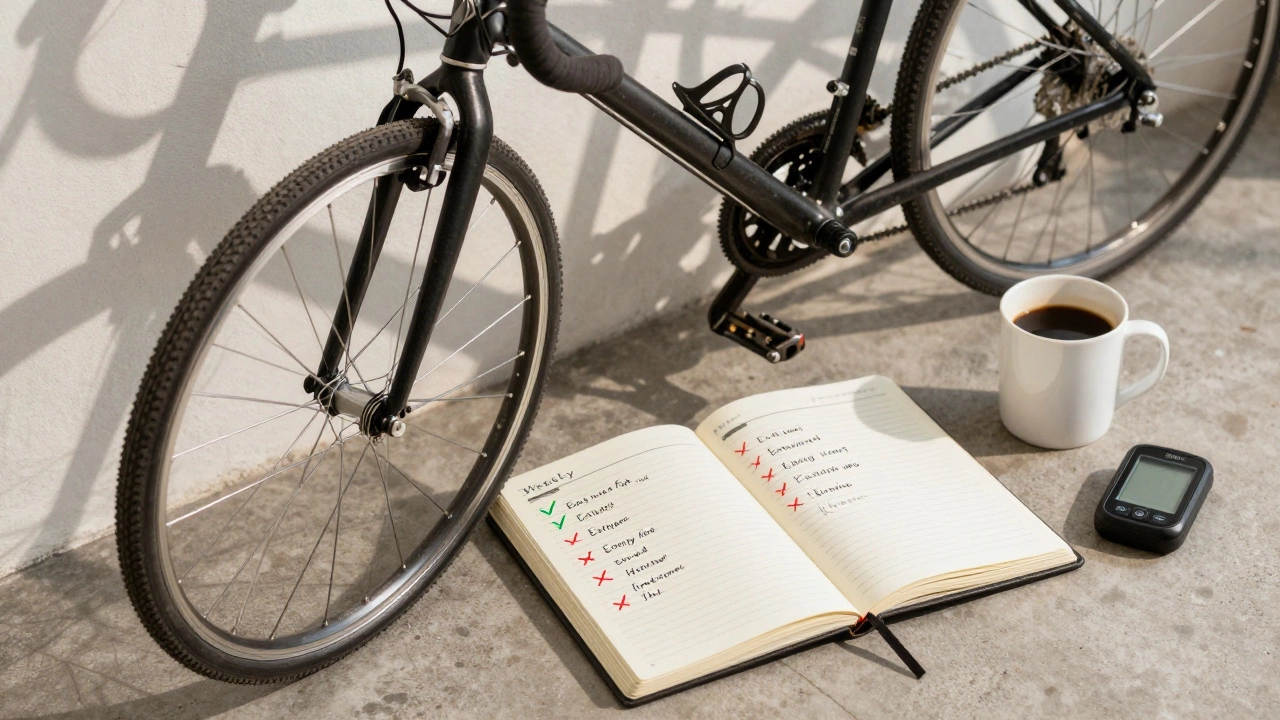
- Journal - write down how you felt after each ride. Over time, you’ll spot patterns.
Even a simple spreadsheet works. Track your daily ride time and mark easy/hard. At the end of the week, do the math. It takes 5 minutes.
Final Thought: It’s Not About How Hard You Ride - It’s About How Smart You Ride
Cycling isn’t about going all-out every time. It’s about consistency. The 75 rule isn’t a secret. It’s a strategy. It’s how the pros train. And it works because it respects your body’s limits.
If you’ve been pushing too hard, this is your sign to slow down. Ride easy. Ride often. Then, when it’s time to go hard, you’ll be ready - not just tired.
Is the 75 rule the same as the 80/20 rule in cycling?
They’re very similar. The 80/20 rule says 80% of training should be easy, 20% hard. The 75 rule is a slightly more flexible version - 75% easy, 25% hard. Both are based on the same science. The 75 rule is often better for riders who do longer endurance rides (like century rides or multi-day tours), because it allows a bit more hard effort without overloading recovery. Most riders find the 75/25 split easier to stick to long-term.
Can I use the 75 rule if I only ride 3 times a week?
Absolutely. The rule works regardless of how many days you ride. If you ride 3 hours a week, aim for 2.25 hours easy and 0.75 hours hard. You could do two easy rides (45 minutes each) and one hard 45-minute session with intervals. The ratio matters more than the number of days.
What if I feel great on hard rides every day? Should I keep going?
Feeling great today doesn’t mean you’re not overtraining. Overtraining is cumulative. You might feel fine now, but after 3-4 weeks of hard rides daily, your performance will drop, you’ll get more sore, and you might even lose motivation. The 75 rule isn’t about how you feel today - it’s about building sustainable progress. Trust the science, not just your mood.
Does the 75 rule apply to indoor cycling too?
Yes. Whether you’re on a trainer, Zwift, or a spin bike, the rule holds. Indoor rides can be harder to judge, so use power or heart rate. An easy indoor ride should feel like a recovery spin - low resistance, steady cadence. Hard sessions can be shorter indoors (20-30 minutes), but still count toward your 25%.
Do I need to follow the 75 rule year-round?
Not always. During race season, you might shift to 70/30 for a few weeks to peak. In the off-season, you might go 80/20 to rebuild. But for 9-10 months of the year, the 75/25 split is the most effective balance. Think of it as your default setting - adjust only when you have a clear goal.