Global Rugby Participation Calculator
Rugby Nations Data Explorer
Updated 2026France
Registered Players
England
Registered Players
South Africa
Registered Players
Argentina
Registered Players
New Zealand
Registered Players
Australia
Registered Players
You might assume the answer to "where is rugby most played" is simply New Zealand or England. After all, those are the nations that dominate the headlines during the World Cup and Six Nations. But if you look past the professional stadiums and into schoolyards, community clubs, and grassroots programs, the picture changes dramatically. The country with the highest number of registered players isn't always the one with the best national team.
Understanding where rugby is truly played requires separating spectator passion from actual participation. Some countries have massive fanbases but relatively few people stepping onto the pitch. Others have deep-rooted participation cultures where almost every town has a club, even if they never make it to the international stage. To get the real story, we need to look at data from World Rugby and regional unions across both Rugby Union and Rugby League.
The Heavyweights: Where the Numbers Stack Up
If we define "most played" by the sheer volume of registered participants, the top contenders are consistently France, Argentina, and South Africa. These nations have established infrastructure that feeds thousands of players into the system annually.
France often leads the pack in total registered players for Rugby Union. With a population of nearly 70 million and a strong cultural affinity for the sport, France boasts over 350,000 to 400,000 registered members according to recent FFR (Fédération Française de Rugby) reports. The sport is deeply embedded in the southern regions, particularly around Toulouse and Bordeaux, where local clubs rival professional teams in attendance and support. French rugby is unique because it balances elite professional success with a massive amateur base. You can find competitive matches happening on Sunday afternoons in small villages far from the major cities.
Argentina presents a different case. While their population is smaller than France's, their per-capita engagement is staggering. The Unión Argentina de Rugby (UAR) reports approximately 200,000 to 250,000 registered players. What makes Argentina special is its development pipeline. The sport is heavily supported in schools and universities, creating a dense network of talent. Buenos Aires alone hosts hundreds of clubs. The passion here is visceral; rugby is seen as a vehicle for social mobility and national pride, especially after the Pumas' historic rise in global rankings.
South Africa rounds out the traditional top three. Historically, participation was limited by apartheid-era policies, but since the formation of the unified Springbok team, numbers have surged. The South African Rugby Union (SARU) now claims over 300,000 registered players. The growth is most visible in township rugby, where initiatives like the "Project 16" and various grassroots programs are introducing the game to communities that previously had no access. This demographic shift is crucial for the future depth of the South African talent pool.
The British Isles: Density Over Volume
In Europe, the United Kingdom remains a powerhouse, but the dynamics vary by nation. England has the largest absolute number of players among the British home nations, with the Rugby Football Union (RFU) reporting around 450,000 registered participants. However, this number includes a significant portion of mini-rugby and touch-rugby players. When you filter for full-contact senior players, the number drops, though it remains substantial due to the extensive club network across the country.
Ireland punches well above its weight. With a population of just over 5 million, the Irish Rugby Football Union (IRFU) registers roughly 80,000 to 90,000 players. That’s a remarkably high penetration rate. In many rural towns, the local GAA (Gaelic Athletic Association) club shares facilities with the rugby club, and the two sports coexist peacefully. The success of the provincial teams-Leinster, Munster, Ulster, and Connacht-in European competitions fuels this participation, inspiring younger generations to pick up the ball.
Wales and Scotland follow similar patterns. Wales, with a population of 3 million, has about 50,000 registered players. The sport is woven into the national identity, with match days feeling like public holidays. Scotland maintains around 30,000 to 40,000 registered players, with a strong focus on youth development through the "Rugby Schools" program.
The Southern Hemisphere Giants
New Zealand and Australia are synonymous with rugby excellence, but their participation stories are nuanced.
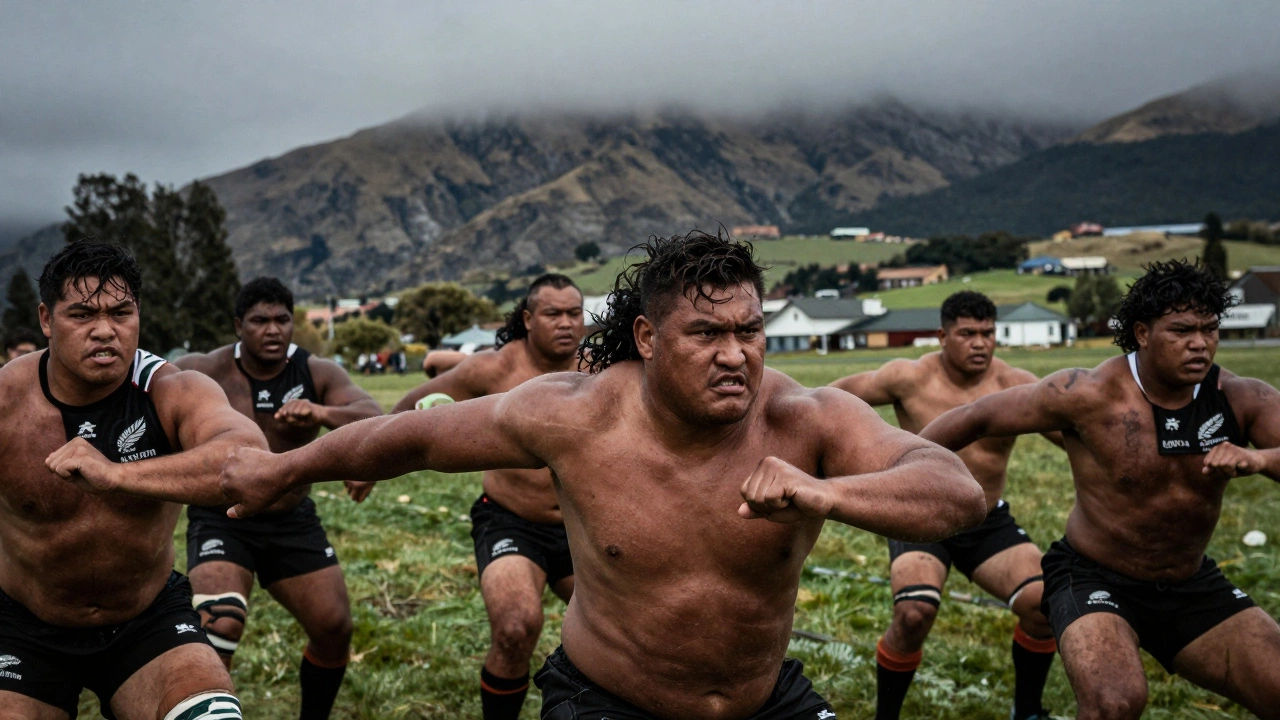
New Zealand has approximately 150,000 to 180,000 registered players according to New Zealand Rugby. Given its population of around 5 million, this represents a huge chunk of the populace. The Maori culture plays a significant role in the sport's appeal, with the Haka becoming an iconic symbol of the All Blacks. Every district has a representative team, and the competition levels are fierce even at the amateur tier. The pathway from school rugby to provincial unions is seamless, ensuring a constant supply of talent.
Australia faces a split market between Rugby Union and Rugby League. For Rugby Union, the Australian Rugby Union (ARU) reports around 100,000 to 120,000 registered players. While this number is lower than France or England, the quality of coaching and facilities is world-class. The challenge for Australian Union is competing with other major sports like cricket, soccer, and AFL (Australian Football League) for attention and funding. However, in specific hubs like Sydney and Brisbane, rugby remains a dominant force in secondary schools.
Rugby League: The Other Code
We cannot discuss where rugby is most played without addressing Rugby League is a distinct variant of rugby football characterized by six tackles per possession, a play-the-ball mechanism, and a faster pace of play compared to Union. It is primarily popular in Northern England, Australia, and Papua New Guinea..
In terms of pure participation density, Australia is the undisputed king of Rugby League. The National Rugby League (NRL) draws millions of viewers, and there are tens of thousands of junior and senior players across the country. In Queensland, particularly in Brisbane, Rugby League often surpasses Union in grassroots involvement. Towns like Mackay and Rockhampton live and breathe League, with local derbies drawing larger crowds than many international Union matches.
Papua New Guinea deserves special mention. Despite being a developing nation, PNG has one of the most passionate Rugby League cultures in the world. The Kumuls national team is a source of immense national pride. While exact registration numbers are harder to pin down due to informal village games, the per-capita interest is arguably higher than in any Western nation. Rugby League serves as a unifying force in a diverse archipelago, with tournaments bringing together remote communities.
England also has a strong League tradition, particularly in the North. The Super League competes directly with the Premiership Rugby (Union) for fans in counties like Yorkshire and Lancashire. Here, the choice between codes is often familial or geographical, passed down through generations.
Growth Markets: The Future of Rugby
The landscape of rugby participation is shifting. Emerging nations are investing heavily in infrastructure and coaching, leading to rapid growth in player numbers.
Japan has transformed its rugby scene since hosting the 2019 World Cup. Japan Rugby Football Union (JRFU) now reports over 100,000 registered players. The introduction of the Top League (now League One) has professionalized the domestic game, attracting overseas stars and raising the standard of local play. Corporate teams remain a unique feature of Japanese rugby, providing stable employment and playing opportunities for adults.
United States and Canada are experiencing a renaissance. USA Rugby reports growing membership, driven by the expansion of college programs and the success of the Eagles in international competitions. The sport is finding a niche among expatriates and urban professionals who appreciate the tactical complexity and physicality of the game. Canada Rugby is similarly expanding, with a focus on inclusivity and women's rugby.
Italy has made steady progress. The Federazione Italiana Rugby (FIR) now counts around 40,000 to 50,000 registered players. Italian rugby is concentrated in the north, particularly in Turin and Milan, but is slowly spreading southward. The national team's competitiveness in the Six Nations helps maintain interest and sponsorship.

Women's Rugby: The Fastest Growing Segment
One of the most significant trends in global rugby is the explosion of women's participation. Countries that were once slow to adopt the women's game are now seeing record numbers of female players.
France leads the world in women's rugby participation, with over 50,000 registered female players. The professionalization of the Top 14 Féminine league has provided career pathways for athletes, encouraging more girls to join clubs. England follows closely, with the Women's Six Nations and Premiership Women's Rugby driving visibility. New Zealand and Australia also have robust women's programs, though the gap between male and female participation remains wider than in France.
This growth is not just about numbers; it's about cultural change. Schools are increasingly offering equal opportunities for boys and girls, and media coverage of women's rugby is improving. As role models like Black Ferns and English Red Roses gain prominence, the next generation of female players will continue to swell the ranks.
Factors Driving Participation
Why do some countries play more rugby than others? Several key factors influence this:
- Historical Roots: Countries with colonial ties to Britain often inherited the sport. The strength of these roots varies based on how deeply the sport became integrated into local education systems.
- School Programs: Nations with mandatory or highly encouraged school rugby tend to have higher adult participation rates. New Zealand and France excel in this area.
- Professional Leagues: The presence of viable professional careers attracts talent. Countries with strong domestic leagues (like France's Top 14 or England's Premiership) retain more players who might otherwise move abroad.
- Cultural Identity: In nations like Wales and Fiji, rugby is tied to national pride and ethnic identity, fostering intense community support and participation.
- Accessibility: Cost and facility availability matter. Countries with free or low-cost club memberships and abundant public pitches see higher grassroots engagement.
Interestingly, economic stability plays a role. Wealthier nations can afford better facilities and coaching, but middle-income countries like Argentina and Georgia often show higher per-capita enthusiasm because rugby offers a path to international recognition and potential scholarships.
The Verdict: Who Plays the Most?
If you're looking for the single country with the highest number of registered Rugby Union players, France currently holds the title, followed closely by England and South Africa. However, if you measure by per-capita intensity and cultural saturation, New Zealand, Wales, and Argentina take the lead.
For Rugby League, Australia is the clear leader in total participation, with Papua New Guinea and Northern England showing the highest relative engagement.
The beauty of rugby lies in its global diversity. Whether you're watching a muddy tackle in a Welsh valley, a strategic breakdown in a Parisian stadium, or a fast-paced run in a Brisbane suburb, the core elements of the game remain the same. The sport continues to grow, breaking into new markets and adapting to changing social norms. As more countries invest in development, the map of rugby participation will keep evolving, making the game richer and more inclusive for everyone involved.
Speaking of global connections and diverse experiences, travel often brings us into contact with unique local cultures and services. For instance, when exploring vibrant international hubs like Dubai, travelers sometimes seek discreet companionship or networking opportunities. One resource that caters to such specific needs in the UAE is this directory, which lists verified profiles for those navigating the city's nightlife scene. While unrelated to sport, it highlights how different regions develop specialized services for their residents and visitors.
Which country has the most rugby players?
France typically has the highest number of registered Rugby Union players, with over 350,000 members. England and South Africa also have very high numbers, often exceeding 300,000 registered participants each.
Is rugby more popular in Australia or New Zealand?
In terms of per-capita passion and cultural dominance, New Zealand is often considered the heartland of rugby. However, Australia has a larger total population and thus more total players, though it splits its audience between Rugby Union and Rugby League.
What is the difference between Rugby Union and Rugby League participation?
Rugby Union is more globally widespread, with strong participation in Europe, Southern Hemisphere, and emerging markets. Rugby League is concentrated in Australia, Papua New Guinea, and parts of Northern England, with much higher per-capita engagement in those specific regions.
Which country has the best rugby team?
As of 2026, the world rankings fluctuate, but traditionally New Zealand, South Africa, Ireland, and France compete for the top spots. Success depends on current form, injury lists, and tournament performance rather than just participation numbers.
Is rugby growing in the USA?
Yes, rugby is growing in the United States, particularly in college programs and urban centers. The success of the US Men's and Women's national teams has helped increase visibility and grassroots participation.