The Golf GOAT Calculator
There is no single mathematical answer to who is the greatest golfer of all time. Adjust the weights below to see how your personal definition of "greatness" changes the outcome between Jack Nicklaus and Tiger Woods.
Define Your Criteria
Adjust the sliders and click Calculate
to see who wins according to your criteria.
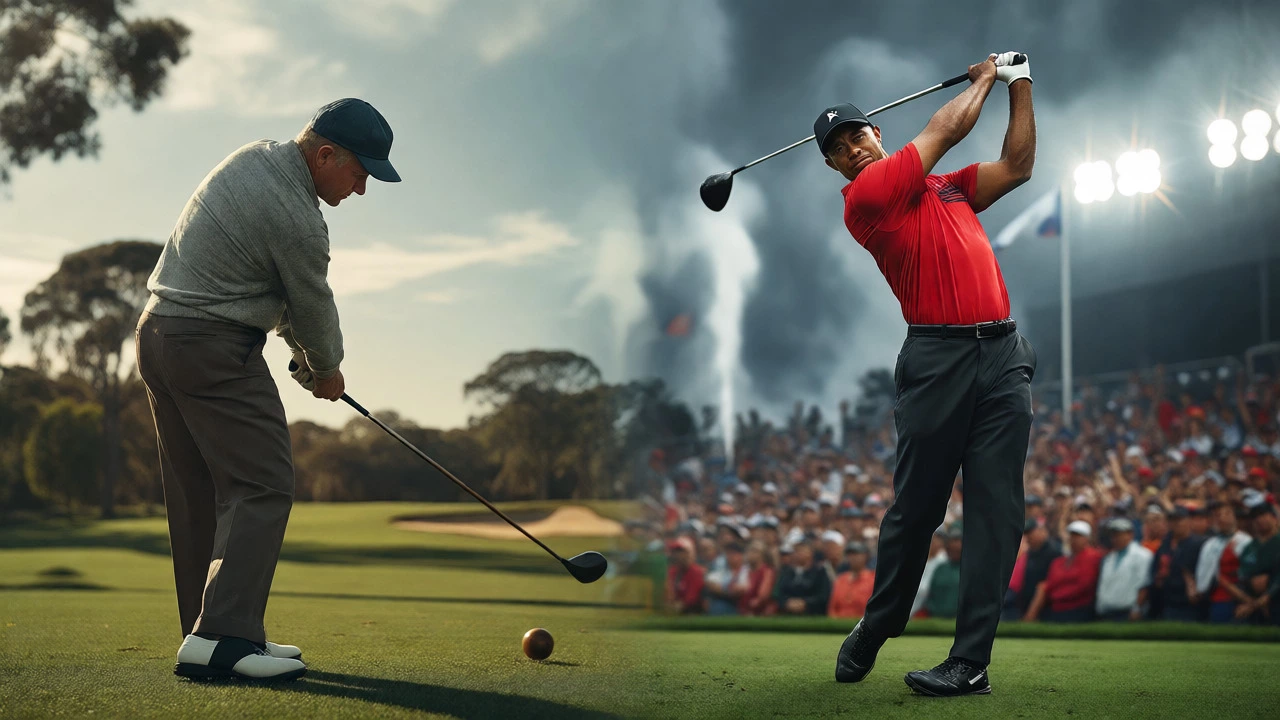
You walk into a bar in Adelaide or New York, and you ask this question: Who is the greatest golfer of all time? A debate centered on comparing the careers of Jack Nicklaus and Tiger Woods based on Major Championships and overall dominance. The room splits instantly. Half the crowd shouts "Jack!" while the other half yells "Tiger!" It’s not just about who hit the ball farther or straighter; it’s about legacy, pressure, and what actually counts as greatness in a sport that spans decades.
Here’s the cold, hard truth: there is no single mathematical answer. If we look at pure statistics, one name wins. If we look at cultural impact and peak performance, another takes the crown. But if you want to settle this argument with your friends over a beer, you need more than gut feeling. You need to understand the metrics that define GOAT status in golf.
The Case for Jack Nicklaus: The Statistical King
Jack Nicklaus, known as the Golden Bear, holds the record for the most Major Championships in history. Let’s put that number in perspective. He won 18 Majors. That’s nearly double the next closest competitor, Tiger Woods, who sits at 15. In any other sport, holding a 3-title lead over the second-best player ever would end the conversation before it started.
Nicklaus didn’t just win; he dominated across eras. His first Major came in 1962, and his last was in 1986. That’s a span of 24 years. Think about how much golf equipment, training science, and course design changed during that time. Yet, he remained elite. His consistency is staggering. He finished runner-up in Majors 19 times-another record. This shows he wasn’t just lucky once; he was consistently the best player on the biggest stages for a quarter-century.
Critics often argue that Nicklaus played against weaker fields. They point out that fewer international players competed in American Majors during the 60s and 70s compared to today. While true, this ignores the sheer volume of competition he faced domestically. The PGA Tour in the 70s was stacked with legends like Arnold Palmer, Gary Player, and Lee Trevino. Beating them repeatedly requires a mental toughness that modern stats can’t fully capture.
The Case for Tiger Woods: The Modern Dominator
If Nicklaus is the king of longevity, Tiger Woods is the god of peak performance. When Tiger was at his best, he wasn’t just beating people; he was humiliating them. His 2000 season remains the gold standard of dominance. He won three Majors in a row (the "Tiger Slam") and led the world ranking by an average margin of victory never seen before or since.
Tiger changed the game physically. Before him, golfers were generally lean athletes. After him, they became bodybuilders. He brought athleticism to the forefront, forcing every pro on tour to hit the gym. His ability to control trajectory, spin, and distance under extreme pressure is arguably unmatched. Remember his chip-in at the 2005 Masters? Or his iron play at Augusta in 2019? Those weren’t just good shots; they were impossible feats executed when everyone else choked.
However, injuries derailed Tiger’s career. Back surgeries and knee issues cost him prime years. If he had stayed healthy, many experts believe he would have broken Nicklaus’s record. Instead, he stopped at 15 Majors. This gap is the primary weapon used by Nicklaus supporters. But Tiger advocates counter that the depth of the field today is deeper than ever. Winning 15 Majors in the modern era, where every kid grows up watching golf and playing year-round, might be harder than winning 18 in the 70s.
Beyond Majors: Money, Records, and Cultural Impact
Majors are the currency of golf history, but they aren’t the only metric. We also need to look at total PGA Tour wins, earnings, and global influence. Here, Tiger pulls ahead significantly.
Tiger has 82 PGA Tour wins, tying Sam Snead’s long-standing record. Nicklaus has 73. In terms of money, Tiger is the highest-earning golfer in history, both from prize money and endorsements. His net worth is estimated in the billions, dwarfing Nicklaus’s fortune. Why does this matter? Because it reflects marketability. Tiger turned golf into a global spectator sport. He brought millions of new fans to the game, including demographics that previously ignored golf entirely.
| Metric | Jack Nicklaus | Tiger Woods |
|---|---|---|
| Major Championships | 18 | 15 |
| PGA Tour Wins | 73 | 82 |
| Weeks at World No. 1 | ~200 | 683 |
| Career Earnings (Prize) | $5.7 Million | $120+ Million |
| Grand Slams Completed | Yes (Career Grand Slam) | Yes (Career Grand Slam) |
The table above highlights the split decision. Nicklaus owns the majors. Tiger owns the volume, the weeks at number one, and the financial empire. Note the "Weeks at World No. 1" stat. Tiger held the top spot for 683 weeks. Nicklaus, whose ranking system wasn’t as robust early in his career, still dominated his era, but Tiger’s reign was unprecedented in duration and intensity.
The Intangibles: Pressure and Mental Game
Golf is a mental game. Both men possess ice-cold nerves, but their styles differ. Nicklaus was calm, methodical, and rarely showed emotion. He planned his shots meticulously. Tiger, conversely, thrived on chaos. He fed off the crowd’s energy. His famous fist pumps after birdies weren’t just celebrations; they were psychological warfare.
Consider the final round dynamics. Nicklaus won 8 of his Majors coming from behind or tied. Tiger won several of his in wire-to-wire fashion, leading from start to finish. Which is harder? Leading from the front puts immense pressure on you not to make mistakes. Coming from behind requires aggressive risk-taking. Both approaches prove elite mental fortitude.
There’s also the factor of adversity. Tiger’s comeback story is legendary. After personal scandals and multiple back surgeries, many wrote him off. Then, in 2019, he won the Masters again. To win a Major at age 43, after such turmoil, adds a layer of resilience that pure stats miss. Nicklaus faced different challenges, primarily competing against peers who were also legends, but he didn’t face the same level of public scrutiny or physical breakdown.
So, Who Is the Greatest?
If you value tradition, records, and sustained excellence over decades, Jack Nicklaus is the greatest. His 18 Majors stand as a monument that may never be broken. He is the benchmark against whom all others are measured.
If you value peak dominance, athletic revolution, and global impact, Tiger Woods is the greatest. He transformed the sport, inspired a generation, and played the best golf anyone has ever seen when he was healthy.
Most modern analysts lean toward Tiger for peak ability and Nicklaus for career achievement. It’s a stalemate because they represent two different definitions of greatness. One is about accumulating trophies; the other is about changing the paradigm.
Why do some people think Arnold Palmer is the greatest?
Arnold Palmer is often cited for his charisma and role in popularizing golf globally. He won 7 Majors, which is fewer than Nicklaus or Tiger. However, his impact on the sport's growth in the mid-20th century was unparalleled. He made golf exciting for the masses, earning him the title "The King." While statistically not the greatest, his cultural footprint is massive.
Can Scottie Scheffler break the GOAT debate?
Scottie Scheffler is currently one of the best players in the world, holding the World Number 1 ranking frequently in recent years. However, breaking the GOAT debate requires more than current form. He needs to accumulate multiple Major Championships over a long career. Currently, he has limited Major wins compared to the historical giants. It will take a decade of dominance to even enter the conversation seriously.
Does the LIV Golf controversy affect the GOAT debate?
LIV Golf has fragmented the professional golf landscape, causing confusion about rankings and legitimacy. Some argue that playing in non-Major events dilutes a player's legacy. However, Major Championships remain the ultimate test. As long as players compete in the four Majors, their achievements count. The controversy affects commercial success and media coverage more than historical statistical comparisons.
How many Majors did Ben Hogan win?
Ben Hogan won 9 Major Championships. Despite his relatively low number due to a near-fatal car accident that sidelined him for years, many experts consider him the best ball-striker in history. His technique is still studied today. While he doesn't challenge Nicklaus or Tiger for the GOAT title purely on volume, his skill level keeps him in the top five discussions.
Is it easier to win golf tournaments now than in the past?
It is arguably harder to win now due to the depth of talent. More players train year-round, use advanced technology, and grow up playing the sport. Courses are longer and more difficult. However, the equipment allows for greater distance and forgiveness. The consensus is that while individual skills have improved, the competition is fiercer, making victories equally impressive across eras.