Boxing Round Calculator
Boxing Match Duration Calculator
Calculate total time for any boxing match based on the number of rounds.
Duration Results
Each round is exactly 3 minutes. Between rounds, there is a 1-minute rest period.
For example, a 12-round fight has 11 rest periods.
Note: This calculation does not include pre-fight rituals, weigh-ins, or post-fight interviews.
When you watch a boxing match on TV, it’s easy to assume it’s just one long fight. But the structure of a boxing match is much more precise than that. The real question isn’t how many matches are in a boxing match - because there’s only one - it’s how many rounds there are, and what determines them.
How Many Rounds Are in a Boxing Match?
A professional boxing match doesn’t have a fixed number of rounds. It depends on the level of the fighters and the type of bout. Most non-title fights last 6, 8, or 10 rounds. Title fights - like those for world championships - are scheduled for 12 rounds. That’s the standard across major organizations like the WBA, WBC, IBF, and WBO.
Each round lasts exactly three minutes, with a one-minute rest period between rounds. So a 12-round fight takes 36 minutes of actual fighting time, plus 11 minutes of rest. That’s 47 minutes of clock time, not counting pre-fight rituals, weigh-ins, or delays.
Amateur boxing is different. In Olympic-style bouts, men and women both fight three rounds of three minutes each. No 12-round marathons here. The focus is on technique, speed, and scoring points - not endurance over an hour-long spectacle.
Why 12 Rounds for Title Fights?
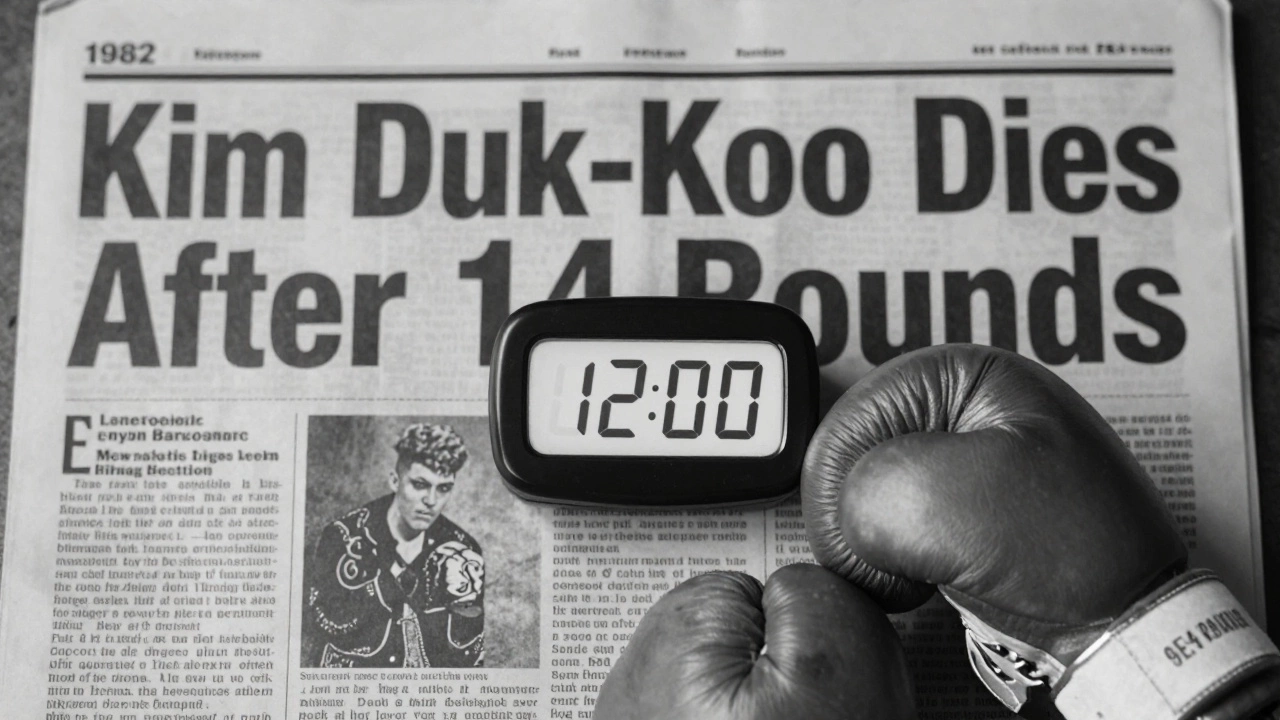
The 12-round limit wasn’t always standard. Before 1982, championship bouts could go up to 15 rounds. That changed after the tragic death of South Korean boxer Kim Duk-koo, who collapsed after a 14-round fight against Ray Mancini. His death sparked global outcry and led boxing commissions to reduce title fights to 12 rounds for safety reasons.
Today, 12 rounds is seen as the maximum physical and medical threshold. Fighters are monitored closely by ringside doctors. If a fighter can’t continue after a round due to injury or fatigue, the fight is stopped - even if it’s only the third round.
What About Non-Title Fights?
Not every boxer is fighting for a belt. Fighters building their records often start with shorter bouts. A 6-round fight is common for newcomers. It gives them experience without overextending them. As they win and climb the rankings, they’ll move to 8 or 10 rounds.
Some promotional organizations, especially in Europe and Asia, still use 10-round fights for interim titles or regional championships. These serve as stepping stones to the 12-round world title.
Can a Fight End Before the Final Round?
Yes - and it happens more often than you think. Most professional fights don’t go the distance. In 2025, over 63% of professional bouts ended before the final bell, according to data from BoxRec. Knockouts (KOs) and technical knockouts (TKOs) are the most common ways fights end early.
A TKO happens when the referee stops the fight because one fighter is taking too much punishment and can’t defend themselves. A corner might also throw in the towel. Sometimes, a fighter’s cut or injury forces the stoppage. These decisions are made to protect the athlete, not to spoil the show.

How Do Judges Score the Rounds?
Even if a fight goes all 12 rounds, it’s not about who landed the most punches. Judges score each round individually on a 10-point must system. The winner of the round gets 10 points. The loser gets 9, or sometimes 8 if they were badly outclassed. A 10-8 round means one fighter dominated so completely, the other barely survived.
At the end, the three judges add up their scores. The fighter with the most points wins. If all three agree, it’s a unanimous decision. If two agree, it’s a split decision. And if the scores are tied? That’s a draw.
What About Women’s Boxing?
Women’s boxing follows the same round structure as men’s. Title fights are 10 or 12 rounds depending on the sanctioning body. Since 2010, major organizations have aligned women’s bouts with men’s standards. The 2024 Women’s World Boxing Championships featured 12-round finals for the first time.
There’s no difference in round length or rest periods. The only distinction is weight classes - women compete in 12 divisions, while men have 17. But the rules? Identical.
How Long Does a Full Fight Last?
Let’s break it down:
- 12 rounds × 3 minutes = 36 minutes of fighting
- 11 rest periods × 1 minute = 11 minutes
- Total time on the clock: 47 minutes
But that’s just the fight. Add pre-fight introductions, medical checks, commercial breaks, and post-fight interviews, and you’re looking at 90 to 120 minutes of live broadcast time. That’s why championship fights are usually scheduled for prime time.
What’s the Longest Boxing Match in History?
The longest recorded professional fight happened in 1893. It was a bout between Andy Bowen and Jack Burke in New Orleans. The fight lasted 110 rounds - over seven hours. It ended in a draw when both fighters were too exhausted to continue. Today, that would be unthinkable. Modern regulations, medical oversight, and athlete safety standards make such marathons impossible.
Is There a Minimum Number of Rounds?
Yes. The minimum for any professional bout is four rounds. Anything shorter is considered an exhibition or a sparring session. Even in regional or low-budget promotions, four rounds is the baseline. It gives fighters enough time to show their skills and for promoters to get value from the event.
What Happens if a Fighter Is Injured Mid-Round?
If a fighter gets cut, dislocated a shoulder, or suffers another injury during a round, the referee will pause the fight. The ringside doctor has 90 seconds to assess whether the fighter can continue. If they can’t, the fight is stopped. If the injury was caused by a legal punch, the other fighter wins by TKO. If it was caused by an accidental headbutt, the fight may go to the scorecards - or be declared a no contest.
How Do Fighters Train for Different Round Lengths?
Training camps tailor conditioning to the expected fight length. A fighter preparing for a 6-round bout might focus on explosive power and recovery between rounds. Someone training for 12 rounds builds endurance - running longer distances, doing 5-minute sparring rounds, and practicing breathing techniques to conserve energy.
Many elite boxers now use heart rate monitors and lactate threshold tests to fine-tune their stamina. It’s not just about strength anymore - it’s about managing fatigue over 36 minutes of high-intensity output.
Final Thoughts
So how many rounds are in a boxing match? The answer isn’t simple. It depends on who’s fighting, where they’re fighting, and what’s at stake. But the structure is clear: 3-minute rounds, 1-minute breaks, and a maximum of 12 rounds for the biggest fights. Everything else is built around that framework.
Boxing isn’t just about punching. It’s about timing, strategy, and survival. Whether it’s a four-round debut or a 12-round war, every round matters.
How many rounds are in a professional boxing match?
Most professional boxing matches are scheduled for 10 or 12 rounds. Title fights are always 12 rounds. Non-title fights can be 4, 6, 8, or 10 rounds depending on the fighters' experience and the promotion’s rules.
How long is each round in boxing?
Each round lasts exactly three minutes. There is a one-minute rest period between rounds. This applies to both men’s and women’s professional bouts.
Why did boxing reduce from 15 to 12 rounds?
The reduction happened in 1982 after the death of boxer Kim Duk-koo following a 14-round fight. His death led to widespread calls for reform, and major boxing organizations lowered the maximum rounds to 12 to improve fighter safety.
Can a boxing match end before all rounds are completed?
Yes. Over 60% of professional fights end before the final bell due to knockouts, technical knockouts, cuts, or injuries. The referee, corner, or ringside doctor can stop the fight at any time for safety reasons.
Do women’s boxing matches have the same number of rounds as men’s?
Yes. Since the 2010s, women’s professional boxing has aligned with men’s standards. Title fights are 10 or 12 rounds, and non-title fights follow the same structure. Round length and rest periods are identical.