Running Foot Type & Shoe Matcher
Step 1: The Wet Test (Static)
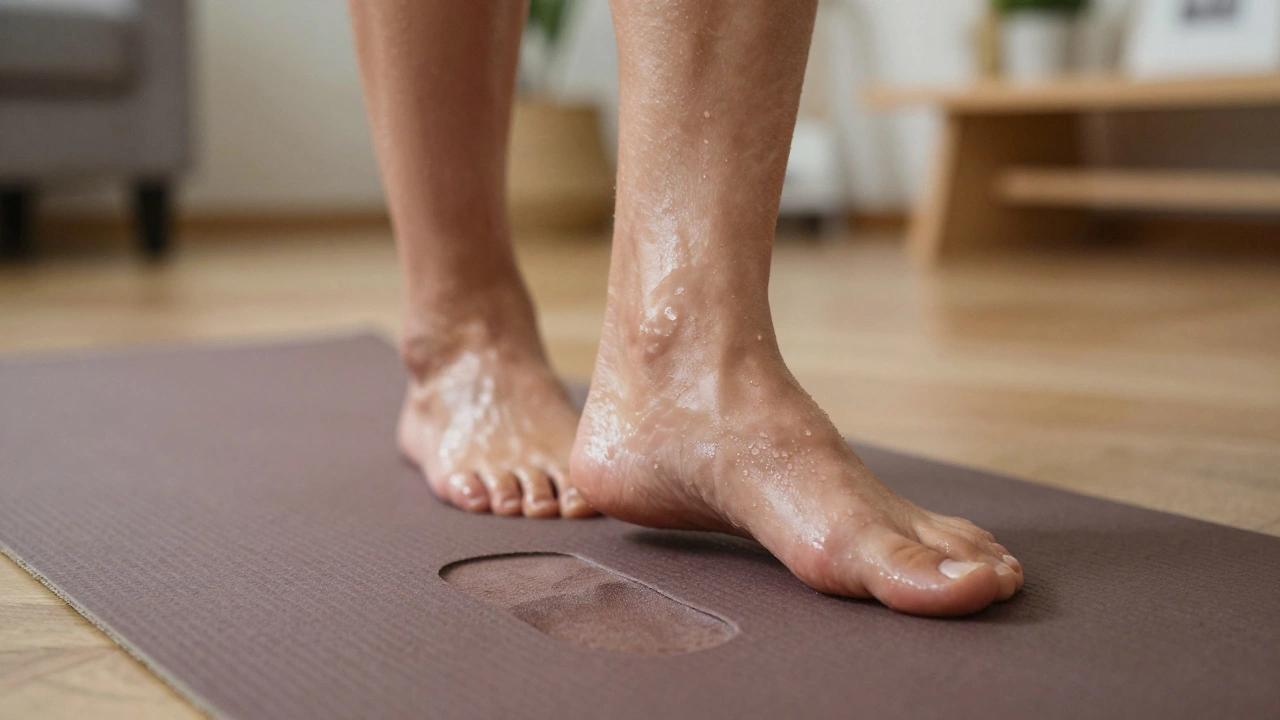
Wet your foot and step on a surface. Look at the print.
Step 2: The Wear Pattern (Dynamic)
Look at the bottom of your oldest pair of running shoes.
Analysis Result
Recommended Shoes
You’ve probably stood in a running store, watched someone film your feet from behind, and walked away confused. Or maybe you just bought a pair of expensive stability shoes because the internet said you "need support," only to develop shin splints two weeks later. The truth is, knowing your foot type isn’t about guessing which shoe looks cool. It’s about matching your biomechanics to the right technology so you can run longer without pain.
Most runners fall into three main categories based on their arch height and how their ankles move when they hit the ground. Getting this wrong doesn’t just make your runs uncomfortable; it can lead to injuries like plantar fasciitis, IT band syndrome, or stress fractures. Let’s cut through the marketing noise and figure out exactly what your feet are doing.
The Wet Test: The Quickest Way to Check Your Arch
If you want a fast, at-home answer, start with the wet footprint test. It’s not perfect, but it gives you a solid baseline for your static arch structure. Here is how you do it properly:
- Wet the sole of one foot with water.
- Step onto a piece of cardboard, dark paper, or a concrete surface that will show the print clearly.
- Stand naturally for a few seconds, then lift your foot.
- Look at the shape of the print left behind.
What you see tells you everything about your arch category:
- Flat Foot (Low Arch): If you see almost the entire sole of your foot, with very little curve on the inside, you have low arches. This usually means your foot flattens completely upon impact.
- Normal Arch (Neutral): You’ll see a clear band connecting your heel and forefoot, roughly half the width of your foot. There is a distinct curve on the inside, but it’s not exaggerated.
- High Arch: The connection between your heel and forefoot is very thin, or there might even be a gap. You’re seeing mostly the heel and the ball of the foot, with very little middle section.
This test shows your static structure-how your foot looks when you’re standing still. But running is dynamic. Your foot behaves differently when it’s moving at speed than when it’s planted on the kitchen floor. That’s why we need to look at movement next.
Understanding Pronation: How Your Foot Moves
Your arch height dictates how much your ankle rolls inward or outward when you run. This motion is called pronation. It’s a natural shock-absorbing mechanism, but too much or too little can cause problems.
| Foot Type | Pronation Style | Common Issues | Shoe Recommendation |
|---|---|---|---|
| Flat / Low Arch | Overpronation (rolls inward) | Shin splints, knee pain | Stability or Motion Control |
| Normal / Neutral Arch | Neutral Pronation | Fewer issues if fitted correctly | Neutral Cushioned |
| High Arch | Underpronation (Supination) | Ankle sprains, stress fractures | Cushioned / Flexible |
Overpronation is when the ankle collapses inward excessively after landing. This puts torque on the knee and hip. If you have flat feet, this is likely your pattern. You need shoes that resist this rolling motion.
Underpronation, also known as supination, is when the foot stays rigid and doesn't roll inward enough to absorb shock. High arches often do this. The force of impact travels straight up your leg instead of being distributed. You need shoes that bend easily and cushion well.
The Wear Pattern Test: What Your Old Shoes Reveal
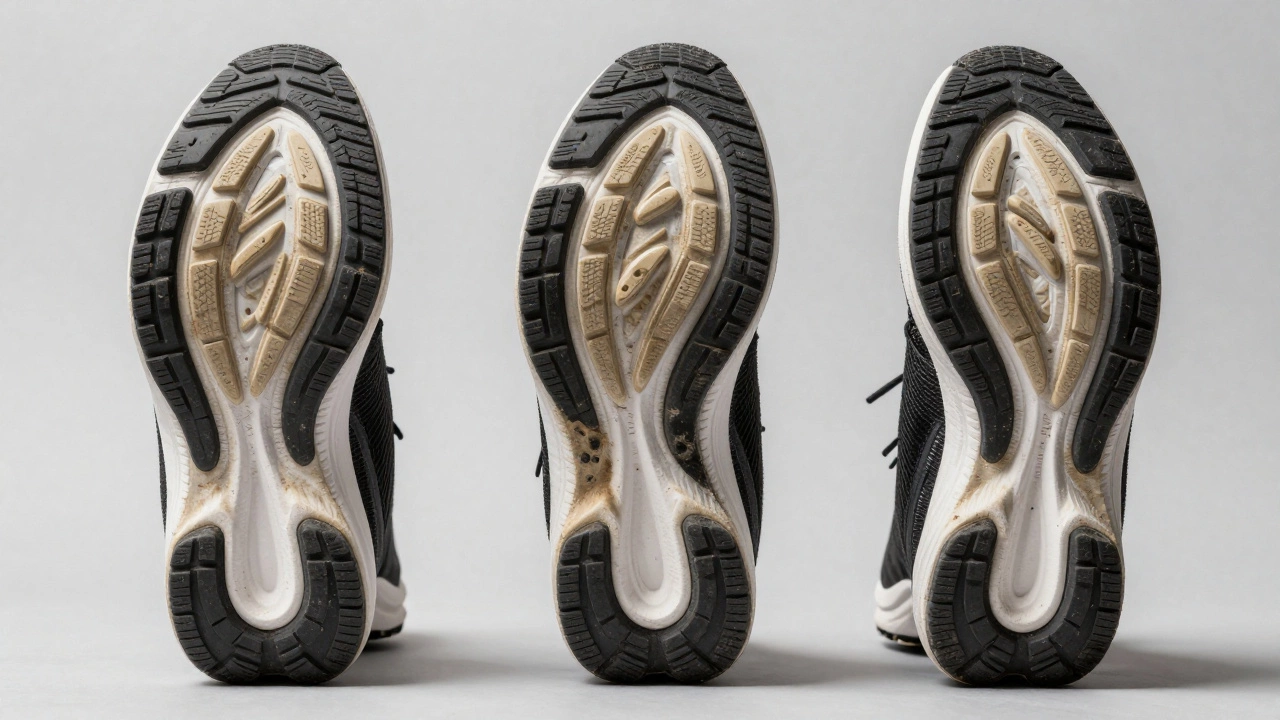
If you already own a pair of running shoes with more than 300 miles on them, flip them over. Look at the outsole tread. Where is the rubber worn down?
- Even Wear: If the wear is spread evenly across the heel and midfoot, you are likely a neutral runner. Your body absorbs shock efficiently.
- Inner Edge Wear: If the inside edge of the heel and forefoot is significantly more worn than the outside, you are overpronating. Your foot is collapsing inward.
- Outer Edge Wear: If the outer edges are heavily worn while the inner side looks brand new, you are underpronating. Your foot is staying stiff and hitting on the outside.
This is one of the most reliable indicators because it reflects real-world usage. However, be careful not to confuse normal wear with pathological wear. All shoes wear out eventually. Look for asymmetry-if one side is noticeably smoother than the other, that’s your clue.
The Video Gait Analysis: Seeing Yourself Run
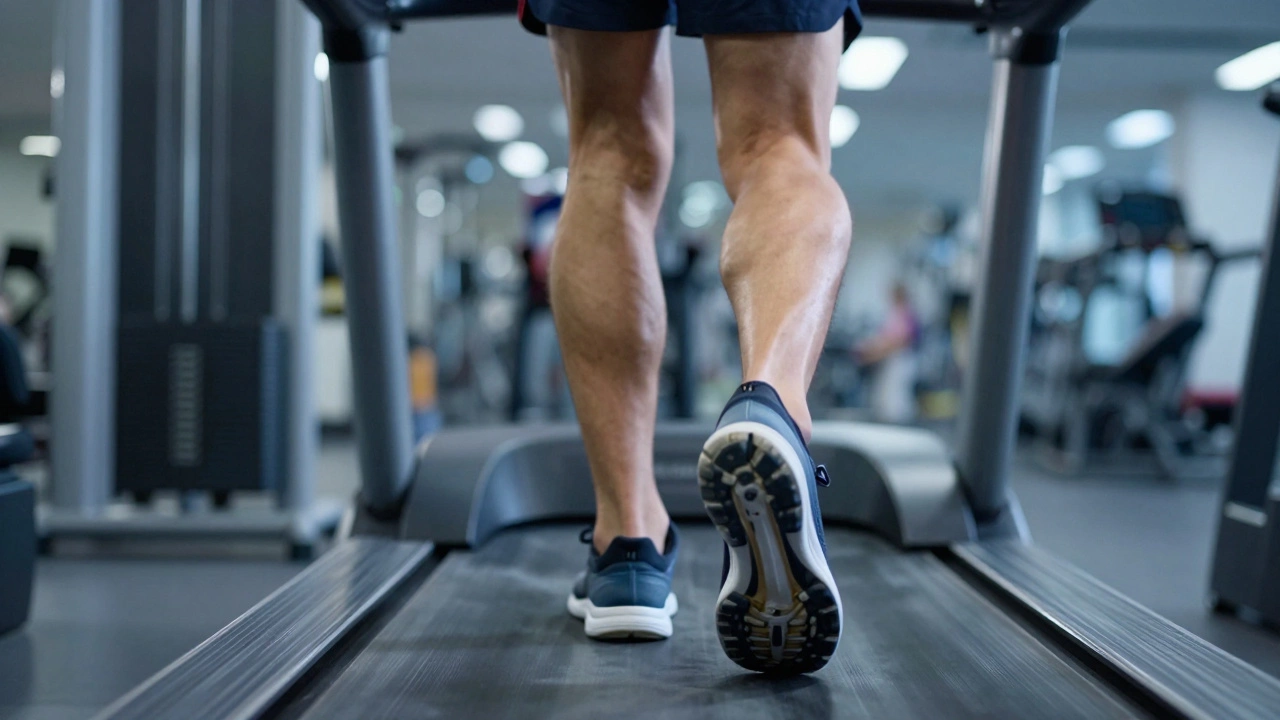
The wet test and wear patterns give you hints, but video gives you proof. You don’t need a fancy lab. Just ask a friend to record you running on a treadmill or a flat sidewalk from behind. Focus on your ankles and knees.
Watch the footage in slow motion. Pay attention to the moment your heel strikes the ground and transitions to toe-off.
- Neutral Gait: Your ankle stays relatively vertical. Your knee tracks straight over your second toe. There is a slight, controlled inward roll, but it doesn’t collapse.
- Overpronation: Watch your ankle. Does it buckle inward? Does your knee cave toward the other knee? If yes, you are overpronating. This is common in heavier runners or those with weak glutes.
- Underpronation: Your ankle leans outward. Your knee may also track outward. You look stiff and bouncy, lacking the smooth fluidity of a neutral stride.
This visual check is crucial because some people have high arches but still overpronate due to muscle weakness. Conversely, some flat-footed runners have strong calves that prevent excessive collapse. Biomechanics are complex, and structure doesn’t always equal function.
Choosing the Right Shoe Based on Your Type
Now that you know your type, how do you pick a shoe? Don’t get hung up on brands. Look for specific features.
If you are an Overpronator with flat feet and inward rolling, look for stability shoes. These have a denser foam wedge on the inside of the midsole (often called a medial post) to stop your foot from collapsing. Examples include the Brooks Adrenaline GTS or Asics GT-2000. If your overpronation is severe, you might need motion control shoes, which are stiffer and heavier.
If you are a Neutral Runner with normal arches and efficient shock absorption, you have the widest choice. Go for neutral cushioned shoes. They offer comfort without unnecessary restrictions. Brands like Hoka Clifton, Nike Pegasus, or Saucony Ride are great starting points. You want flexibility and bounce.
If you are an Underpronator with high arches and outward leaning, avoid stability shoes. They will make your foot feel even stiffer. Instead, choose maximalist or highly cushioned neutral shoes. You need extra material to absorb the shock your foot isn’t handling naturally. Look for soft foams and flexible uppers. The Hoka Bondi or New Balance Fresh Foam More are good options.
Common Mistakes to Avoid
Even with the right knowledge, many runners make costly errors.
- Ignoring Muscle Strength: Shoes support your feet, but muscles stabilize your joints. If you have weak glutes or core, no shoe will fix your form entirely. Incorporate strength training.
- Buying Too Tight: Always buy running shoes a half-size larger than your street shoes. Your feet swell during long runs. A thumb’s width of space in front of your toes is essential.
- Sticking to One Brand Forever: Even if a shoe works, technology changes. Try different models every 500-800 miles to keep your muscles adapting.
- Assuming Flat Feet Are Bad: Many elite distance runners have flat feet. If you run injury-free in neutral shoes, don’t switch to stability shoes just because a salesperson says you "should."
Your foot type is a starting point, not a life sentence. Listen to your body. If your shins hurt, try a stability shoe. If your ankles ache, try more cushioning. The best data comes from your own experience on the road.
Can my foot type change over time?
Yes, your foot mechanics can change due to aging, weight gain, pregnancy, or injury. Arches can flatten slightly as ligaments loosen with age. If you notice new pains or changes in your gait, re-evaluate your foot type and consider getting a professional gait analysis.
Do I need custom orthotics if I have flat feet?
Not necessarily. Most runners with flat feet can manage with over-the-counter stability shoes. Custom orthotics are generally reserved for severe structural issues, chronic pain, or specific medical conditions diagnosed by a podiatrist. Start with proper footwear before investing in inserts.
How often should I replace my running shoes?
Typically every 500 to 800 kilometers (300-500 miles). The foam loses its resilience long before the outsole wears out. If you start feeling unexplained joint pain, your shoes might be dead even if they look fine.
Is it better to run barefoot to strengthen my feet?
Barefoot running can strengthen foot muscles, but transitioning too quickly leads to injuries like Achilles tendonitis or stress fractures. If you want to try it, do it gradually on short distances and ensure you have strong calf and foot muscles first. It is not suitable for everyone.
Does my weight affect my foot type classification?
Weight affects how much your foot compresses under load. Heavier runners are more likely to overpronate because the force on their arches is greater. Lighter runners might appear to have higher arches dynamically even if their static arch is moderate. Consider both structure and load when choosing shoes.