Belly Fat Loss Calculator
Calculate your daily protein targets and caloric deficit based on the science-backed plan for reducing overall body fat.
Your Daily Targets
Based on a moderate 300-500 calorie deficit and 1.6-2.2g protein per kg of body weight to preserve muscle mass while losing fat.
You walk into the gym, head straight for the treadmill or the ab machines, and spend forty minutes grinding away. You’re sweating, you’re tired, and you feel like you’ve earned a reward. But when you step on the scale or look in the mirror a week later, that stubborn layer around your midsection hasn’t budged an inch. It’s frustrating. It feels unfair. And honestly? It’s not your fault.
The fitness industry has sold us a lie for decades: the idea that if you just do enough crunches, the fat on your belly will disappear. This concept is called spot reduction, which is the false belief that you can lose fat from a specific body part by exercising that muscle group. Here is the hard truth: you cannot choose where your body burns fat first. Your genetics decide that. What you *can* control is how much total body fat you carry. To get rid of belly fat, you need to lower your overall body fat percentage. And the gym is the best place to do it-if you stop treating it like an ab factory and start treating it like a metabolic engine.
Why Crunches Won't Save You (And What Will)
Let’s clear the air about abdominal exercises. Doing sit-ups, leg raises, or hanging knee tucks builds the muscles underneath the fat. Think of it like building a bigger engine under the hood of a car. If the hood is closed (covered by fat), no one sees the engine. You might have six-pack abs right now, but they’re hidden under a layer of adipose tissue.
To reveal them, you need to create a caloric deficit, meaning you consume fewer calories than your body burns in a day. The gym helps you achieve this in two ways: by burning calories during the workout and by increasing your metabolism so you burn more calories while sitting on the couch.
The most effective way to maximize calorie burn isn't endless cardio. It’s resistance training. Muscle tissue is metabolically expensive. Your body has to work harder to keep muscle alive than it does to keep fat alive. By building lean mass through compound movements, you raise your basal metabolic rate (BMR). This means you become a machine that burns energy 24/7, not just during your hour at the gym.
The Compound Movement Strategy
If you want to target belly fat, you need to recruit as many muscle fibers as possible in every rep. Isolation exercises-like bicep curls or calf raises-are great for shaping specific muscles, but they don’t spike your heart rate or demand enough energy to trigger significant fat loss. Instead, focus on compound lifts, which are exercises that involve multiple joints and muscle groups simultaneously.
Here are the four pillars of a fat-loss-focused gym routine:
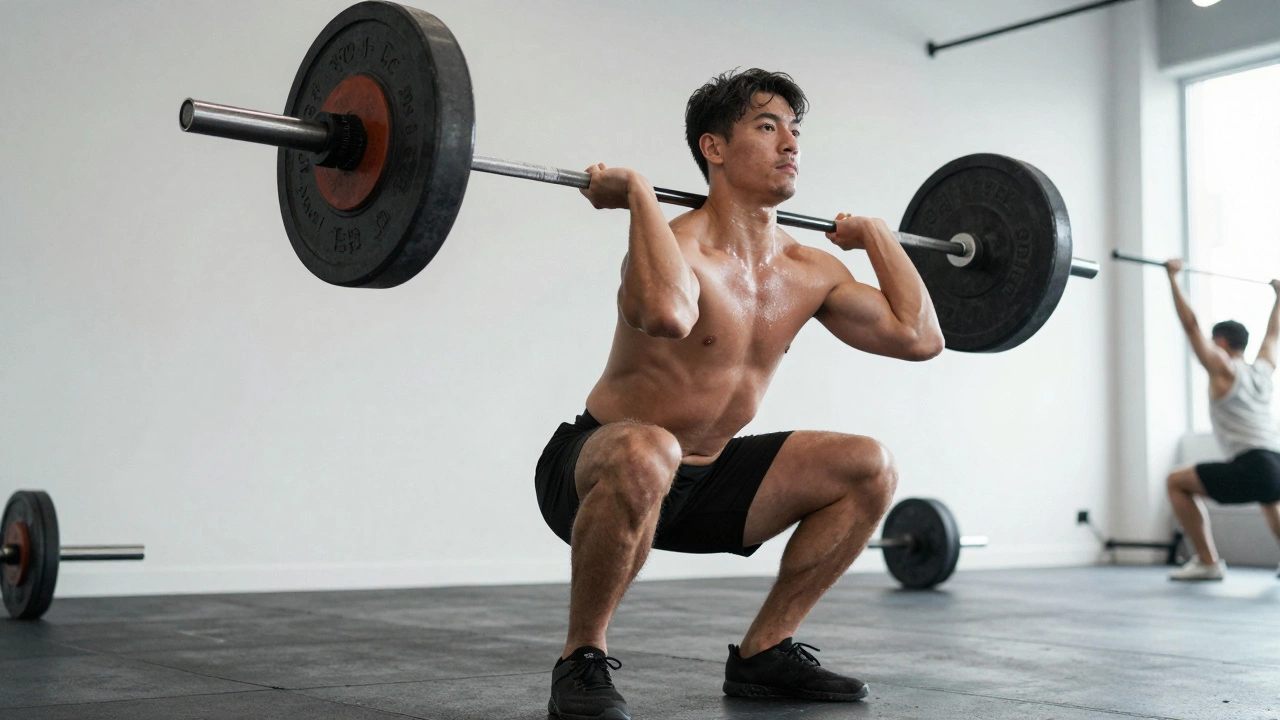
- Squats: Whether you use a barbell, dumbbells, or a goblet hold, squats engage your quads, glutes, hamstrings, and yes, your core. Your abs have to work overtime to stabilize your spine as you lift heavy weight. A heavy squat session can burn hundreds of calories and elevate your metabolism for hours afterward due to Excess Post-exercise Oxygen Consumption (EPOC).
- Deadlifts: Often called the king of all exercises, deadlifts hit your posterior chain (back, glutes, hamstrings) and require immense core tension. Proper form here forces your transverse abdominis-the deep corset-like muscle that holds your gut in-to fire continuously.
- Overhead Presses: Pushing weight overhead requires stability from your entire torso. It’s not just shoulders working; your abs are bracing against the load to prevent your back from arching.
- Rows and Pull-Ups: A strong back pulls your shoulders back, improving posture. Poor posture makes your belly stick out even if you’re skinny. Fixing your stance instantly makes your midsection look flatter.
Aim for three to four sets of eight to twelve reps for these movements. Rest for 60 to 90 seconds between sets to keep your heart rate elevated. This approach combines strength training with metabolic conditioning, giving you the best of both worlds.
High-Intensity Interval Training (HIIT) vs. Steady-State Cardio
Cardio has a bad rap in the lifting community, but it’s a powerful tool for fat loss if used correctly. The debate usually centers on HIIT versus steady-state cardio (like jogging at a constant pace). For belly fat specifically, HIIT often comes out on top.
HIIT involves short bursts of intense activity followed by brief recovery periods. Why? Because it triggers that EPOC effect I mentioned earlier. After a HIIT session, your body continues to burn calories at a higher rate as it repairs itself and replenishes oxygen stores. A twenty-minute HIIT session can sometimes burn more total calories (including post-workout burn) than a forty-five-minute jog.
Try this simple gym-based HIIT circuit twice a week:
- Treadmill Sprints: Walk for 1 minute, sprint at maximum effort for 30 seconds. Repeat for 15 minutes.
- Rowing Machine Intervals: Row hard for 20 seconds, easy for 40 seconds. Repeat for 10 minutes.
- Kettlebell Swings: Perform explosive swings for 45 seconds, rest for 15 seconds. Do 8 rounds.
Don’t neglect steady-state cardio entirely. Low-intensity steady-state (LISS) cardio, like a brisk 30-minute walk on an incline treadmill, is excellent for active recovery. It burns calories without stressing your central nervous system, allowing you to lift heavier weights on other days. Use LISS on rest days or after your main workout if you have the energy.
The Core Work That Actually Matters
I said crunches won’t burn the fat, but that doesn’t mean you should ignore your core. A strong core improves your performance in squats and deadlifts, which in turn helps you burn more calories. However, you need to train your core for stability, not just flexion.
Swap out your standard sit-ups for these three moves:
- Planks: Simple, but effective. Hold a forearm plank for 30-60 seconds. Focus on squeezing your glutes and pulling your belly button toward your spine. If this gets too easy, try a side plank to target the obliques (the muscles on your sides).
- Farmers Carries: Pick up two heavy dumbbells or kettlebells and walk across the gym. Keep your chest up and your core tight. This teaches your body to resist rotation and maintain posture under load. It’s functional strength that translates to real life.
- Cable Woodchoppers: Stand sideways to a cable machine and pull the handle diagonally across your body. This mimics rotational movements and strengthens the obliques without thickening the waistline (a common fear among beginners).
Add these at the end of your workout. Two or three sets each. They won’t melt the fat, but they will ensure that when the fat does come off, there’s a solid foundation underneath.
Nutrition: The 80% Rule
You can train like an Olympic athlete, but if you eat poorly, you will not lose belly fat. Nutrition accounts for roughly 80% of your results. The gym is the catalyst; food is the fuel.
To lose fat, you must be in a caloric deficit. But don’t starve yourself. Extreme deficits slow down your metabolism and cause muscle loss, making you look "skinny fat" rather than toned. Aim for a moderate deficit of 300-500 calories below your maintenance level.
Prioritize protein. Protein has a high thermic effect, meaning your body burns more calories digesting it than it does carbs or fats. Plus, protein preserves muscle mass while you’re losing weight. Aim for 1.6 to 2.2 grams of protein per kilogram of body weight. Chicken breast, lean beef, fish, eggs, Greek yogurt, and tofu are excellent sources.
Watch out for liquid calories. Soda, juice, and fancy coffee drinks add hundreds of empty calories without making you feel full. Stick to water, black coffee, or unsweetened tea. Alcohol is another major culprit. It pauses fat burning because your liver prioritizes breaking down alcohol over burning fat. Cut back on beer and wine, especially around your workouts.

Sample Weekly Gym Schedule
Consistency beats intensity. You don’t need to kill yourself every day. You need a sustainable plan. Here is a balanced weekly schedule designed to target belly fat by maximizing fat burn and preserving muscle:
| Day | Focus | Activity |
|---|---|---|
| Monday | Strength (Lower Body) | Squats, Lunges, Leg Press + 10 min HIIT |
| Tuesday | Strength (Upper Body) | Bench Press, Rows, Overhead Press + Planks |
| Wednesday | Active Recovery | 30-min brisk walk or light yoga |
| Thursday | Strength (Full Body) | Deadlifts, Pull-Ups, Dumbbell Thrusters |
| Friday | Cardio & Core | 20-min HIIT Circuit + Cable Woodchoppers/Farmers Carry |
| Saturday | Fun Activity | Hiking, swimming, sports, or long bike ride |
| Sunday | Rest | Complete rest, meal prep for the week |
This structure ensures you hit every major muscle group, keep your heart rate variable, and allow time for recovery. Remember, muscles grow and fat burns while you rest, not while you train.
Common Pitfalls to Avoid
Even with the right plan, small mistakes can derail your progress. Here are the most common traps:
- Overtraining: Going to the gym every single day without rest increases cortisol, a stress hormone that can promote fat storage in the abdominal area. Sleep and rest are non-negotiable.
- Ignoring Sleep: Poor sleep disrupts hunger hormones (ghrelin and leptin), making you crave sugary, fatty foods. Aim for 7-9 hours of quality sleep.
- Tracking Only Weight: The scale lies. You might be losing fat but gaining muscle, resulting in the same weight but a smaller waistline. Use a tape measure to track your waist circumference. Take photos every two weeks. These metrics tell the real story.
- Being Too Impatient: Belly fat is often the last to go. It takes time. Consistency over months, not days, is what changes your physique.
Targeting belly fat at the gym isn’t about finding a magic exercise. It’s about using the gym to build a metabolically active body and pairing that with smart nutrition. Stop doing endless crunches. Start lifting heavy, moving fast, and eating well. The results will follow.
Can I lose belly fat without dieting?
It is extremely difficult. While exercise burns calories, it is easy to undo that effort with poor eating habits. You can create a slight deficit through movement alone, but combining exercise with a moderate caloric deficit is the fastest and most sustainable way to lose belly fat.
How long does it take to see results?
With consistent training and proper nutrition, most people notice changes in their waistline within 4 to 8 weeks. Visible six-pack abs typically require a body fat percentage of 10-12% for men and 16-20% for women, which may take several months to achieve depending on your starting point.
Is morning fasting cardio better for belly fat?
Fasted cardio may slightly increase fat oxidation during the workout, but studies show that total daily energy expenditure matters more. If you burn the same amount of calories throughout the day, the timing of your meals has minimal impact on long-term fat loss.
Should I avoid carbohydrates to lose belly fat?
No. Carbohydrates are essential for fueling intense workouts. Instead of cutting them out completely, focus on complex carbs like oats, brown rice, and sweet potatoes, and reduce refined sugars and processed grains. Timing carbs around your workouts can optimize performance and recovery.
Does stress really cause belly fat?
Yes. Chronic stress elevates cortisol levels, which can lead to increased appetite and preferential fat storage in the abdominal area. Managing stress through sleep, relaxation techniques, and balanced training is crucial for reducing belly fat.