Major Equipment Identifier
Select a sport and an item to check its classification according to standard sporting regulations and safety guidelines.
Classification Result
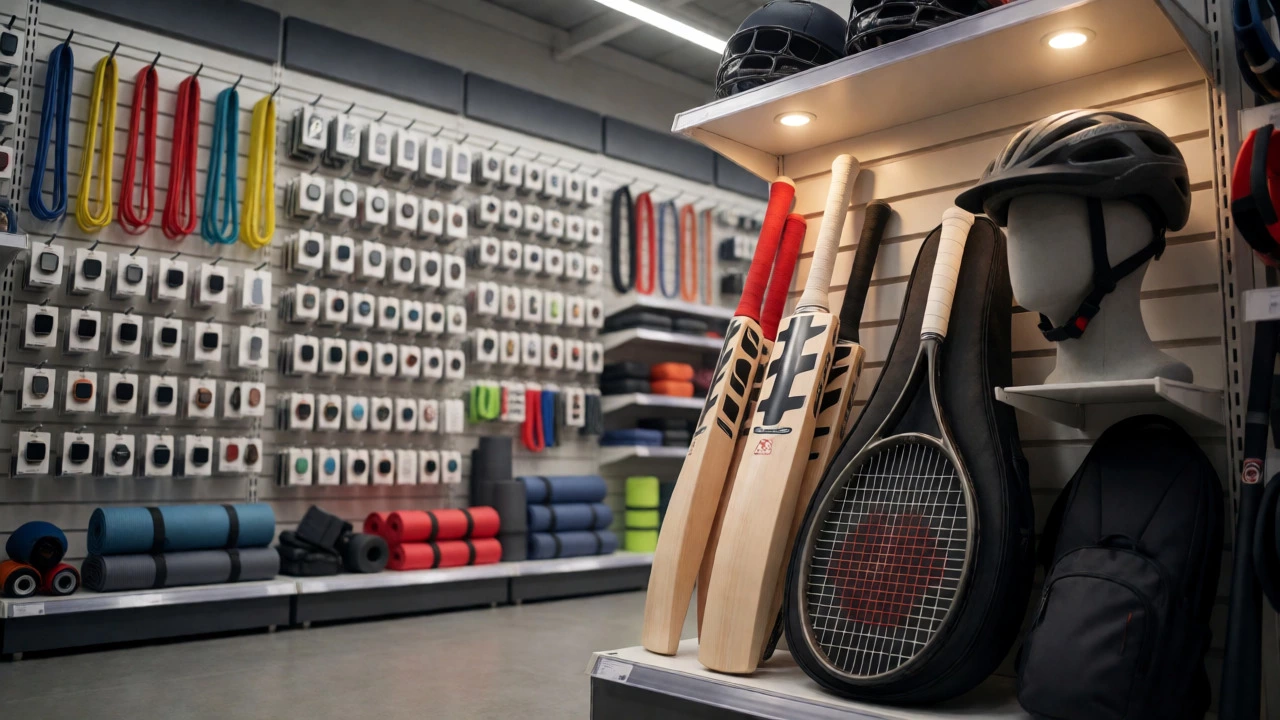
You walk into a sports store or open an online catalog, and suddenly you're drowning in options. There are shin guards, resistance bands, yoga mats, protein shakers, and smartwatches. It’s easy to feel overwhelmed by the sheer volume of "stuff" marketed as essential for your training. But here is the hard truth: not all gear is created equal. Some items change the game entirely; others just take up space in your bag.
This brings us to a critical distinction that every athlete, coach, and weekend warrior needs to understand: the difference between major equipment and minor accessories. Knowing this isn't just about saving money-it's about safety, performance, and legality. If you show up to a cricket match without a bat, you can't play. That’s major equipment. If you forget your wristband, you can still hit a six. That’s minor. Understanding this hierarchy helps you prioritize what to buy first, how to maintain it, and when it’s time to replace it.
Defining Major Equipment vs. Minor Accessories
At its core, Major Equipment is defined as any apparatus, device, or structure that is indispensable for the conduct of a sport or physical activity. Without it, the specific activity cannot be performed according to standard rules, or it becomes unsafe. Think of it as the hardware of sport. You need the bike to cycle. You need the racket to play tennis. You need the weights to lift.
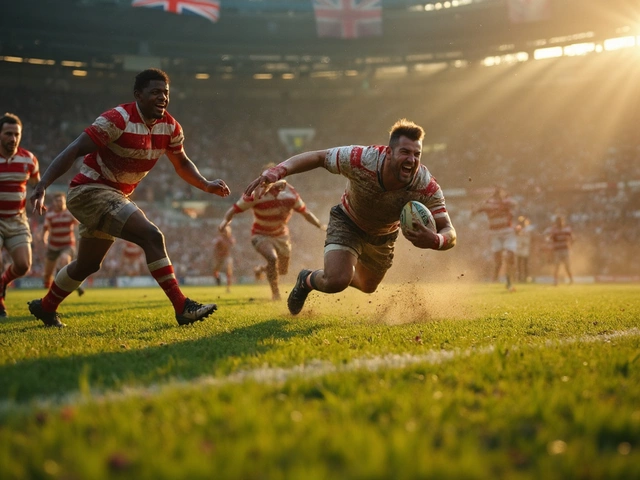
In contrast, minor accessories-often called consumables or personal protective equipment (PPE) depending on the context-enhance performance, comfort, or hygiene but do not define the activity itself. A mouthguard is crucial for rugby safety, but technically, you could run a practice session without one if you’re careful (though you shouldn’t). However, you cannot play rugby without a ball. The ball is major equipment; the mouthguard is essential safety gear, which often gets grouped into "equipment" broadly, but functionally serves a different role.
The line can blur depending on the level of play. For a casual jogger, running shoes might seem like an accessory compared to bare feet. But for anyone serious about joint health and performance, they are major equipment because they enable the safe repetition of the movement at high impact. In professional contexts, governing bodies like FIFA or World Rugby have strict specifications for what counts as approved major equipment. If your ball doesn’t meet the pressure standards, it’s not just bad gear-it’s illegal equipment.
The Three Pillars of Major Equipment
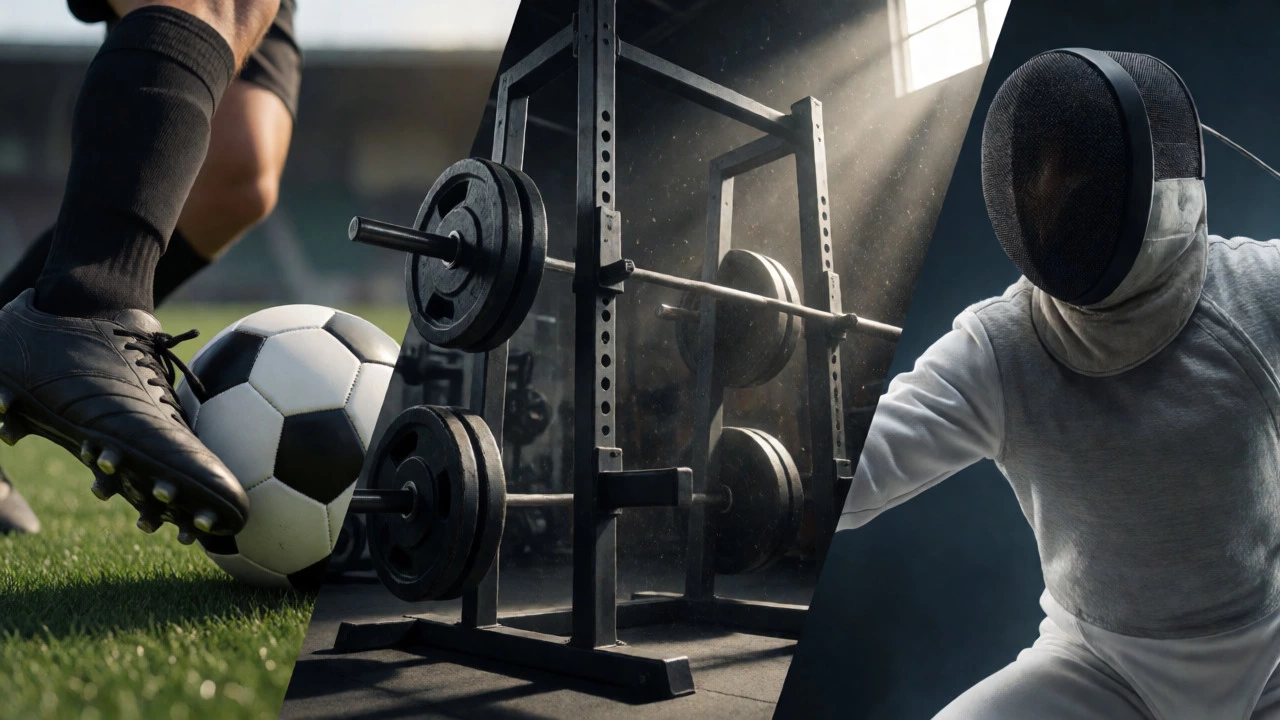
To make sense of the vast world of sports gear, we categorize major equipment into three distinct pillars. Each pillar serves a different purpose in the ecosystem of physical activity.
- Game-Specific Apparatus: This is the most obvious category. These are the tools required to interact with the game object. Examples include soccer balls, basketball hoops, tennis rackets, golf clubs, and cricket bats. Without these, the sport literally does not exist. They are subject to rigorous regulation regarding size, weight, and material composition.
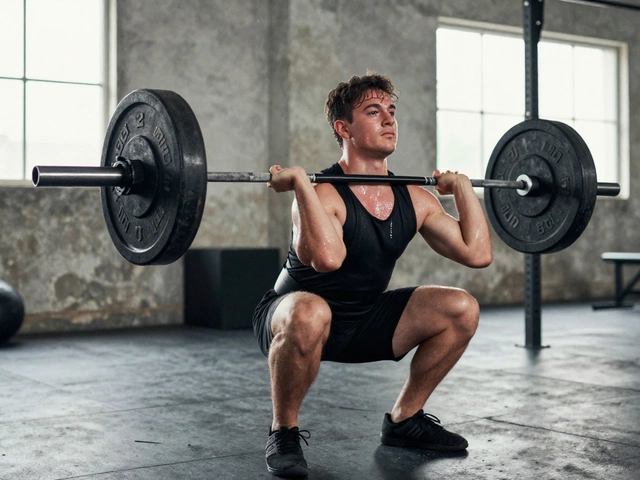
- Training Infrastructure: This refers to large-scale items found in gyms or training facilities. Weight racks, squat stands, rowing machines, and treadmills fall here. While you can exercise without them (bodyweight exercises), they are considered major equipment for structured strength and conditioning programs because they provide progressive overload capabilities that bodyweight alone cannot easily replicate.
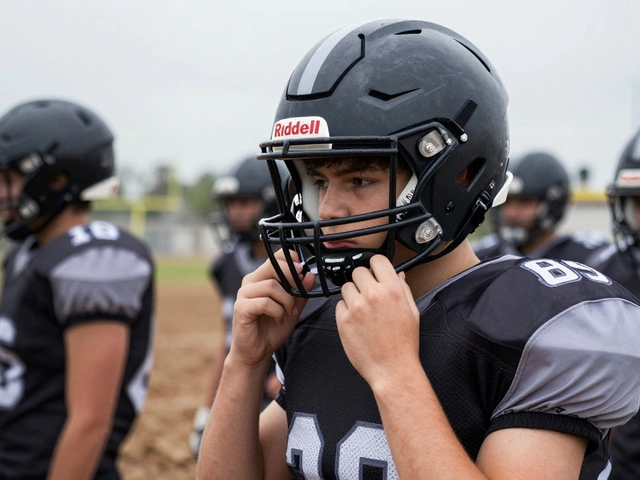
- Protective Frameworks: In contact sports, certain protective items are mandatory for participation. Helmets in cycling or American football, face masks in fencing, and chest protectors in baseball are not optional add-ons. They are major equipment because their absence disqualifies a player from competing safely. Governing bodies mandate their use, making them legally equivalent to the bat or the ball.
Understanding these pillars helps you budget correctly. Game-specific apparatus usually has a shorter lifespan due to wear and tear. Training infrastructure is a long-term investment. Protective frameworks require regular inspection for structural integrity.
How to Identify Essential Gear for Your Sport
Not sure what counts as major equipment for your chosen activity? Use this simple heuristic: Ask yourself, "Can I perform the primary action of this sport without it?"
If you answer no, it’s major equipment. Let’s test this with a few scenarios. Can you swim laps without goggles? Yes, but it’s uncomfortable and potentially harmful to your eyes over time. So, while goggles are highly recommended, they aren't strictly "major" in the same way a swimsuit is (which defines the attire rules) or a pool lane rope (which defines the environment). However, in competitive swimming, caps and goggles are often mandated, shifting them toward major status for competition.
Consider rock climbing. You can boulder (climb short routes without ropes) without a harness. But for lead climbing, the harness, rope, and belay device are non-negotiable. They are major equipment because they prevent fatal falls. The chalk bag? Minor accessory. It improves grip but won’t save your life.
Here is a breakdown of common sports and their undisputed major equipment:
| Sport | Primary Game Object | Mandatory Protective Gear | Infrastructure Requirement |
|---|---|---|---|
| Soccer | Ball (Size 5) | Shin Guards | Goals, Pitch Markings |
| Tennis | Racket & Ball | None (Non-contact) | Net, Court Surface |
| Cycling | Bicycle | Helmet (Legal/Safety) | Road/Track, Bike Rack |
| Weightlifting | Barbell & Plates | Lifting Belt (Optional but common) | Squat Rack, Bench |
| Cricket | Bat & Ball | Helmet, Pads, Gloves | Pitch, Stumps |
Notice how the requirements shift based on risk and complexity. Soccer requires minimal personal gear beyond shin guards because the impact is lower than in cricket, where a hard ball traveling at speed necessitates heavy padding. This contextual definition is key. What is major in one discipline may be irrelevant in another.
Material Science and Longevity
Once you’ve identified your major equipment, you need to know how long it lasts. Unlike minor accessories, which you might replace annually, major equipment represents a significant capital expenditure. Therefore, understanding material science saves you money.
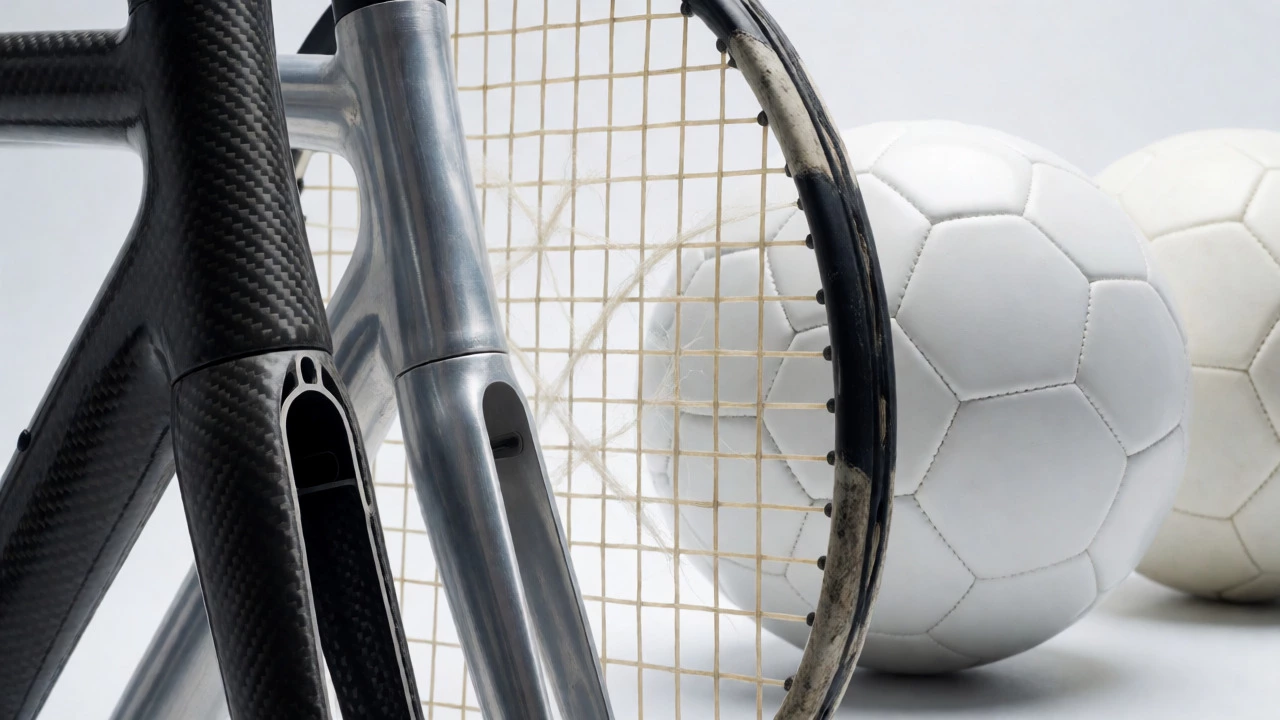
Take carbon fiber versus aluminum frames in cycling. Aluminum is durable, cheap, and forgiving. Carbon fiber is lighter, stiffer, and more expensive, but it is susceptible to impact damage that isn’t always visible. If you crash your carbon bike, you must inspect it closely. A hairline crack can compromise structural integrity under load. Aluminum bends; carbon breaks. This knowledge dictates your maintenance routine.
Similarly, consider composite materials in tennis rackets. Modern rackets use graphite composites for power and control. Over time, the resin matrix degrades, especially if exposed to extreme temperatures (like leaving a racket in a hot car). A "dead" racket loses energy transfer efficiency. You won’t notice it day-to-day, but after two years of heavy play, the equipment no longer performs to spec. Replacing it isn't vanity; it’s maintaining performance standards.
For team sports, the lifespan of the ball is critical. Leather balls degrade faster than synthetic ones in wet conditions. If you play soccer in Adelaide during winter, a high-quality synthetic leather ball will outlast a traditional stitched leather ball by months. This is why professional leagues switch balls based on weather and surface type. The "major" aspect here is ensuring the ball meets bounce and weight regulations throughout the season.
Regulatory Standards and Certification
If you compete in organized leagues, your major equipment must pass regulatory checks. This is where terms like CE marking, ASTM certification, or ISO standards come into play. These aren't just marketing stickers; they indicate that the equipment has been tested for safety and performance.
For example, helmets must meet specific impact absorption standards. A helmet certified by Snell Memorial Foundation undergoes more rigorous testing than one that only meets basic DOT standards for motorcycles. Using uncertified gear in a sanctioned event can lead to disqualification. Worse, if you get injured wearing substandard gear, you might find your insurance claim complicated because you weren't using "approved" major equipment.
Governing bodies also regulate dimensions. A basketball rim must be exactly 10 feet high. A netball post must be 3.05 meters. Deviations affect gameplay fairness. When buying home gym equipment, check if it mimics commercial specs. A cheap treadmill with a motor rated for light jogging might fail under sprint intervals. Always check the continuous duty horsepower rating, not just the peak power, to ensure it qualifies as reliable major equipment for your intensity levels.
Care and Maintenance Protocols
Maintaining major equipment extends its life and ensures safety. Neglect leads to failure, and failure in major equipment can be dangerous.
Start with cleaning. Mud and grit act as abrasives. After playing soccer, wipe down your boots. For cycling, clean the drivetrain regularly to prevent chain wear. A worn chain skips gears and stresses the cassette, turning a $20 part replacement into a $200 repair. This is a classic example of poor maintenance escalating costs.
Storage matters too. Store rubber-based equipment, like resistance bands or yoga mats, away from direct sunlight. UV radiation breaks down polymer chains, causing cracking and loss of elasticity. Hang jerseys and pads to air dry completely before storing to prevent mold and odor buildup, which can degrade fabric fibers over time.
Regular inspections are vital. Before every use, check your climbing rope for sheath damage. Inspect your tennis racket strings for tension loss. Test your bicycle brakes for responsiveness. Create a monthly checklist for your major equipment. Treat it like a vehicle service schedule. Small issues caught early are cheap fixes; ignored issues become hazards.
Common Myths About Sports Gear
Let’s bust a few myths that confuse buyers.
Myth 1: Expensive means better. Not always. A $300 running shoe might offer marginal gains over a $100 pair for a beginner. The "best" major equipment is the one that fits your biomechanics and usage frequency. A pro-level racket is useless if your technique can't exploit its stiffness.
Myth 2: All protective gear is optional. As discussed, in many sports, it’s mandatory. Even if not legally required, skipping a mouthguard in hockey or lacrosse risks dental trauma that costs thousands in repairs. The gear pays for itself after one prevented injury.
Myth 3: One size fits all. Major equipment must be sized correctly. A bicycle frame that’s too large causes back pain and poor handling. A baseball glove that’s too big hinders control. Sizing charts are guidelines, but trying gear on is essential. Fit determines function.
Investing Wisely in Your Kit
When building your sports kit, prioritize major equipment first. Buy the best quality you can afford for the items that define the activity. Then, spend less on accessories. For instance, invest in a high-quality weight bench rather than premium lifting straps. The bench supports hundreds of pounds of load repeatedly; the straps assist grip. The bench wears out slower but bears more responsibility.
Consider the total cost of ownership. A cheap tent for camping might leak after one storm, forcing a replacement. A mid-range tent lasts seasons. Calculate cost per use. If you play tennis twice a week, a $200 racket used for two years costs roughly $4 per session. That’s reasonable value. Factor in maintenance costs too. Some equipment requires specialized care products, adding to the long-term expense.
Finally, stay updated. Technology evolves. New materials emerge. Regulations change. Subscribe to newsletters from governing bodies or reputable review sites. Being informed prevents you from buying obsolete gear. For example, knowing that certain foam midsoles compress permanently after 500 miles helps you plan replacements before performance drops.
By focusing on major equipment, you build a foundation for sustainable, safe, and enjoyable physical activity. You cut through the noise of marketing hype and focus on what truly enables your sport. Whether you’re hitting the courts in Melbourne or the trails in the Flinders Ranges, knowing your gear makes you a smarter athlete.
Is clothing considered major equipment?
Generally, no. Clothing is classified as apparel or minor accessories unless it serves a specific functional role mandated by rules, such as compression garments for medical reasons or specific uniforms for team identification. However, footwear is often treated as major equipment due to its critical role in performance and injury prevention.
What happens if my major equipment fails during a game?
Rules vary by sport. In soccer, if the ball bursts, play stops and a new one is introduced. In tennis, if a racket breaks, you must stop play immediately and retrieve a spare; you cannot continue with broken strings. Always carry spares for critical items like balls, strings, or batteries for electronic devices.
Do I need certified helmets for recreational cycling?
While laws vary by region, using a certified helmet (e.g., AS/NZS 2063 in Australia) is strongly recommended even for recreational riders. It ensures the helmet has passed impact tests. Uncertified novelty hats offer little protection and increase liability in case of accidents.
How often should I replace my running shoes?
Typically every 500-800 kilometers or 6-12 months, whichever comes first. The midsole foam loses cushioning properties over time, even if the outsole looks fine. Continuing to use degraded shoes increases the risk of joint stress injuries.
Are fitness trackers considered major equipment?
No, they are minor accessories. They provide data feedback but are not required to perform the physical activity. You can run, cycle, or swim effectively without a tracker, whereas you cannot cycle without a bike.