Sports Equipment Material Analyzer
Equipment Configuration
Analysis Results
Configure your preferences and click 'Analyze' to see recommended materials.
Have you ever picked up a tennis racket or held a golf club and wondered why it feels so light yet incredibly strong? It’s not magic. It’s chemistry and engineering working together. The stuff we use to play sports has changed drastically over the last few decades. We used to rely on wood, leather, and steel. Today, high-performance gear is built from advanced composites, specialized alloys, and engineered plastics. Understanding what these items are made of helps you choose better gear and understand why some equipment costs a fortune while other pieces sit in the bargain bin.
The shift in materials isn't just about making things lighter. It’s about controlling how energy moves through an object. When you hit a ball, swing a bat, or pedal a bike, the material determines how much power you keep and how much gets lost as heat or vibration. Let's look at the primary building blocks of modern sports gear.
The Rise of Carbon Fiber and Composites
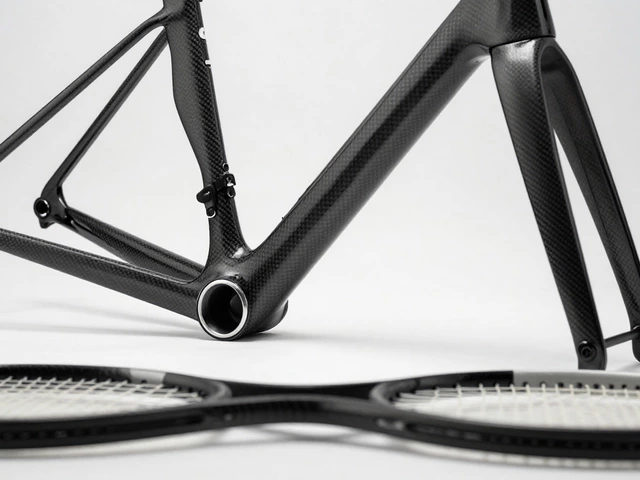
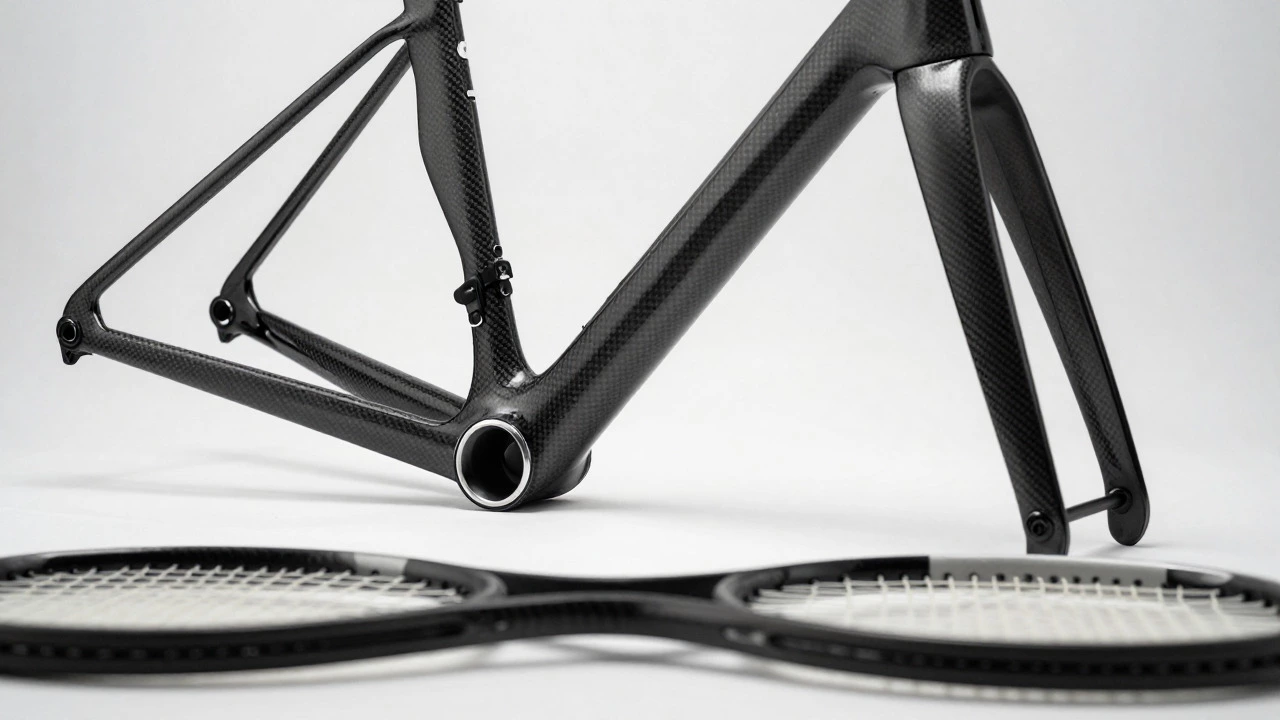
If you buy premium gear today, you will almost certainly encounter carbon fiber. This material consists of thin strands of carbon woven into fabric and hardened with resin. The result is a structure that is stronger than steel but significantly lighter. You find this in high-end bicycle frames, golf shafts, and tennis rackets.
| Material | Strength-to-Weight Ratio | Durability | Cost | Common Uses |
|---|---|---|---|---|
| Carbon Fiber | Very High | High (but brittle) | High | Bikes, Golf Shafts, Rackets |
| Aluminum Alloys | Moderate | High | Moderate | Bike Frames, Baseball Bats |
| Titanium | High | Very High | Very High | Golf Clubs, Ski Poles |
| Kevlar | High (Tensile) | Very High | Moderate | Helmets, Protective Padding |
| Wood | Low | Low | Low | Cue Sticks, Batting Tees |
Carbon fiber works by absorbing impact rather than bouncing it back entirely. In a tennis racket, this means less shock travels to your arm. However, it can be brittle. If you drop a carbon fiber bike frame on concrete, it might crack instead of denting. That is why manufacturers often mix it with other fibers like glass fiber or Kevlar to add toughness. This combination creates a balanced product that resists both bending and snapping.
Metals: Aluminum, Titanium, and Steel
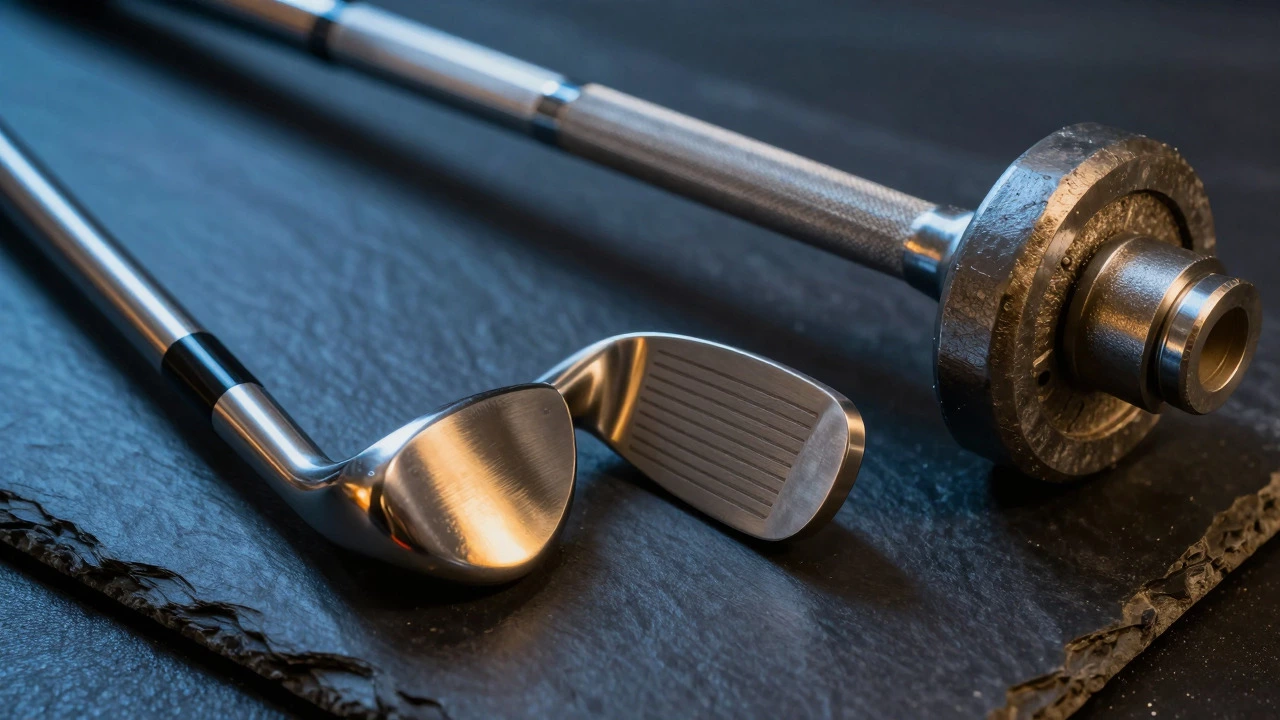
Metals remain the backbone of durable sports equipment. Steel was the standard for centuries because it is cheap and tough. You still see it in weightlifting bars and some lower-cost bicycle chains. But steel is heavy. For athletes trying to shave off seconds, that weight is unacceptable.
Aluminum alloys solved the weight problem. By mixing aluminum with small amounts of copper, magnesium, or silicon, engineers create metals that are stiff and light. Most entry-level and mid-range mountain bikes use aluminum frames. They are easy to weld and repair, which keeps manufacturing costs down. Aluminum also handles impacts well. If you crash your bike, the frame might bend, but it rarely shatters.
For those willing to pay more, titanium offers the best of both worlds. It is as strong as steel but as light as aluminum. Titanium frames absorb road vibrations beautifully, giving riders a smooth feel. The downside is price and difficulty in manufacturing. Welding titanium requires an inert gas environment, making production slower and more expensive. You mostly see titanium in high-end road bikes and premium golf club heads.
Synthetic Polymers and Plastics
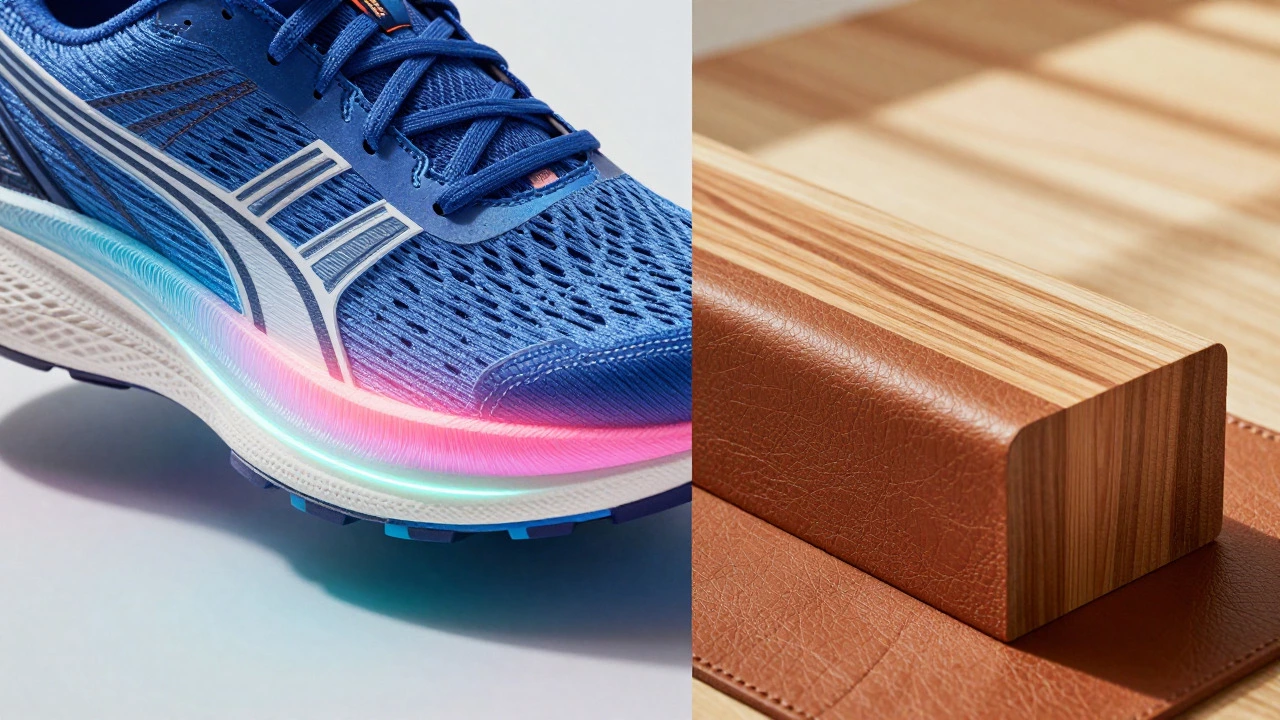
We tend to think of plastic as cheap, but in sports science, polymers are miracles. Nylon, Polyester, and EVA foam (Ethylene-Vinyl Acetate) form the core of athletic footwear and apparel. EVA foam provides cushioning in running shoes. It compresses under your foot to absorb shock and then rebounds to help push you forward. The density of the foam determines how firm or soft the shoe feels.
In protective gear, plastics become even more critical. Helmets for cycling and skiing often use expanded polystyrene (EPS) foam inside a hard outer shell. The EPS foam crushes upon impact, converting kinetic energy into deformation energy. This saves your brain from taking the full force of the hit. Once a helmet takes a significant blow, that foam is compressed permanently, which is why you must replace it after any serious accident.
Natural Fibers and Leather
Despite the tech boom, natural materials haven't disappeared. Leather remains the gold standard for boxing gloves and football boots. It molds to your body over time, providing a custom fit that synthetic materials struggle to match. Full-grain leather is breathable and durable, though it requires maintenance to prevent cracking.
Wood still has its place, particularly in cue sports and traditional baseball bats. Ash and maple woods offer specific grain structures that provide feedback when striking a ball. While composite bats dominate youth leagues due to their larger sweet spots, professional baseball players often prefer wood for the honest feedback it gives. If you hit the ball off-center, you know it immediately.
Smart Materials and Future Tech
The next frontier involves smart materials. These are substances that change properties based on external stimuli. Shape-memory alloys, for example, can return to their original shape after being bent. Imagine ski poles that adjust their stiffness automatically based on temperature or speed. We are already seeing early versions of this in adaptive suspension systems for bicycles.
Another area is 3D printing using lattice structures. Instead of solid metal, engineers print intricate web-like patterns that distribute stress evenly. This allows for parts that are incredibly light yet maintain structural integrity. Nike and Adidas have experimented with 3D-printed shoe soles that offer personalized support based on a runner's gait data.
How Material Choice Affects Performance
Your choice of equipment should depend on your goals. If you are a beginner, durability and cost matter most. Aluminum bikes and synthetic leather shoes will serve you well. As you advance, you start noticing nuances. A stiffer carbon fiber racket gives you more control but demands perfect technique. A softer one forgives errors but lacks punch.
Consider the trade-offs. Lighter materials often mean higher prices and less forgiveness. Heavier materials are cheaper and more durable but can slow you down. There is no perfect material, only the right material for your specific needs. Always test equipment if possible. Feel the weight, check the balance, and imagine yourself using it during intense activity.
Why is carbon fiber so expensive?
Carbon fiber is costly because of its complex manufacturing process. The raw polyacrylonitrile (PAN) precursor must be spun into fibers, oxidized, and carbonized at extremely high temperatures. This process is energy-intensive and slow. Additionally, weaving the fibers into specific patterns and bonding them with resin requires precision labor and specialized machinery. The result is a material with exceptional strength-to-weight properties, justifying the premium price for performance athletes.
Is titanium better than aluminum for bike frames?
Titanium offers superior comfort and longevity compared to aluminum. It absorbs road vibrations better, reducing rider fatigue on long rides. Titanium is also highly resistant to corrosion and fatigue, meaning a titanium frame can last a lifetime with proper care. However, aluminum is much cheaper and easier to manufacture. For most recreational riders, aluminum provides excellent value. Titanium is best suited for serious cyclists who prioritize ride quality and plan to keep their bike for many years.
Do synthetic materials breathe as well as natural ones?
Modern synthetic fabrics like polyester and nylon have improved significantly in breathability. Many feature micro-perforations and moisture-wicking treatments that pull sweat away from the skin faster than cotton. However, natural materials like merino wool and leather still excel in temperature regulation and odor resistance. Wool, for instance, can absorb moisture without feeling wet and naturally repels bacteria. For high-intensity workouts, synthetics are usually preferred for their quick-drying nature.
How do I know if my sports equipment needs replacing?
Signs include visible cracks, dents, or fraying. For foam-based items like helmets or shoe soles, compression is key. If the foam no longer bounces back quickly, it has lost its protective ability. Metal equipment may show signs of fatigue, such as hairline cracks near joints or welds. Regularly inspect your gear before use. Manufacturers often recommend replacement intervals, especially for safety-critical items like climbing ropes or car seats.
Are eco-friendly sports materials effective?
Yes, sustainable materials are becoming increasingly competitive. Recycled polyester performs similarly to virgin polyester in terms of durability and moisture management. Bio-based foams derived from corn or sugar cane offer comparable cushioning to petroleum-based EVA. Bamboo fibers provide excellent antibacterial properties and breathability. While some niche high-performance applications still rely on traditional materials, the gap in performance is closing rapidly as technology advances.