Football vs Rugby: Historical Timeline Explorer
Explore the shared origins and divergent paths of two great sports through an interactive timeline
It sounds like a classic chicken-and-egg debate. Which sport actually started first: the game we call soccer (or association football) or rugby? If you look at the calendars today, they are distinct worlds with different balls, different rules, and fiercely loyal fans on both sides. But go back far enough, and those lines blur into a single, muddy field in 19th-century England.
The short answer is that they came from the exact same place at almost the exact same time. They were siblings, not strangers. However, if you want to know which one has the older written rules and formal organization, English football takes the crown by a few years. But the story is much messier than just dates on a calendar.
The Common Ancestor: Mob Football
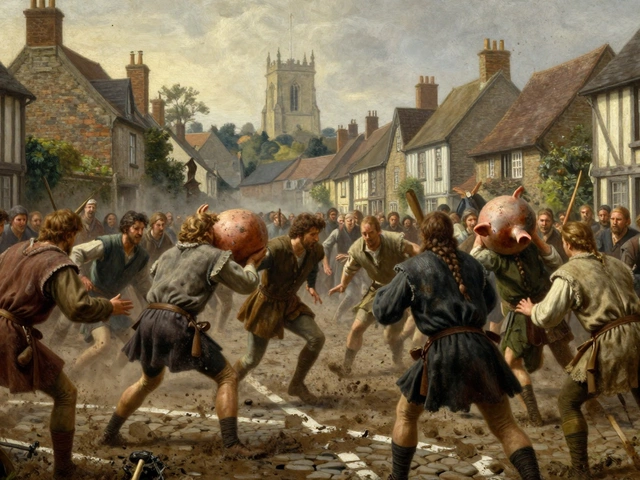
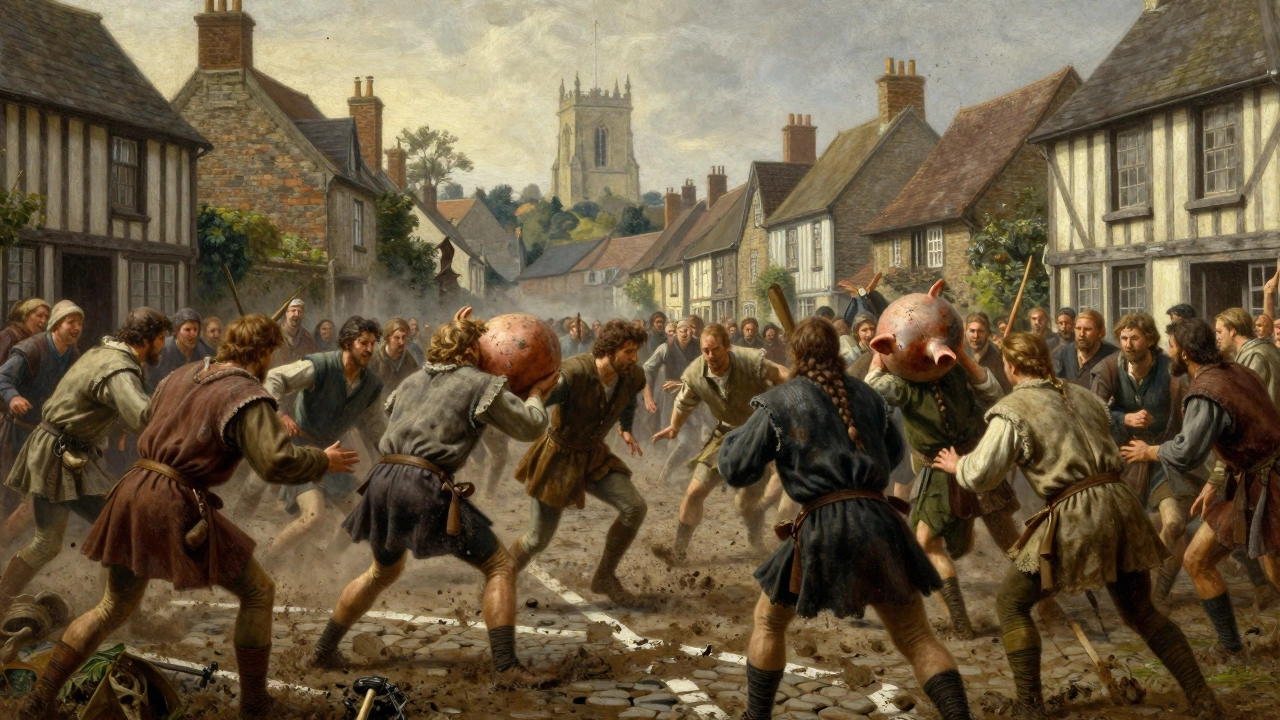
Before there were referees, white lines, or even standardized teams, there was "mob football." This wasn't a sport in the modern sense; it was more of a seasonal riot. In medieval England, entire villages would gather to kick or carry a ball-often a pig's bladder stuffed with hair-from one end of town to another. There were no fixed rules, no limit on players, and very little mercy.
These games were so chaotic that kings frequently banned them. King Edward III outlawed them in 1314 because he believed young men needed to practice archery for war, not chase a ball through the streets. Despite the bans, the tradition survived. It was a raw, physical expression of community energy. Both modern football and rugby evolved directly from these unstructured folk games played across rural England.
The School Years: Where the Split Began
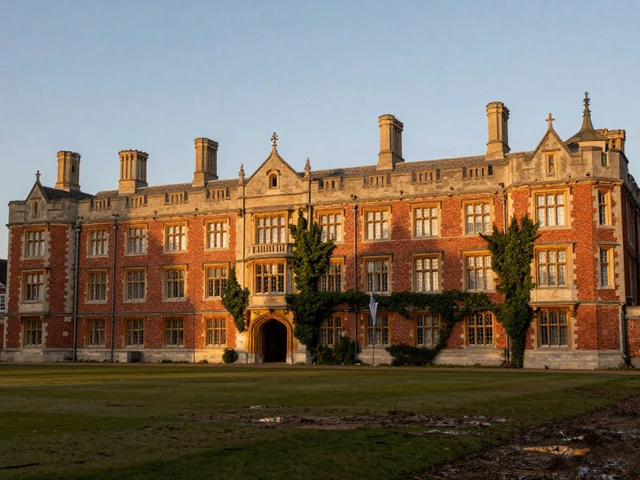
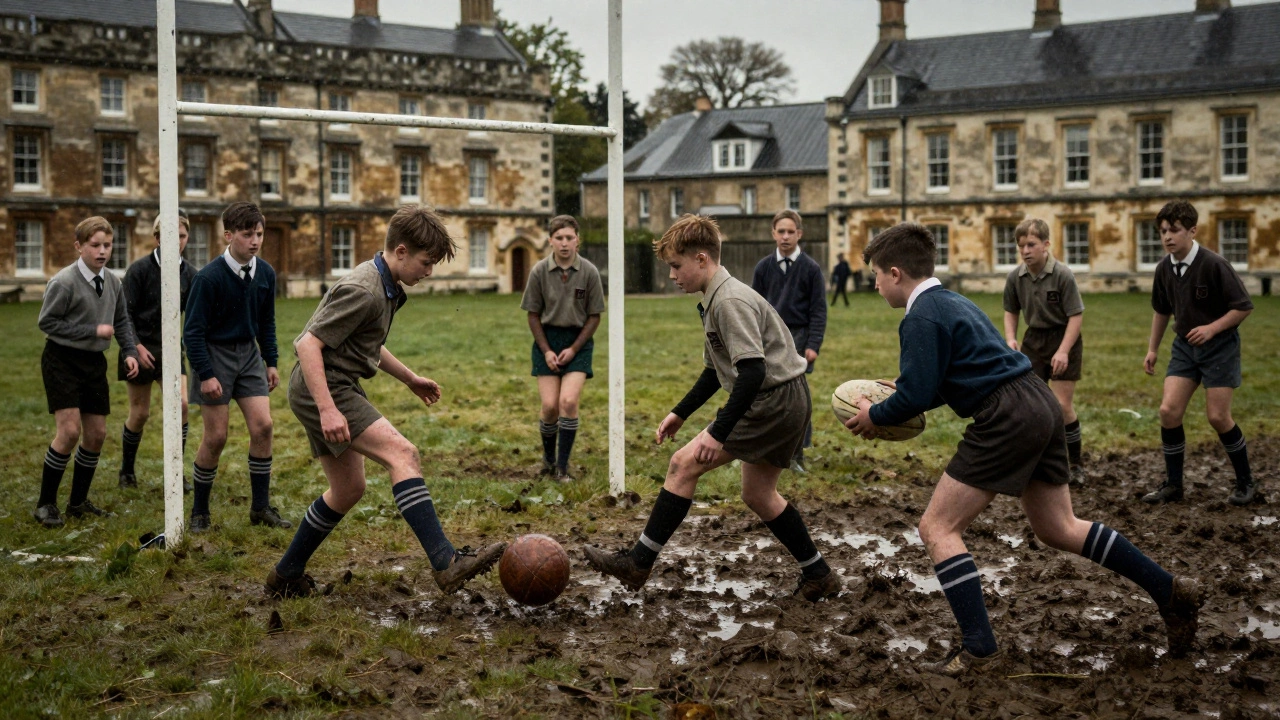
As society changed, public schools (private boarding schools) began to tame the chaos. Each school started writing its own set of rules to keep students safe and organized. This is where the divergence happened. Some schools favored kicking the ball toward a goal, while others allowed carrying it.
Eton College had its own version called "Eton Fives," which involved hitting the ball against a wall. Winchester College played a game that resembled modern rugby, focusing on running with the ball. Meanwhile, Rugby School, located in Warwickshire, developed a style that heavily featured handling the ball.
By the early 1800s, students leaving these schools took their specific rule sets to universities and workplaces. When an Oxford student played against a Cambridge student, they often argued over whose rules should apply. Was tripping allowed? Could you hold the ball? These disagreements created confusion and friction, setting the stage for a major split.
The Myth of William Webb Ellis
You cannot talk about the origin of rugby without mentioning the legend of William Webb Ellis. According to the myth, in 1823, during a match at Rugby School, Webb Ellis broke the rules by picking up the ball and running with it. This act supposedly inspired the creation of rugby football.
While this story is beloved by rugby historians and immortalized in a statue outside Twickenham Stadium, most experts agree it is likely apocryphal. There is no contemporary evidence that Webb Ellis did this specific thing. Instead, historical records suggest that handling the ball was already part of the informal games played at Rugby School before 1823. The myth serves as a neat narrative device, but the reality is that rugby evolved gradually from local customs, not a single moment of inspiration.
1863: The Great Schism
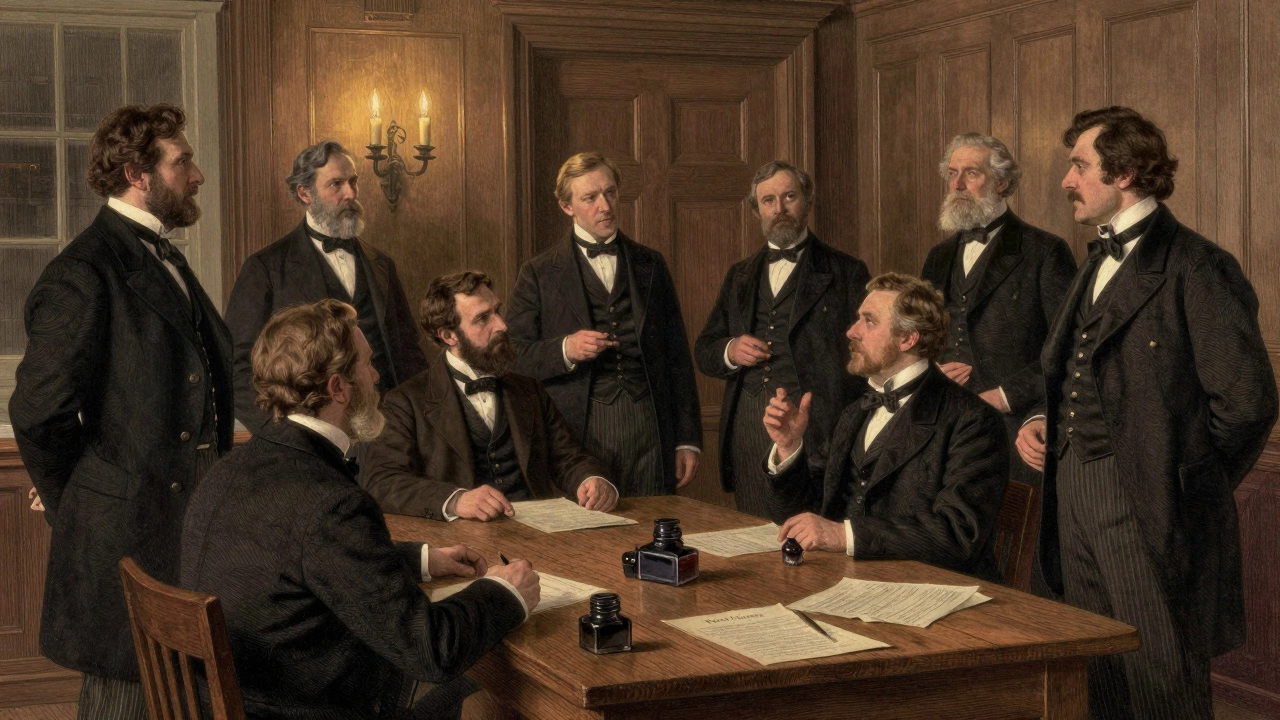
The real turning point came in 1863. Representatives from various London clubs and schools met at the Freemasons' Tavern to create a unified code of laws for football. The goal was simple: standardize the game so anyone could play anywhere.
During these meetings, two major points of contention arose: hacking (kicking opponents in the shins) and carrying the ball. Most delegates wanted to ban hacking entirely. A minority, largely from schools like Blackheath, insisted on keeping it. When the vote came to remove hacking, the Blackheath club walked out rather than accept a non-violent game. They also objected to the new rules that prohibited holding the ball.
This walkout was the birth of two separate sports. The group that stayed formed the Football Association (FA) and established the laws of Association Football. The group that left eventually formed the Rugby Football Union (RFU) in 1871.
| Feature | Association Football (Soccer) | Rugby Football |
|---|---|---|
| Formal Organization Year | 1863 (FA founded) | 1871 (RFU founded) |
| Key Rule Difference | No handling the ball (except goalkeeper) | Carrying and passing backward allowed |
| Stance on Hacking | Banned completely | Allowed initially, later restricted |
| Influential Schools | Eton, Harrow, Charterhouse | Rugby, Marlborough, Winchester |
Why Football Got Official Recognition First
If we define "first" by who had the first governing body, English football wins. The Football Association was founded in October 1863. For eight years, association football existed as a formally regulated sport while rugby remained a collection of loosely connected clubs playing under varying local codes.
The RFU didn't form until 1871. Until then, rugby matches were often played under the rules of individual schools or ad-hoc agreements between teams. This lack of centralization meant that while the *practice* of rugby might have been happening alongside football, the *institution* of football was built earlier.
The Professional Split: 1895
Just when things seemed settled, another split occurred within rugby. In 1895, northern rugby clubs, many of whose players were working-class laborers, grew frustrated with the amateur-only stance of the RFU. Players were being paid "broken time" compensation for missed work due to injuries, which the RFU viewed as illegal professionalism.
Twenty-two clubs broke away to form the Northern Rugby Football Union, which later became known as Rugby League. This further complicated the timeline. So, while association football remained a single entity, rugby fractured into two codes: Rugby Union (the original amateur path) and Rugby League (the professional offshoot).
Which Sport Is Older?
So, what came first? It depends on how you measure age.
- As informal games: They are equally old, sharing roots in medieval mob football.
- As codified school games: They developed simultaneously in the early 19th century, with no clear winner.
- As organized national sports: English football (association football) is older. The FA was founded in 1863, predating the RFU by eight years.
The distinction matters less now than it did in the 19th century. Today, both sports have global followings, complex regulations, and rich histories. Understanding their shared origin helps explain why they still share similarities: the shape of the pitch, the concept of try zones, and the intense tribal loyalty of fans.
Did William Webb Ellis really invent rugby?
No, it is highly unlikely. The story of William Webb Ellis picking up the ball in 1823 is considered a myth by most historians. While he was a student at Rugby School, there is no contemporary evidence supporting the claim. Rugby evolved gradually from existing handling games played at the school, rather than from a single inventive moment.
When was the Football Association founded?
The Football Association (FA) was founded on October 26, 1863. This meeting at the Freemasons' Tavern in London marked the first time a governing body was established specifically to regulate association football, making it the oldest national football association in the world.
Why did rugby and football split in 1863?
The split occurred because of disagreements over rules, specifically regarding hacking (kicking opponents in the shins) and carrying the ball. Clubs like Blackheath refused to accept the ban on hacking and the restriction on handling the ball, leading them to leave the meeting that formed the FA. This group later helped establish the Rugby Football Union.
Is rugby league older than rugby union?
No, rugby union is older. The Rugby Football Union (RFU) was formed in 1871. Rugby League originated later, in 1895, when northern clubs broke away from the RFU to allow professional payments, forming the Northern Rugby Football Union.
What is mob football?
Mob football refers to medieval folk games played in England where large numbers of people from opposing villages would kick or carry a ball towards a target. These games had few rules, often lasted all day, and were frequently banned by monarchs who preferred citizens to practice archery instead.