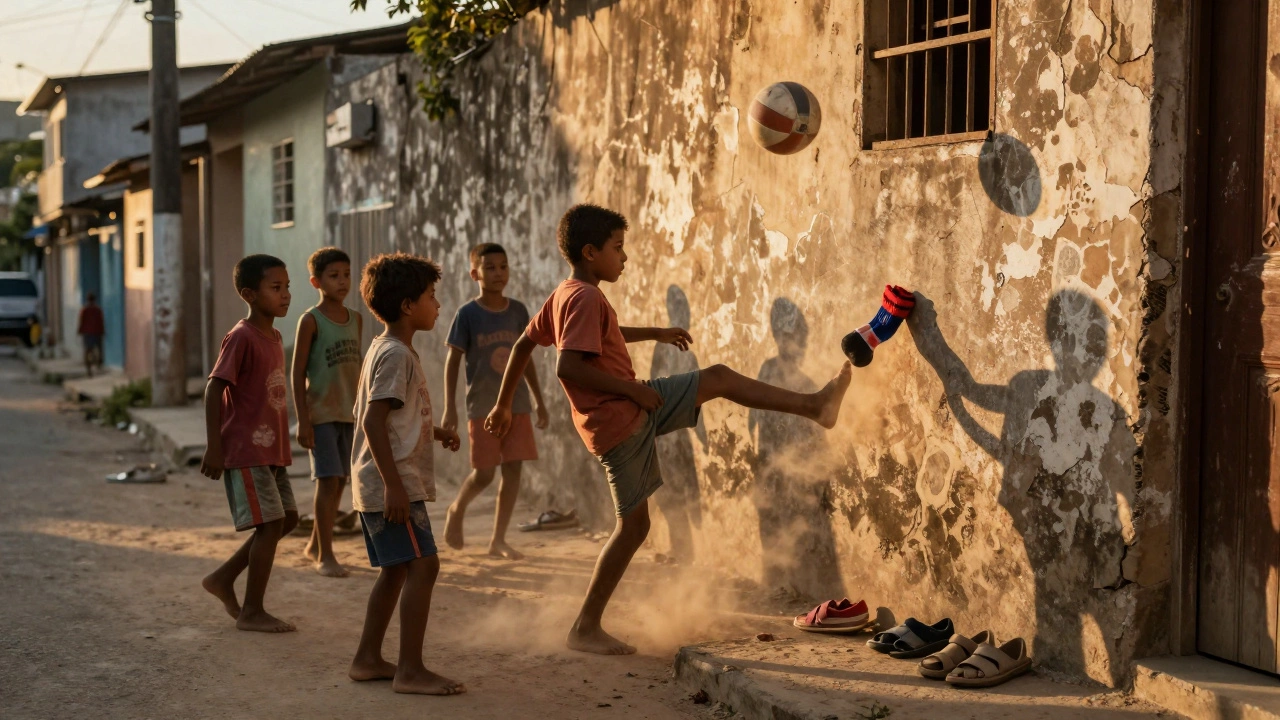
Ask someone what football is in one word, and you’ll get a dozen different answers. Speed? Strategy? Drama? All true-but none of them capture the real heartbeat of it. The only word that fits, the only word that holds every chant, every tear, every midnight watch and every barefoot kick on a dusty field, is passion.
It’s Not Just a Game
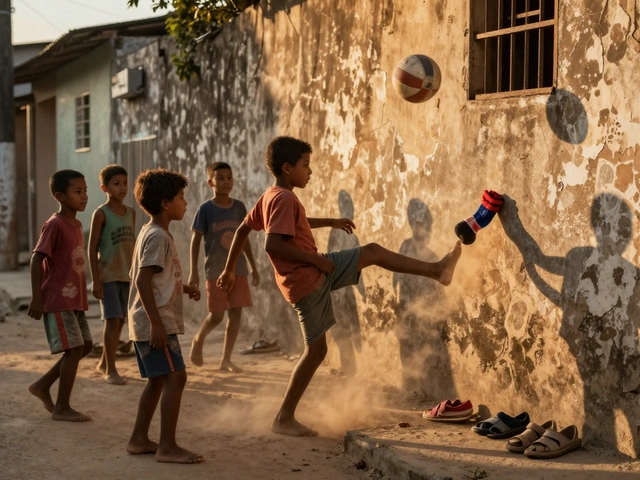
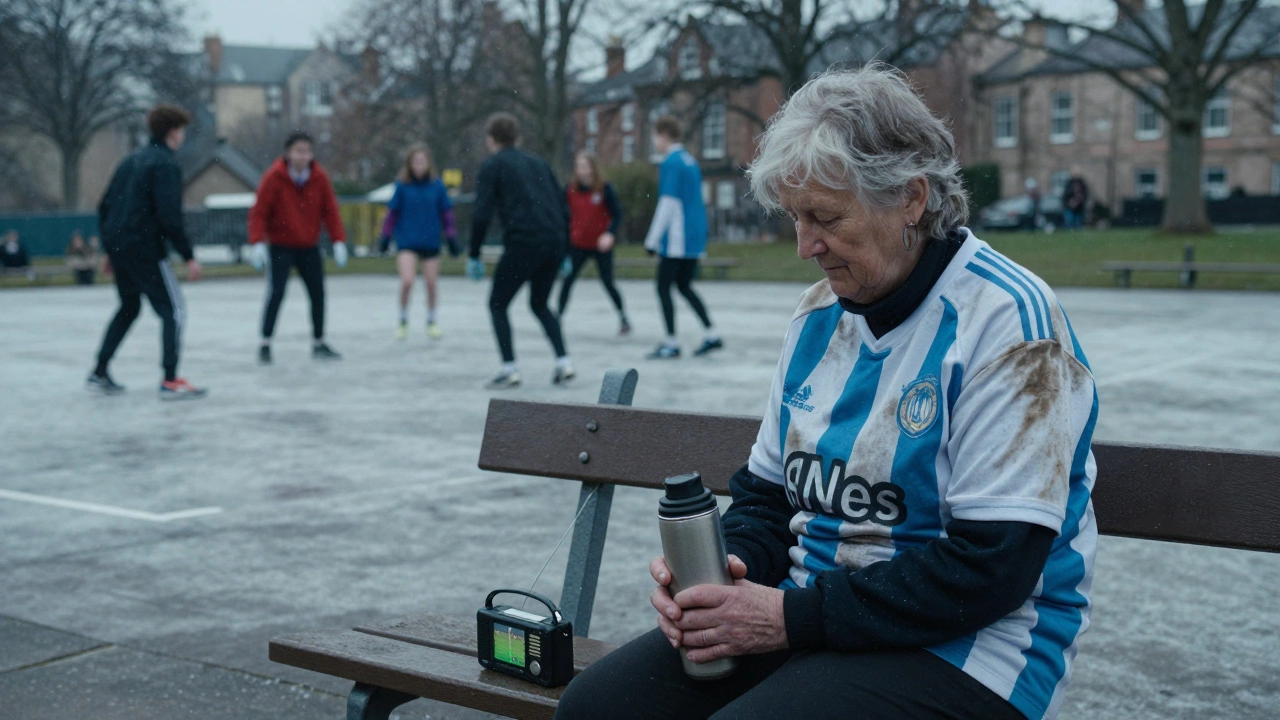
Football isn’t played in a vacuum. It doesn’t live inside a rulebook or a stadium. It lives in the streets of Rio, the alleys of Lagos, the frozen parks of Glasgow, and the backyards of Adelaide where kids kick a rolled-up sock at dusk. It’s the boy who skips dinner to practice volleys before the streetlights come on. It’s the grandmother who wears her son’s old jersey to every match, even if she doesn’t understand offside. It’s the man who cries when his team wins, not because he bet money on it, but because he’s carried that team through divorce, job loss, and grief.
The rules? They’re simple. Eleven players. One ball. Two goals. But the meaning? It’s endless. Football doesn’t ask for permission. It doesn’t care if you’re rich or poor, educated or not, tall or short. It only asks for heart. And if you’ve ever felt that rush when the ball rolls past the keeper, or that silence when the crowd holds its breath before a penalty, you know it’s not about tactics-it’s about feeling.
Why Passion, Not Skill or Speed?
You can teach skill. You can train speed. You can drill tactics until players move like robots. But you can’t teach passion. It’s not learned in a gym or drilled into a playbook. It’s inherited. Passed down from father to son. Whispered in chants at 3 a.m. on a cold Tuesday night. Carried in the voice of a radio announcer who’s been calling games since 1978.
Look at the World Cup. The best players in the world don’t win because they’re the fastest or the strongest. They win because they play like their soul is on the line. Lionel Messi didn’t carry Argentina to glory because of his dribbling-he did it because he played like every touch was his last. Kylian Mbappé doesn’t run faster than anyone else-he runs like he’s trying to outrun every doubt he’s ever had.
And when a team like Fiji’s underdog club beats a millionaire side in a local cup? It’s not luck. It’s passion. It’s the kid who walks six kilometers to training because he has no bike. It’s the coach who uses chalk on a wall because they can’t afford a whiteboard. That’s football. Not the TV version. Not the corporate version. The real one.
The Global Language
There are over 7,000 languages spoken on Earth. But in every single one, the sound of a ball being kicked is understood. In Japan, it’s "futtobooru." In Brazil, it’s "futebol." In Egypt, it’s "kura." In Australia, we just call it football-even though we’ve got Aussie Rules and rugby fighting for the name.
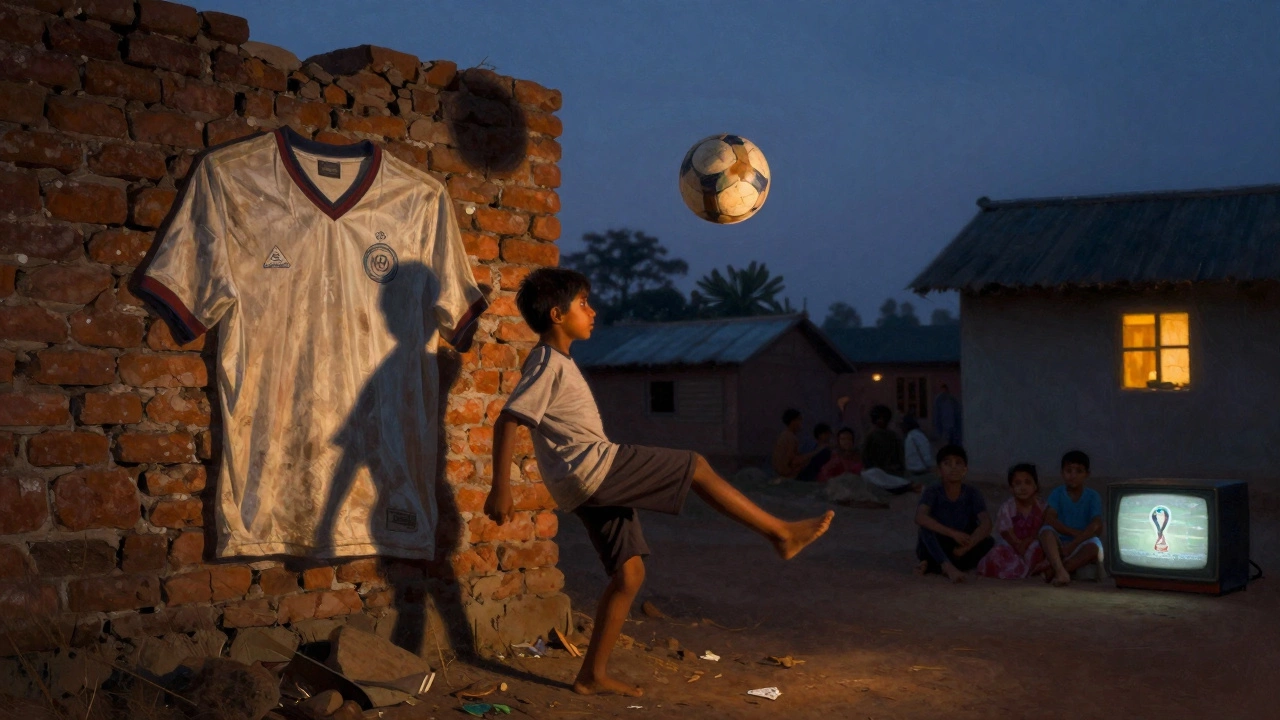
That’s the power of this one word: passion. It cuts through borders, politics, and poverty. A kid in Dhaka and a kid in Dublin both know the exact same feeling when their team scores. No translation needed. No app required. Just a ball, a patch of ground, and the will to play.
That’s why football is the only sport where a 10-year-old can make a 50-year-old man cry. Where a single goal can stop a war for a day. Where a team’s colors mean more than a flag. It’s not about winning. It’s about belonging. And that belonging? It’s built on passion.
What Happens When Passion Fades?
Look at the modern game. Tickets cost more than a week’s groceries. Players earn more in a week than a schoolteacher earns in a lifetime. Contracts are longer than marriages. The game’s being sold as a product, not a pulse.
And yet-when the World Cup comes around, the passion comes back. Even the richest fans stop checking their phones. Even the most cynical fans stand up and sing. Why? Because deep down, we still know what football is. We just got distracted.
Every time a kid kicks a ball against a wall in a housing estate, every time a group of friends plays five-a-side on concrete with no referee, every time a grandparent teaches a grandchild how to curl a free kick-that’s football staying alive. Not in boardrooms. Not on Instagram. In the dirt. In the rain. In the quiet moments when no one’s watching.
It’s Not About the Ball
People think football is about the ball. It’s not. It’s about the people who chase it. The ones who show up even when they’re tired. The ones who lose but still come back next week. The ones who don’t have a coach but still practice alone. The ones who don’t have a team but still wear the jersey.
That’s why you can’t reduce football to stats, transfers, or tactics. Those are just the bones. Passion is the blood. Without it, football is just a sport. With it? It’s everything.
So when someone asks you what football is in one word? Don’t say "soccer." Don’t say "game." Don’t say "sport." Say passion. Because that’s what keeps it alive. That’s what makes it bigger than any league, any star, any trophy. That’s what makes it eternal.
Why do people call it soccer in some countries?
The term "soccer" comes from "association football," which was shortened to "assoc" and then "soccer" in late 1800s England. It stuck in places like the U.S., Canada, and Australia because they already had their own versions of football-like American football or Aussie Rules. In most of the world, "football" is the only name used because it’s the original and only game that matters.
Is football really the most popular sport on Earth?
Yes. Over 4 billion people follow football in some way. That’s more than half the planet. The 2022 World Cup final had an estimated 1.5 billion viewers. No other sport comes close. Even the Super Bowl, the biggest event in American sports, draws about half that. Football’s reach isn’t just global-it’s universal.
Can football change a person’s life?
Absolutely. There are thousands of stories-kids from refugee camps who became pros, ex-convicts who found purpose through local clubs, girls in conservative towns who broke barriers just by playing. Football gives identity, discipline, and community. It doesn’t promise fame, but it always gives belonging. That’s enough to change a life.
Why does football feel so emotional?
Because it’s tied to memory. The first goal you ever scored. The match you watched with your dad. The team you supported when no one else did. Football becomes part of your story. When your team wins, you feel like you won. When they lose, you feel like you lost. It’s not just entertainment-it’s emotional history.
Do you need to be good to enjoy football?
No. You don’t need to be good to love it. You don’t even need to play. Watching, singing, wearing the jersey, arguing with friends over tactics-all of it counts. Football isn’t a test of skill. It’s a space where anyone can belong. The best fans aren’t the ones who know the most-they’re the ones who care the most.