Marathon Pace Predictor & Benchmark
Estimate Your Time
Enter a recent race time to predict your marathon potential.
Your Predicted Performance
How does this compare?
- Average Male Finisher ~4:15:00
- Average Female Finisher ~4:45:00
- Sub-4 Goal < 4:00:00
- Sub-3 Goal < 3:00:00
Most people assume that if you can jog a mile in ten minutes, you can run a marathon in seven hours. The math doesn't quite work out that way because your body breaks down differently over 26.2 miles than it does over two. If you are staring at a race date and wondering what kind of time you should aim for, you aren't alone. The question isn't just about speed; it's about survival, strategy, and understanding where you fit into the massive crowd of finishers.
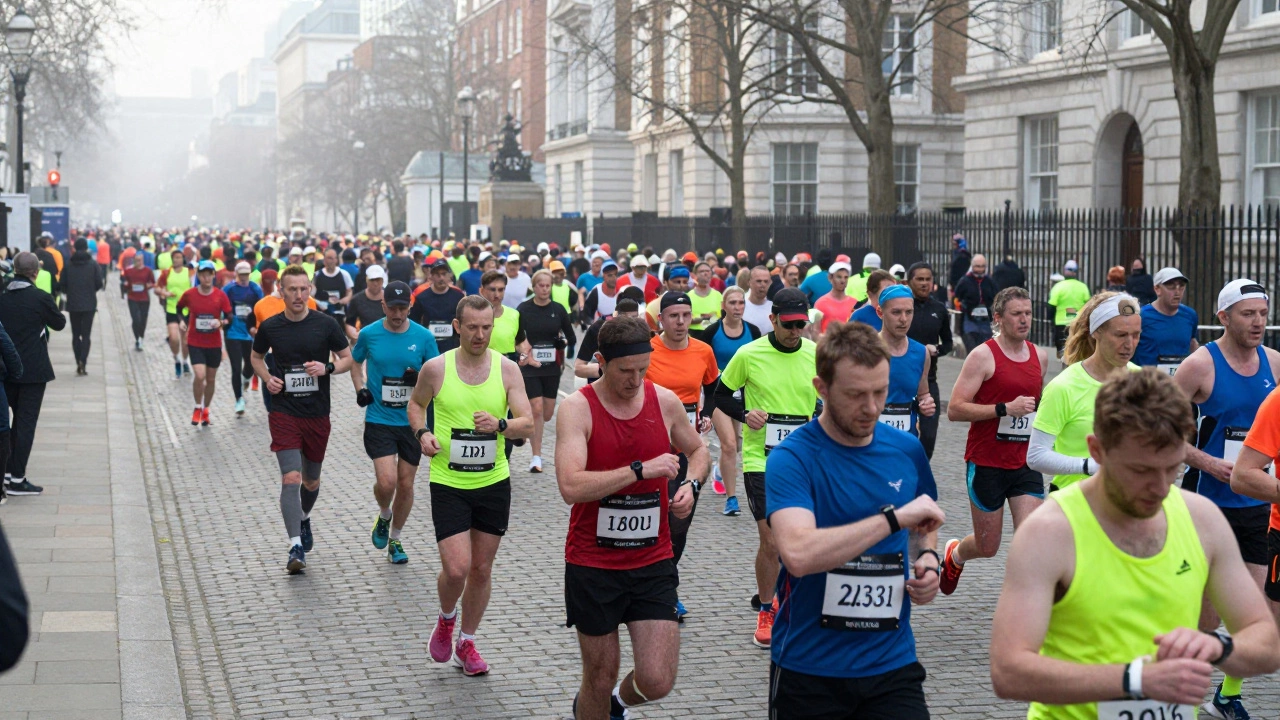
The global average marathon time sits right around 4 hours and 30 minutes. That translates to a pace of roughly 10:15 per mile (or 6:25 per kilometer). But averages are tricky. They don't tell you if you're a beginner aiming to finish or an intermediate runner chasing a sub-4 goal. To set a realistic target, you need to look at how different groups perform, not just the median number.
Breaking Down the Numbers by Gender
When we talk about average pace, we have to split the data by gender because physiological differences and training habits create distinct performance curves. According to data from major race aggregators like RunRepeat and results from large metropolitan marathons (like New York, Chicago, and London), the gaps are consistent but narrowing as more women enter the sport.
For men, the average finishing time is typically between 4 hours and 15 minutes. This means a male runner maintains a pace of about 9:45 per mile. For women, the average is closer to 4 hours and 45 minutes, which equates to a pace of 10:45 per mile. These numbers include everyone who crosses the line, from elites to those who walk-run intervals.
| Group | Average Time | Pace per Mile | Pace per Kilometer |
|---|---|---|---|
| Men | 4:15:00 | 9:45 min/mi | 6:00 min/km |
| Women | 4:45:00 | 10:45 min/mi | 6:40 min/km |
| All Finishers | 4:30:00 | 10:15 min/mi | 6:25 min/km |
It is important to remember that these are medians. Half of the runners are faster, and half are slower. If you are new to long-distance running, falling on the slower side of this spectrum is completely normal and expected.
Age Groups and Performance Curves
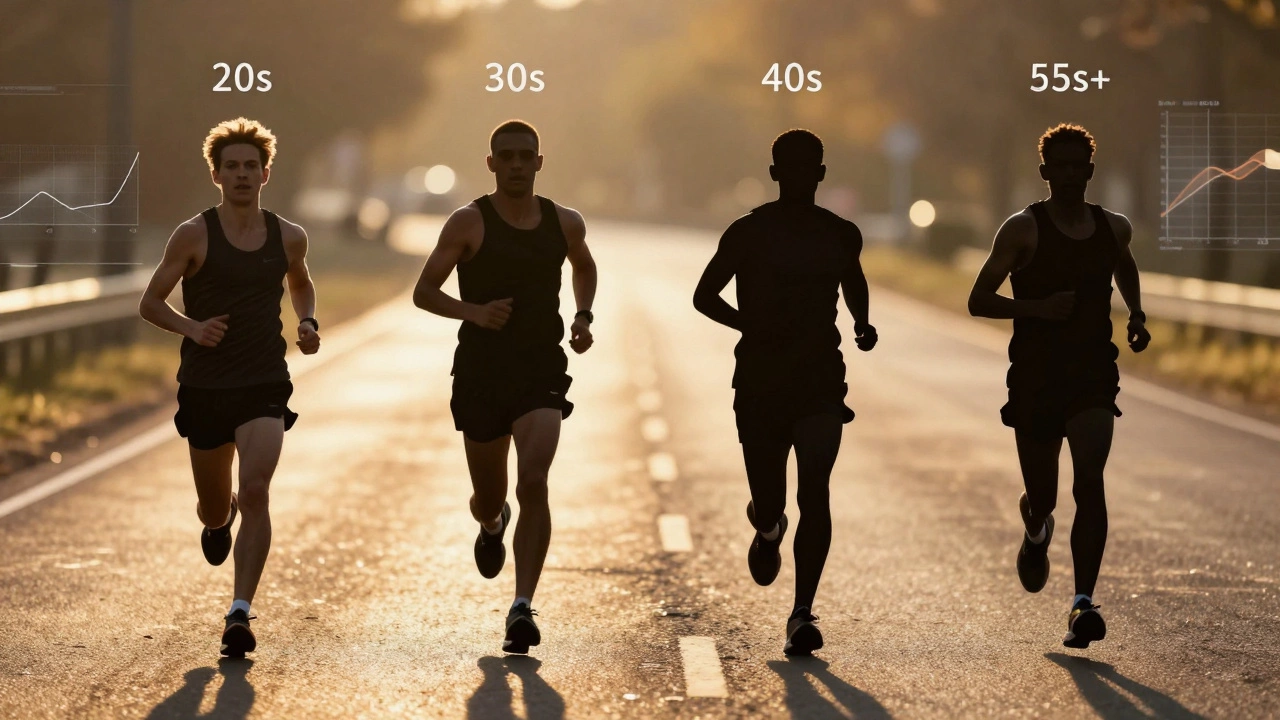
Your age plays a massive role in your average pace. It’s a common myth that you peak at 25 and decline sharply after 30. In reality, marathon performance tends to stabilize until your late 30s or early 40s. Many amateur runners actually get faster in their 30s because they train smarter, not harder.
Here is how the average pace shifts across decades based on aggregate race data:
- 18-29 years old: This group often has the highest volume of training but also the highest injury rate. The average pace hovers around 9:30-10:00 per mile. Younger runners tend to go out too fast, leading to "the wall" hitting earlier.
- 30-39 years old: Considered the prime decade for amateur marathoners. With better life stability and experience, the average pace improves slightly to 9:20-9:50 per mile. This group dominates the top percentages of non-elite finishers.
- 40-49 years old: Performance remains strong. The average pace slows marginally to 9:40-10:10 per mile. Recovery becomes the limiting factor, not cardiovascular fitness.
- 50+ years old: The drop-off is gradual. Masters runners (50+) average paces between 10:00 and 10:30 per mile. However, the most experienced masters runners often beat younger, less disciplined athletes due to pacing strategy.
If you are over 40, do not compare your pace to a 25-year-old college athlete. Compare it to other masters runners. You will likely find yourself right in the thick of the pack, which is a great place to be for morale.
Beginner vs. Intermediate vs. Advanced Paces
Average numbers can feel abstract. Let’s break them down by experience level so you can identify where you stand. Your "pace" isn't just one number; it's a range depending on your goals.
The Beginner (First Marathon): If this is your first 26.2 miles, your primary goal is finishing. Most beginners aim for a sub-6-hour time. This requires a pace of roughly 14:00 per mile. Yes, that includes walking. Many first-timers use a run-walk method (e.g., run 9 minutes, walk 1 minute) to manage fatigue. A 6-hour finish is a huge achievement and places you in the bottom 20% of finishers, but you are still part of the marathon community.
The Intermediate Runner: You have run a few half-marathons or one full marathon. You want to improve without burning out. The sweet spot here is the 4:00 to 4:30 range. This requires a steady 9:15 to 10:15 pace. This is the most common demographic at local marathons. These runners have structured training plans and understand nutrition during the race.
The Advanced Amateur: These runners treat the marathon seriously, often training 50+ miles per week. They aim for sub-3:30 or even sub-3:00. A sub-3:30 marathon requires an 8:00 per mile pace. A sub-3:00 marathon demands a relentless 6:50 per mile pace. Only about 5-10% of finishers achieve these times. This level requires significant genetic predisposition and lifestyle dedication.
How to Calculate Your Personal Target Pace
You shouldn't guess your marathon pace. You can predict it using recent race data. The most reliable predictor is your half-marathon time, provided you ran it recently and felt good.
Use the Riegel Formula, a standard equation in sports science for predicting performance across distances: T2 = T1 * (D2 / D1)^1.15
Where: - T1 = Your previous race time (in minutes) - D1 = Previous race distance (13.1 miles for half) - D2 = Target distance (26.2 miles for marathon)
For example, if you ran a half-marathon in 1 hour 45 minutes (105 minutes): 1. Divide 26.2 by 13.1 = 2 2. Raise 2 to the power of 1.15 ≈ 2.22 3. Multiply 105 minutes by 2.22 ≈ 233 minutes 4. 233 minutes is roughly 3 hours and 53 minutes.
This suggests a potential marathon time of 3:53, which is a pace of 8:53 per mile. Note that this formula assumes optimal conditions and perfect execution. Add 5-10% buffer for race-day variables like hills, weather, or poor sleep.

Factors That Influence Your Actual Pace
Even with a calculated pace, many variables can speed you up or slow you down. Understanding these helps you adjust expectations on race day.
- Course Elevation: A flat course like Boston (despite its hills, it's net downhill) or Chicago allows for faster paces. A hilly course like San Francisco or Denver can add 10-15 minutes to your time. Rule of thumb: Add 1 minute per mile for every 10 feet of elevation gain.
- Weather: Heat and humidity are pace killers. For every degree Fahrenheit above 60°F (15°C), expect your pace to slow by roughly 1%. If it's 80°F (27°C), add 20% to your predicted time. Cold weather is generally favorable for speed, provided you stay warm before the start.
- Crowd Density: Large races mean stopping for photos, aid station bottlenecks, and navigating through slower runners. These micro-stops can cost you 5-10 minutes total, even if your moving pace is fast.
- Nutrition Strategy: Hitting "the wall" (glycogen depletion) usually happens around mile 20. If you haven't practiced taking in 30-60 grams of carbs per hour during training, your pace will plummet in the final 6 miles.
Setting a Realistic Goal
Don't let the average pressure you into setting an unrealistic goal. If your current 5K pace is 10:00 per mile, aiming for a 4:30 marathon is ambitious but possible with months of training. Aiming for a 3:30 marathon is likely a recipe for injury or failure.
Start by assessing your current fitness. Can you comfortably run 10 miles at your target marathon pace? If yes, you have a chance. If no, lower your goal. It is far better to finish a marathon feeling proud of a conservative time than to collapse at mile 22 chasing a number.
Remember, the marathon is a test of endurance, not just speed. The average pace is a benchmark, not a mandate. Your personal best is the only number that truly matters.
What is a good marathon pace for a beginner?
A good pace for a beginner is anything that allows you to finish safely. Typically, this is between 12:00 and 14:00 minutes per mile, resulting in a finish time between 5:12 and 6:00 hours. Using a run-walk strategy is highly recommended for first-timers to conserve energy.
Is a 5-hour marathon considered fast?
A 5-hour marathon is a solid achievement for recreational runners. It places you faster than approximately 30-40% of all finishers. While it is not elite-level speed, it demonstrates consistent training and good endurance management.
How does age affect marathon pace?
Age affects pace gradually. Peak performance for amateurs is often in the 30-39 age group. After 40, pace may slow by 1-2 seconds per mile per year, but experienced runners can mitigate this with smart training. Masters runners often outperform younger, less experienced athletes.
Can I predict my marathon time from a 5K?
Yes, but it is less accurate than using a half-marathon time. A 5K tests speed and anaerobic capacity, while a marathon tests aerobic endurance. Use the Riegel Formula, but add a significant buffer (10-15%) because the jump from 3.1 miles to 26.2 miles introduces unknown fatigue factors.
What is the fastest average marathon pace ever recorded?
Elite professional runners maintain paces under 5:00 minutes per mile. World record holders average around 4:30 minutes per mile. For context, Eliud Kipchoge's sub-2-hour marathon attempt was run at an average pace of 4:55 minutes per mile, though this was a controlled exhibition, not a official race.