The definitive answer on shoe tightness
You stand up there in the store, lacing up the new pair. You want them to feel comfortable immediately, right? If they feel too tight, you push back. If they feel loose, you think you'll stretch them in. The truth is that comfort on the bench doesn't equal comfort on the run. Your feet behave differently once you're pounding the pavement at five miles per hour.
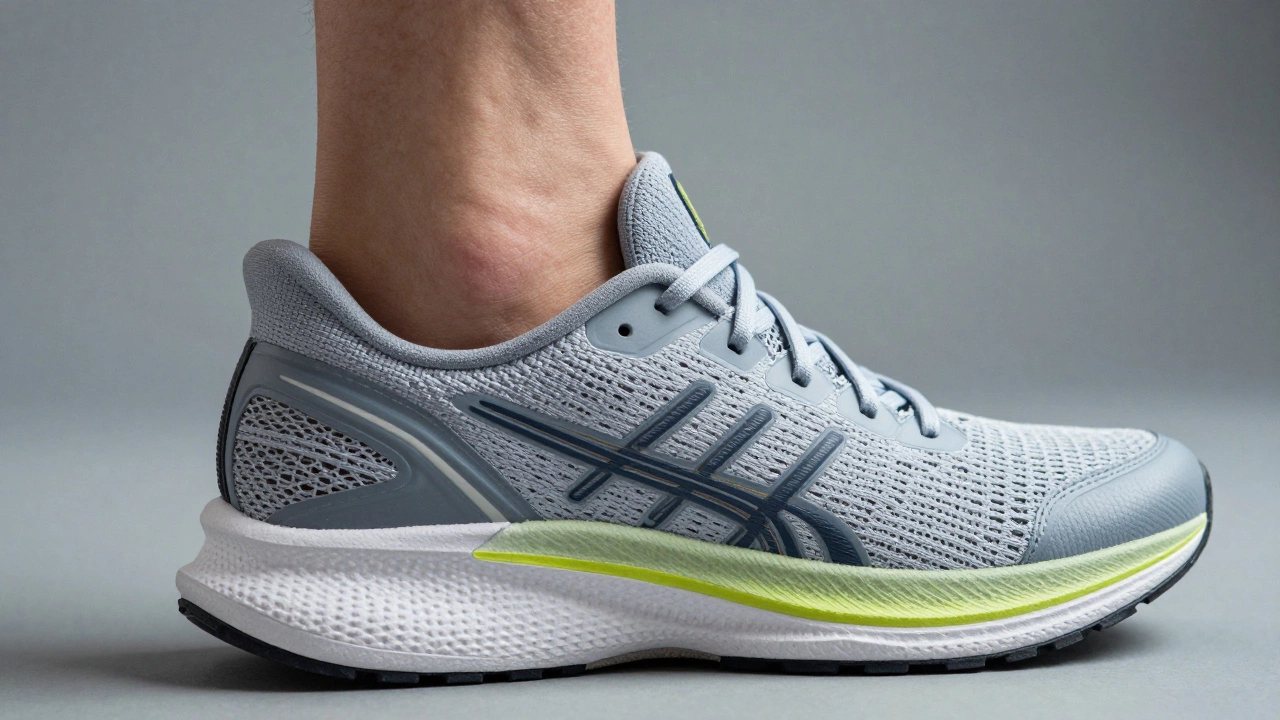
Running shoes should feel secure around the heel and midfoot but loose enough in the front. Specifically, your heel should lock down like it is glued to the ground, while your toes need room to wiggle freely. This balance prevents injuries without sacrificing stability. Think of it as a handshake: firm grip where it counts, but not squeezing hard enough to cut off circulation.
Why the heel and toe rule matters
Your foot expands during exercise. When you run, blood rushes to your extremities, and your body temperature rises. This causes natural foot swellingphysiological expansion of the foot tissue throughout the session. If you pack your toes tightly into a zero-space box at home, they have nowhere to go when you start moving. You end up jamming your toes against the front wall of the shoe with every stride.
This compression leads directly to Black ToenailsTraumatic subungual hematoma caused by repetitive impact. Many runners suffer this silently until their nails fall off. A proper fit allows your toes to splay upon impact without hitting the mesh ceiling. Conversely, if the heel slips, you get friction burns and blisters on the back of your skin. The Heel CounterRigid cup at the back of the shoe exists specifically to anchor your Achilles tendon.
Understanding the anatomy of a perfect fit
To find the sweet spot, you need to understand the three zones of contact. First, the forefoot. This area needs breathability and width. Second, the arch. This should feel supported but not pinned. Third, the collar. This wraps around your ankle bone. Some people mistake a stiff collar for good support. It is usually bad news. You should slide two fingers easily under the upper material at the widest part of your foot.
Many brands use different last shapes. Some are narrow and race-oriented. Others are wider and designed for daily logging. Do not assume your size is consistent across all labels. You might wear a size 10 in one brand and a size 10.5 in another. Always try shoes on while standing. Sitting flattens your foot muscles and gives a false reading of volume. Standing mimics the load you place on them during a run.
Testing the fit properly
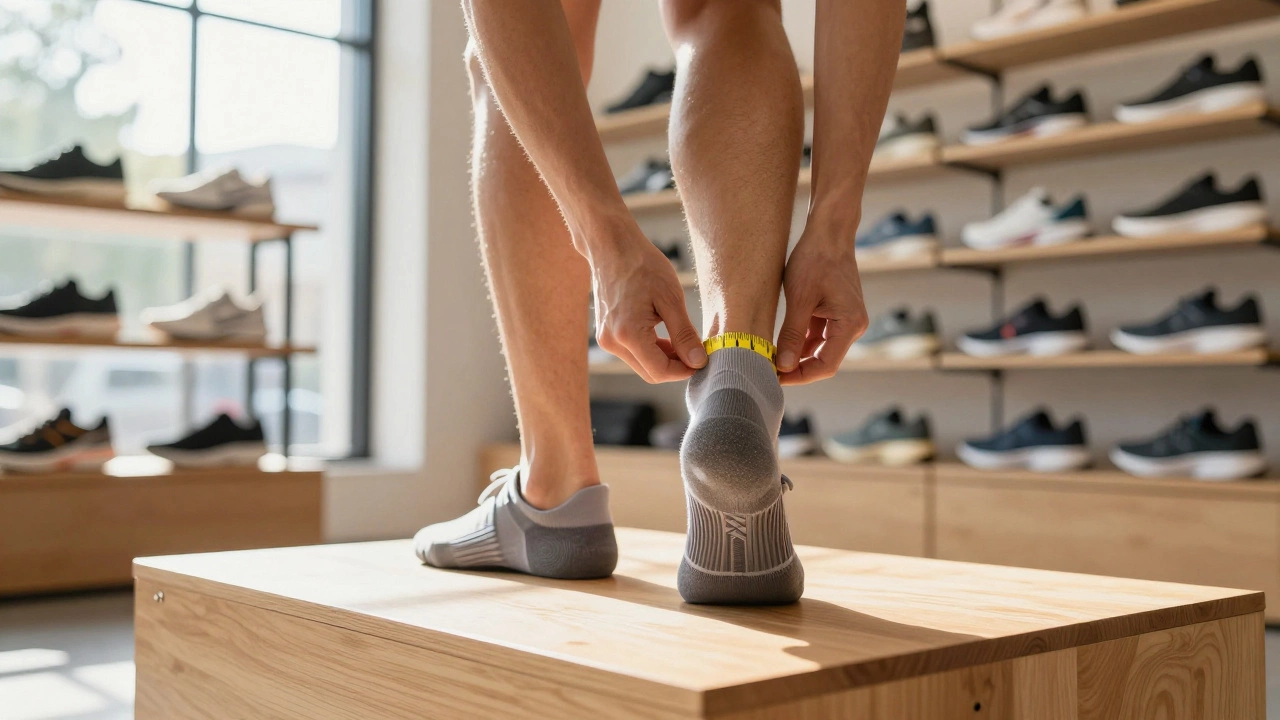
Do not trust the printed number on the insole alone. Numbers vary wildly between manufacturers. Instead, perform the thumb test. Stand up with both feet on the floor. Push your foot forward until your big toe touches the tip of the shoe. Now look at the gap behind your heel. It should be exactly one thumb's width. If there is less than a thumb, you risk nail damage. If there is much more, your foot slides forward on hills.
Next, do the lace pull test. Lace the shoes firmly. Then walk around the shop for at least ten minutes. Climb the stairs in the store. Jump up and down gently. Listen for movement inside the shell. Any shifting of your foot means friction is waiting to happen. Friction equals pain later. Also, pay attention to pressure points. Sharp pain in the pinky toe or the ankle bone means the design isn't compatible with your bone structure.
The hidden variables in shoe fit
Shoe sizing isn't just about length. Width plays a massive role in snugness. A standard-width shoe on a wide foot creates pressure hot spots. These spots turn into bunions or calluses over time. Look for brands offering wide options. If you have custom needs, consider trying a model specifically built for broader feet rather than forcing a standard fit. Some designs feature removable insoles. Taking the insole out can provide extra vertical clearance for high insteps.
Another factor is Running socksSpecialized compression layers worn during runs. Store staff often offer thin paper liners to test the shoes. Do not rely on those for your decision. Wear the exact socks you intend to run in during your purchase visit. Thick cushioned socks eat up volume. Merino wool blends might feel tighter than synthetic mesh. Ignoring this variable means buying shoes that become tight the moment you switch to your usual gear.
If you use OrthoticsCustom insoles for biomechanical correction, bring them along. Custom devices change the effective size of your foot instantly. They add height under the arch and may crowd the toe box. If you buy a new pair of shoes, do not assume your old size applies to the new model. Every manufacturer builds their internal cavity slightly differently.
Timing and environment factors
Feet fluctuate throughout the day. They swell as gravity takes its toll after long periods of standing. Shop for gear late in the day. Ideally, go after a workout when your legs are pumped. If you fit shoes in the morning, you might leave the store with shoes that become restrictive by noon. Heat also plays a role in your local climate. In summer conditions, your skin expands more than in winter.
Consider the activity type too. Trail running requires a different fit philosophy compared to road running. On trails, mud and water increase friction. You might prefer a slightly looser fit to prevent slipping inside the shoe if it gets wet. Road running demands tighter control for efficiency. There is no universal "perfect" fit, but the principle remains: secure heel, spacious toes.
Recognizing wear signs and replacement
Even the best-fitting shoe degrades over time. The foam collapses, and the geometry shifts. A shoe that used to fit perfectly will suddenly feel tight. This isn't just because your foot grew. It is often because the cushioning bottomed out, causing your foot to sink deeper and touch the boundaries of the upper material. Most shoes last between 300 to 500 miles. Keeping track of your mileage helps predict when the fit will change.
When you notice recurring pain, check the lining. If the interior padding is matted down, the shoe is done. Continuing to run in compressed shoes increases injury risk regardless of the initial fit quality. Listen to your feet. If you wake up with numb toes or burning sensations after a short jog, the equipment is working against you.
Frequently Asked Questions
Do running shoes break in?
Modern running shoes generally do not require a break-in period. They should feel comfortable from the first mile. If you need weeks to soften the foam, you likely bought the wrong fit or model.
Should my toes touch the end when standing?
Your toes should never rest against the end cap. There should always be roughly a thumb's width of space between your longest toe and the front edge to allow for natural movement.
Is it okay if my heel slips a little?
Minimal slip can occur in the first few wears, but persistent heel lift indicates the heel counter is too large. Excessive slip causes blisters and reduces power transfer efficiency.
Why do my shoes hurt after buying them?
Pain often comes from shopping in the morning when feet are smaller. Buying when your feet are swollen ensures the shoes remain comfortable throughout the day and during exertion.
Can I wear thick socks for fitting?
Yes, always test shoes with the socks you plan to wear. Thicker socks reduce internal volume significantly and can make a correct size feel dangerously tight.