Rugby Scoring Calculator
Calculate your rugby score based on the official scoring system. A try is worth 5 points, conversion 2 points, penalty 3 points, and drop goal 3 points.
Score Input
Result
Enter your scores to see the total
Scoring Breakdown:
Try: 0
Conversion: 0
Penalty: 0
Drop Goal: 0
Did you know? In rugby, a try is worth 5 points, but you can earn up to 7 points with a conversion. This is why teams often aim for tries near the sides of the field to make conversions easier!
Ever watched a rugby match and wondered why scoring a point is called a try? It doesn’t sound like a score. It doesn’t sound like a touchdown. It doesn’t even sound like a goal. And yet, in rugby, getting the ball over the opponent’s goal line and touching it down is worth five points-and it’s called a try. The word feels odd, almost outdated. But there’s a very clear reason for it, rooted in how the game was played over 200 years ago.
The Original Purpose of a Try
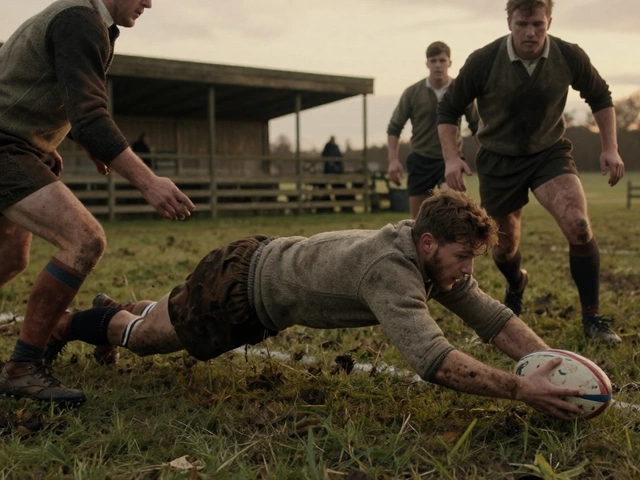
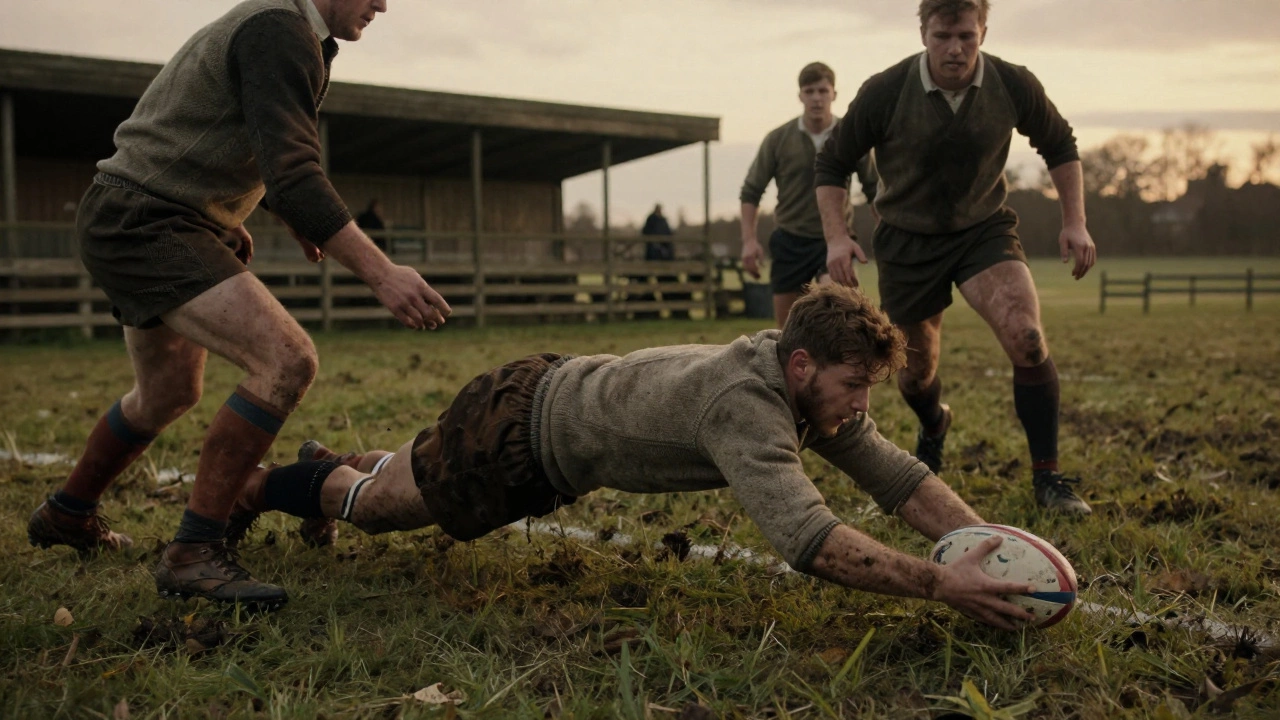
In the early 1800s, rugby wasn’t about scoring points the way it is today. The main goal was to get the ball past the opponent’s goal line and then earn the right to kick for a goal. That kick was the only way to score actual points. The act of touching the ball down after crossing the line wasn’t the score itself-it was just the chance to take a shot at the posts. That chance was called a “try at goal.” Over time, people shortened it to just “try.”Think of it like this: You’re playing a game where the only way to win is to kick a field goal. But before you can kick, you have to earn the right to do so. That’s what a try was-a try at kicking the goal. The scoring system back then was simple: one point for a successful goal, nothing for the try itself. The try was just the setup.
How the Try Evolved Into a Score
As rugby grew more popular in the mid-1800s, especially in England and later in New Zealand and South Africa, the rules started changing. Players began to value the try more-not just as a setup, but as an achievement in itself. Why? Because it was harder to get the ball over the line against a packed defense than it was to kick a goal from a distance. Kicking was easier if you had space, but getting the ball over the line required brute force, teamwork, and skill.By 1875, the Rugby Football Union officially recognized the try as something worth rewarding. Still, it was only worth one point. That didn’t change until 1893, when the try became worth two points. Then came another shift: in 1971, it jumped to four points. Finally, in 1992, it settled at five points-the same value it holds today. Meanwhile, the conversion kick after a try went from two points to two points (unchanged), and penalties and drop goals stayed at three.
Today, the try is the most valuable and most exciting way to score. It’s the moment fans stand up for. It’s the highlight of every match. But the name stuck-because language doesn’t change as fast as rules do.
Why Not Just Call It a Touchdown?
You might wonder why rugby didn’t just rename it to something clearer, like “touchdown,” like American football did. The answer is tradition-and identity. Rugby was one of the first organized team sports to codify its rules. The term “try” was already deeply embedded in the game’s culture. Changing it would’ve meant erasing part of its history.Plus, rugby has always prided itself on being different from American football. Even though the two sports share a common ancestor (both evolved from early football games played at English schools), rugby kept its own language. “Try,” “scrum,” “ruck,” “maul,” “lineout”-these aren’t just terms. They’re part of the sport’s soul. Calling it a touchdown would’ve made rugby feel more like American football. And that’s something rugby fans have fought hard to avoid.

The Try and the Spirit of the Game
There’s also something poetic about the word “try.” It’s humble. It doesn’t boast. It doesn’t say “I scored.” It says, “I had a go.” That fits rugby’s culture perfectly. The sport has always celebrated effort, grit, and persistence. Even if you don’t score, if you give it everything to get the ball over the line, you’ve still tried.That’s why you’ll hear commentators say, “He didn’t score, but he gave it a real try,” even when the player is tackled just short. The word carries meaning beyond the scoreboard. It’s not just about the rules-it’s about the attitude.
What About Other Rugby Terms?
The word “try” isn’t the only odd one left over from rugby’s past. Take “scrum.” It comes from “scrime” or “scrummage,” a term used in 19th-century English football games to describe a chaotic pile-up of players fighting for the ball. It wasn’t a structured formation back then-it was a brawl with rules. Today, scrums are highly technical, with precise binding and pushing techniques. But the name stayed.Same with “ruck.” Originally, it just meant a pile of players on the ground after a tackle. Now it’s a specific phase of play with strict laws about how players enter and support. Yet the word remains. That’s the pattern: rugby keeps the old names even when the meaning evolves.
How the Try Changed the Game
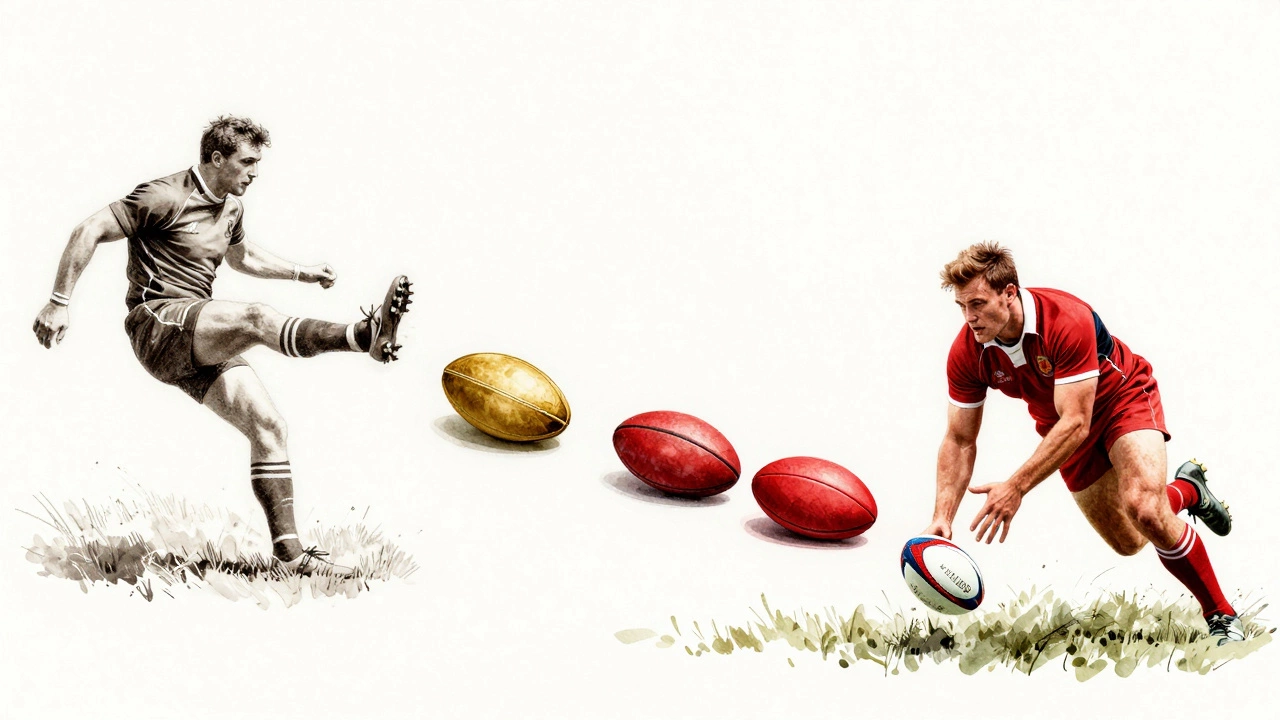
Making the try worth more points didn’t just change scoring-it changed how teams played. Before 1992, teams often kicked for penalties or drop goals because they were safer. A try required risk. It required breaking through a line of defenders. But once tries became worth five points, suddenly, the game opened up. Coaches started building attacks around getting over the line, not just kicking for points.Modern rugby is faster, more dynamic, and more open because of that change. The try became the heartbeat of the game. The best teams aren’t just the ones who kick the most-they’re the ones who create the most tries. That’s why you see teams like New Zealand’s All Blacks and South Africa’s Springboks investing so heavily in backline speed, offloads, and support play. They know: tries win matches.
What Happens After a Try?
After a player grounds the ball over the try line, the scoring team gets a chance to convert the try into two extra points with a place kick. The kick is taken from a spot directly in line with where the try was scored. That’s why you’ll see kickers walking sideways after a try-they’re trying to find the best angle. A try scored in the corner is much harder to convert than one scored right in front of the posts.That’s why a try near the sideline feels bittersweet. Five points for the try, but maybe only two for the conversion. A try in the middle? That’s seven points. That’s why teams will sometimes pass the ball wide even when they’re close to the line-they’re not just trying to score. They’re trying to score in the best position to convert.
Why This Matters Today
Understanding why a try is called a try isn’t just about history. It’s about understanding rugby’s soul. The game didn’t evolve by throwing out its past. It kept its language, its rituals, its quirks-and built on them. The try is a living relic. It’s a word that survived centuries of change because it carried meaning beyond its definition.When you hear a commentator shout, “He’s got a try!” you’re not just hearing a score. You’re hearing 200 years of rugby tradition. You’re hearing the grit of a player who fought through a dozen tackles. You’re hearing the teamwork of five men who passed the ball backward at the last second. And you’re hearing a word that started as a humble request: “Let me try.”
Is a try the same as a touchdown in American football?
They’re similar in action-both involve grounding the ball in the opponent’s end zone-but they’re not the same. In American football, a touchdown is worth six points and is the primary scoring method. In rugby, a try is worth five points and is only one part of the scoring system. The rules around how you get there, what happens after, and how the field is used are completely different. The term “touchdown” was never adopted in rugby because the two sports developed separately after splitting in the 19th century.
Why is a try worth five points now?
The value of a try has changed several times. It was worth one point in 1875, two in 1893, four in 1971, and finally five in 1992. The change to five points was made to encourage more attacking play. Before that, teams often kicked for penalties or drop goals because they were safer. Making the try worth more forced teams to take risks and play open, exciting rugby. It’s why modern rugby is so fast-paced and high-scoring.
Can you score a try without touching the ball down?
No. A try only counts if the player grounds the ball-meaning they must apply downward pressure with the ball on or over the try line. Simply crossing the line with the ball in hand doesn’t count. The ball must be touched to the ground, and the player must be in control. If the ball slips out before grounding, or if the player is tackled before touching it down, no try is awarded.
What’s the difference between a try and a conversion?
A try is worth five points and is scored by grounding the ball over the opponent’s try line. A conversion is a kick taken after a try, worth two points, and is attempted from a spot directly in line with where the try was scored. The conversion is optional and gives the scoring team a chance to add extra points. You can’t score a conversion without first scoring a try.
Do women’s rugby and junior rugby use the same rules for tries?
Yes. The rules for scoring a try are identical across all levels of rugby-men’s, women’s, senior, junior, and even touch rugby variants. Whether it’s a school match in Adelaide or the Rugby World Cup final, grounding the ball over the try line is always worth five points. The only differences are in the size of the field, duration of play, or physical contact rules, not in how a try is scored.