
10K Training Plan Generator
Your Current Stats
Your 10K Goals
Here is the short answer: Yes. If you can currently run a 5K is a standard road race distance of 3.1 miles or 5 kilometers, you have the baseline fitness to complete a 10K is a road race distance of 6.2 miles or 10 kilometers. However, there is a massive difference between finishing a 5K and finishing a 10K. The jump from 5K to 10K is not just double the distance; it is a shift in how your body uses energy, manages fatigue, and recovers.
Many runners make the mistake of thinking they can simply run their 5K pace for twice as long. This leads to injury, burnout, or quitting halfway through the race. To successfully make this transition, you need to understand the physiology behind the distances and follow a structured plan that builds endurance is the ability of a muscle or group of muscles to sustain repeated contractions against a force for an extended period without breaking down.
The Physiology Gap: Why 10K Feels Different
When you run a 5K, you are primarily relying on anaerobic energy systems. You are fast, intense, and burning glycogen (stored sugar) quickly. A 10K requires a significant aerobic base. Your heart rate stays elevated for longer, and your body must become efficient at using fat as fuel alongside glycogen. This metabolic switch doesn't happen overnight.
Consider the time commitment. If your 5K time is 30 minutes, a simple math projection might suggest a 60-minute 10K. In reality, most runners see a slowdown due to cumulative fatigue. A more realistic goal for a beginner transitioning from 5K to 10K is adding 15-20% per mile to your current pace. So, if you run 10-minute miles for a 5K, aim for 11-to-11:30 minute miles for your first 10K. This small adjustment prevents your legs from turning to lead around mile 4.
The biggest risk in this transition is overuse injury is damage caused by repetitive stress on bones, joints, or muscles without adequate recovery time. Runners often increase their weekly mileage too quickly. The general rule of thumb is the 10% rule: never increase your total weekly mileage by more than 10% from the previous week. This allows your tendons and ligaments, which adapt slower than your cardiovascular system, to strengthen properly.
Building Your Base: The First Four Weeks
Before you worry about speed, you need volume. The first phase of your training should focus on increasing the duration of your longest run each week. You don't need to run every day. In fact, rest days are when your body gets stronger.
A typical week during this phase might look like this:
- Monday: Rest or cross-training (swimming, cycling)
- Tuesday: Easy 3-mile run
- Wednesday: Rest or strength training
- Thursday: Easy 3-mile run
- Friday: Rest
- Saturday: Long run (start with 4 miles, add 0.5 miles each week)
- Sunday: Active recovery (walking, light yoga)
The key here is "easy." Your Saturday long run should be conversational pace. If you can't hold a conversation while running, you are going too fast. This teaches your body to be economical with its energy stores. By the end of four weeks, your Saturday run should be 6 miles. This is your new benchmark. Once you can comfortably jog 6 miles, you are physically capable of completing a 10K.
Nutrition and Hydration Strategies
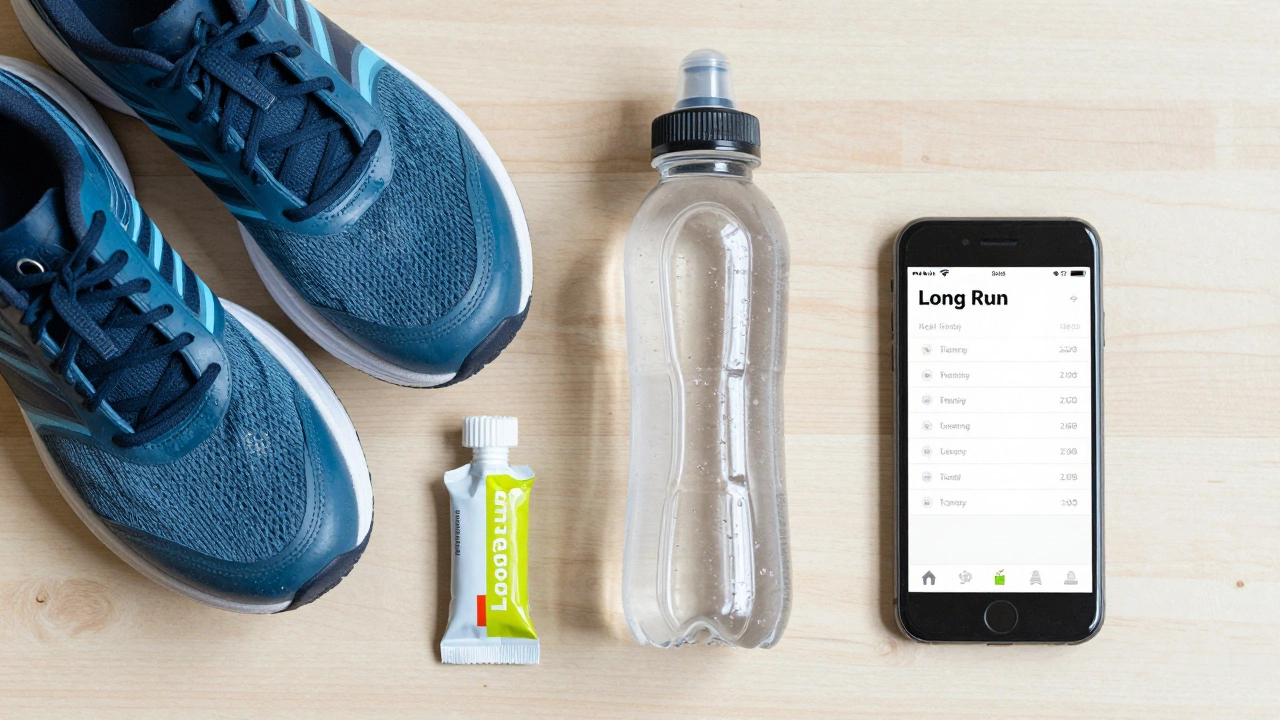
For a 5K, water before the race is usually enough. For a 10K, especially if it lasts longer than 60 minutes, nutrition becomes a tactical element. You need to practice fueling during your long runs.
Start experimenting with energy gels are concentrated carbohydrate sources designed to provide quick energy during endurance exercise or chews during your 5-mile and 6-mile runs. Don't try new food on race day. Your stomach needs to get used to processing calories while moving. Aim for 30-60 grams of carbohydrates per hour once you pass the one-hour mark.
Hydration is equally critical. Dehydration reduces blood volume, making your heart work harder to pump oxygen to your muscles. On hot days, sweat loss can exceed 1 liter per hour. Weigh yourself before and after your long runs. For every pound lost, drink 16-20 ounces of fluid to replenish. Electrolytes (sodium, potassium) are crucial if you are a salty sweater, as plain water alone won't replace what you've lost.
Mental Toughness and Pacing
The physical ability to run 10K is only half the battle. The mental aspect is where most beginners fail. Around mile 4 or 5, your brain will start sending signals to stop. It’s a survival mechanism. You need to train your mind to ignore these signals.
One effective strategy is negative splitting is a pacing strategy where the second half of a race is run faster than the first half. Instead of sprinting out of the starting line, start slow. Run the first 3 miles slower than your goal pace. This conserves glycogen and keeps your heart rate manageable. Then, gradually pick up the pace in the final 3 miles. This approach leaves you feeling strong at the finish line rather than collapsed.
Break the race into chunks. Don't think about 6.2 miles. Think about getting to the next water station, or the next landmark. Visualization helps. Imagine crossing the finish line, hearing the crowd, and feeling the relief. This positive reinforcement keeps motivation high when your legs feel heavy.
| Aspect | 5K Focus | 10K Focus |
|---|---|---|
| Primary Energy System | Anaerobic (Glycogen) | Aerobic (Fat + Glycogen) |
| Pacing Strategy | All-out effort | Conservative start, negative split |
| Longest Weekly Run | 3-4 miles | 6-8 miles |
| Nutrition Needs | Pre-race meal only | In-run fueling (gels/chews) |
| Recovery Time | 24-48 hours | 48-72 hours |

Common Pitfalls to Avoid
Even with a good plan, mistakes happen. Here are the most common errors runners make when doubling their distance:
- Ignoring Strength Training: Running alone creates imbalances. Incorporate squats, lunges, and core exercises twice a week. Strong glutes and hips protect your knees and lower back during long runs.
- Wearing Old Shoes: Running shoes lose cushioning after 300-500 miles. If your shoes are old, your impact absorption is compromised. Get fitted at a specialty running store before starting your 10K training.
- Rushing the Long Run: The purpose of the long run is time on feet, not speed. Going too fast ruins your recovery for the rest of the week.
- Neglecting Sleep: Sleep is when growth hormone repairs muscle tissue. Aim for 7-9 hours per night. Poor sleep increases cortisol levels, which breaks down muscle and hinders fat loss.
From 10K to Marathon: The Next Step
Once you complete your first 10K, you might wonder about the marathon is a long-distance race of approximately 26.2 miles or 42.195 kilometers. The jump from 10K to marathon is even larger than 5K to 10K. It requires 16-20 weeks of dedicated training. However, completing a 10K proves you have the discipline and basic endurance needed for longer distances. Treat your 10K as a milestone, not the destination. It validates your ability to manage fatigue, nutrition, and pacing-skills that are directly transferable to half-marathons and full marathons.
If you enjoy the process, consider signing up for a local 10K event three months from now. Having a date on the calendar provides accountability. Use this time to build your aerobic base, experiment with gear, and refine your mental strategies. You already have the engine; now you just need to tune it for distance.
How long does it take to train for a 10K if I can run a 5K?
It typically takes 8 to 12 weeks of consistent training to safely transition from a 5K to a 10K. This timeline allows your body to adapt to the increased mileage and develop the necessary aerobic endurance without risking injury.
Do I need to change my running shoes for a 10K?
Not necessarily, but you should check the mileage on your current pair. If they have been used for more than 300-500 miles, the cushioning is likely worn out. For a 10K, you want maximum support and shock absorption, so fresh shoes are recommended.
What should I eat before a 10K race?
Eat a carb-rich meal 2-3 hours before the race, such as oatmeal with banana or toast with honey. Avoid high-fiber or high-fat foods that can cause digestive distress. During the race, consider an energy gel if you expect to run longer than 60 minutes.
Is it safe to run a 10K immediately after finishing a 5K?
No. While you have the fitness to finish a 5K, your body is not adapted for the double distance. Attempting a 10K without proper training increases the risk of shin splints, stress fractures, and severe muscle soreness. Follow a gradual progression plan.
How do I prevent cramping during a 10K?
Cramping is often caused by dehydration and electrolyte imbalance. Ensure you are well-hydrated in the days leading up to the race. During the run, sip on electrolyte drinks if it's hot or humid. Stretching lightly before the race can also help prepare your muscles for sustained activity.