
Half Marathon Transition Calculator
You’ve just finished your first 10K. Maybe it took you an hour, maybe forty minutes. Your legs are tired, but you’re standing at the finish line, feeling that surge of pride. Then you see the flyer for the local half marathon-21.1 kilometers away. It’s not double the distance; it’s double the effort, right? Or is it?
Here is the short answer: Yes, you can absolutely run a half marathon if you can run a 10K. But there is a massive difference between *finishing* a 10K and being *ready* for a half marathon without hating every step of the second half.
The jump from 10K (6.2 miles) to a half marathon (13.1 miles) is one of the most common transitions in running. It feels manageable because you already have the base. However, many runners make the mistake of thinking they just need to add more miles to their current routine. That approach usually leads to injury or burnout before race day. Let’s look at what actually changes when you double your distance and how to do it safely.
The Math Doesn’t Lie: Why Distance Is Deceptive
When you move from a 5K to a 10K, you double the distance. When you move from a 10K to a half marathon, you also double the distance. Mathematically, it seems like the same leap. Physiologically, it is completely different.
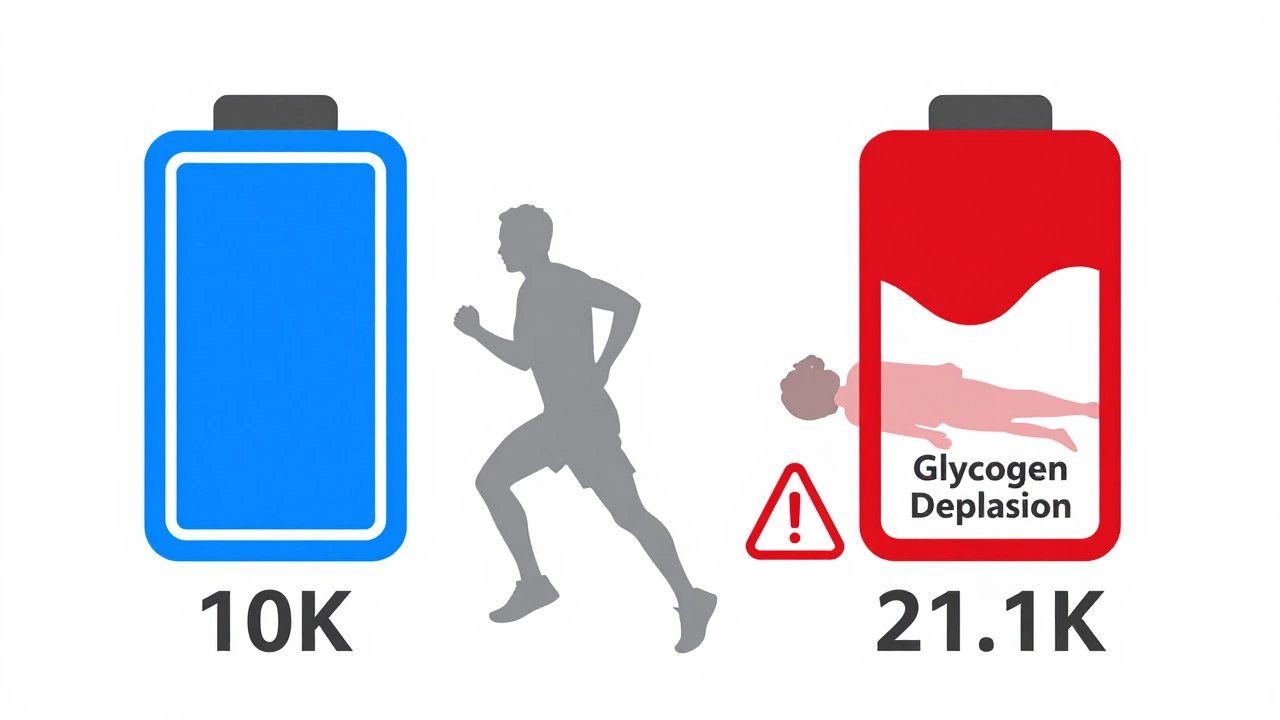
In a 10K, you rely heavily on speed and anaerobic capacity. You might start fast, push through the pain barrier at mile 4, and sprint home. In a half marathon, speed is secondary to efficiency. The real enemy isn’t the first 10K; it’s the last 6.2 kilometers. This is where glycogen stores deplete, form breaks down, and mental fatigue sets in.
Glycogen depletion is the state where your muscles run out of stored energy, leading to extreme fatigue known as 'hitting the wall'. While less severe than in a full marathon, this effect becomes noticeable around mile 10 for most recreational runners.If you try to run a half marathon using only your 10K fitness, you will likely hit a wall around kilometer 12. Your pace will drop significantly, and you may be forced to walk. To avoid this, you need to build specific aerobic endurance, not just raw mileage.
Building the Base: What Changes in Your Training?
Your current 10K training probably involves a mix of interval runs, tempo runs, and one long run per week. To transition to a half marathon, you need to shift the focus. Speed work takes a backseat; volume takes center stage.
- Increase Weekly Mileage Gradually: Do not jump from 20km to 40km overnight. Follow the 10% rule. If you currently run 20km a week, aim for 22km the next week. This allows your tendons, ligaments, and bones to adapt to the increased load.
- The Long Run Becomes King: Your longest run should gradually increase from 10K to 18-20K. These runs teach your body to burn fat for fuel rather than relying solely on carbohydrates. Aim to complete these runs at a conversational pace. If you can’t hold a conversation, you’re going too fast.
- Cut Back on Intensity: Reduce high-intensity interval sessions. Replace them with easy recovery runs. Easy runs flush out lactate and promote blood flow without stressing the central nervous system.
A typical 10-to-half transition plan lasts 12 to 16 weeks. Rushing this process is the number one reason new half-marathoners get injured. Patience is not just a virtue here; it’s a physiological requirement.
Fueling: Eating and Drinking Like a Pro
In a 10K, you rarely need to eat or drink during the race. A pre-race banana and some water are usually enough. In a half marathon, nutrition becomes a critical skill. You cannot ignore hunger or thirst for 90+ minutes.
| Aspect | 10K Race | Half Marathon Race |
|---|---|---|
| Pre-Race Meal | Light carb snack 1 hour prior | Substantial carb meal 2-3 hours prior |
| During Race | Water only (if needed) | Electrolytes + Carbs every 45 mins |
| Hydration | Sip water if hot | Regular sips every aid station |
Practice your nutrition strategy during your long training runs. Try different gels, chews, or bananas. Some people tolerate caffeine well; others get stomach cramps. Find out what works for you before race day. Aim for 30-60 grams of carbohydrates per hour during the race. This keeps your blood sugar stable and delays fatigue.
Mental Toughness: The Invisible Muscle
Physical preparation gets you to the starting line. Mental preparation gets you to the finish line. Running 10K is mostly physical. Running 21.1K is 50% mental.
You will face moments of doubt. Around kilometer 15, your brain will scream at you to stop. It will tell you that you’re slow, that you’re hurt, that walking is fine. This is normal. Every runner experiences this. The key is to have a plan for these moments.
- Break It Down: Don’t think about the remaining 6 kilometers. Think about reaching the next lamp post, the next tree, the next mile marker. Small goals are achievable.
- Positive Self-Talk: Replace “I’m tired” with “I am strong.” Replace “This hurts” with “This is temporary.” Your thoughts influence your perception of pain.
- Focus on Form: When fatigue sets in, your posture slumps. Consciously check your form. Shoulders down, head up, arms swinging freely. Good form reduces energy expenditure.
Veteran runners often say that the half marathon is won in the mind. If you believe you can finish, you will find the strength to keep moving, even if it’s a shuffle.
Recovery: The Secret Weapon
Training stresses your body. Recovery builds your body. Without adequate rest, you are just breaking yourself down. Many runners underestimate the importance of sleep and active recovery.
Aim for 7-9 hours of quality sleep each night. This is when your body repairs muscle tissue and consolidates motor skills. On rest days, consider gentle activities like walking, swimming, or yoga. These activities promote blood flow without impact, helping to clear metabolic waste from your muscles.
Listen to your body. If you feel sharp pain, not just soreness, take an extra rest day. Pushing through injury is not heroic; it’s counterproductive. A few days off now can save you months of rehabilitation later.

Race Day Strategy: Pacing for Success
On race day, excitement can lead to starting too fast. Adrenaline makes you feel invincible. Resist the urge to sprint out of the starting corral. Start slower than you think you need to.
Aim for negative splitting. This means running the second half of the race slightly faster than the first half. For example, if your goal pace is 5:30 per kilometer, start at 5:45. As your body warms up and settles into a rhythm, you can gradually pick up the pace. This strategy conserves energy and prevents early fatigue.
Stay hydrated from the beginning. Drink at every aid station, even if you don’t feel thirsty. Thirst is a late indicator of dehydration. By the time you feel thirsty, you are already behind the curve.
Common Pitfalls to Avoid
As you prepare for your half marathon, watch out for these common mistakes:
- Too Much, Too Soon: Increasing mileage by more than 10% per week significantly increases injury risk.
- Ignoring Strength Training: Incorporate two days of strength training per week. Focus on core, glutes, and hips. Strong muscles support joints and improve running economy.
- New Gear on Race Day: Never wear new shoes, socks, or clothing on race day. Break them in during your long runs to prevent blisters and chafing.
- Neglecting Tapering: Reduce your mileage in the final two weeks before the race. This allows your body to fully recover and store energy for race day.
Transitioning from a 10K to a half marathon is a rewarding challenge. It requires patience, smart training, and mental resilience. But with the right approach, you will cross that finish line not just exhausted, but empowered. You’ll prove to yourself that you are capable of more than you imagined. Now, lace up your shoes and start planning your journey.
How long does it take to train for a half marathon after running a 10K?
Most runners need 12 to 16 weeks to safely transition from a 10K to a half marathon. This timeframe allows for gradual increases in mileage and proper adaptation of muscles and joints. If you are very new to running, you might need up to 20 weeks to build a solid base.
Can I run a half marathon without training if I can run a 10K?
Technically, yes, but it is not recommended. While you have the cardiovascular base, you lack the specific muscular endurance and fueling strategies needed for 21.1 kilometers. Attempting this without training significantly increases your risk of injury, severe fatigue, and a poor race experience. Proper training ensures you enjoy the race and finish strong.
What is the best pace for my first half marathon?
Your best pace is a comfortable, conversational pace. Do not worry about speed initially. Aim to finish the race feeling like you could have gone a bit further. A good rule of thumb is to run 45-60 seconds per kilometer slower than your 10K race pace. This conservative approach helps you avoid hitting the wall late in the race.
Do I need to eat during a half marathon?
Yes, especially if the race lasts longer than 90 minutes. Consuming 30-60 grams of carbohydrates per hour helps maintain blood sugar levels and delays fatigue. Energy gels, chews, or bananas are popular options. Practice your nutrition strategy during long training runs to ensure your stomach tolerates it well.
How much should I taper before the race?
Tapering involves reducing your weekly mileage by 20-30% each week for the final two to three weeks before the race. This allows your body to recover from training stress and store glycogen. Keep some short, easy runs to stay loose, but avoid long distances or high-intensity workouts during this period.