The "Einsteinian" Golf Shot Simulator
Einstein didn't play, but he would have loved the math. Input your shot parameters to see the theoretical distance and peak height.
Einstein's Perspective:
While this tool uses simplified vacuum physics, Einstein would remind you that in the real world, Fluid Dynamics (air resistance) and the Magnus Effect (backspin) significantly alter the ball's path, often keeping it in the air longer and curving it upwards.
Quick Facts
- No documented record of Albert Einstein playing golf exists in his archives.
- He preferred solitary or musical hobbies like the violin.
- His approach to leisure was about "mental detachment" rather than competitive sport.
- Golf's popularity grew during his life, but he remained indifferent to it.
The Mystery of the Missing Golf Bag
If you dig through the massive archives at the Einstein Archives, you'll find letters to world leaders, complex equations, and notes on his love for Mozart. But you won't find a single mention of a handicap or a favorite club. For a man whose life has been dissected by historians for decades, the absence of golf is telling. Usually, when a public figure of his stature engages in a popular hobby, there's a paper trail-a mention in a diary, a photo of them in knickers, or a anecdote from a colleague.
Why does this matter? Because golf is often seen as the "thinking person's game." It requires geometry, physics, and an understanding of wind resistance-all things Einstein excelled at. It seems almost unnatural that he wouldn't be drawn to a sport that is essentially a physics problem played out over 18 holes. However, Einstein's interest in physics was a passion, not a puzzle he wanted to solve during his downtime.
What He Actually Did to Relax
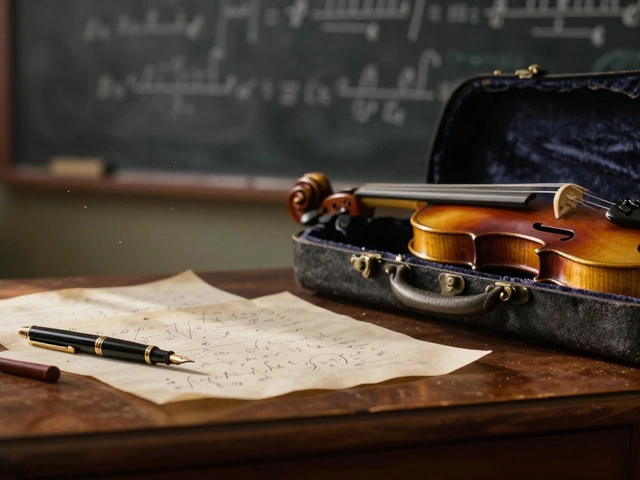
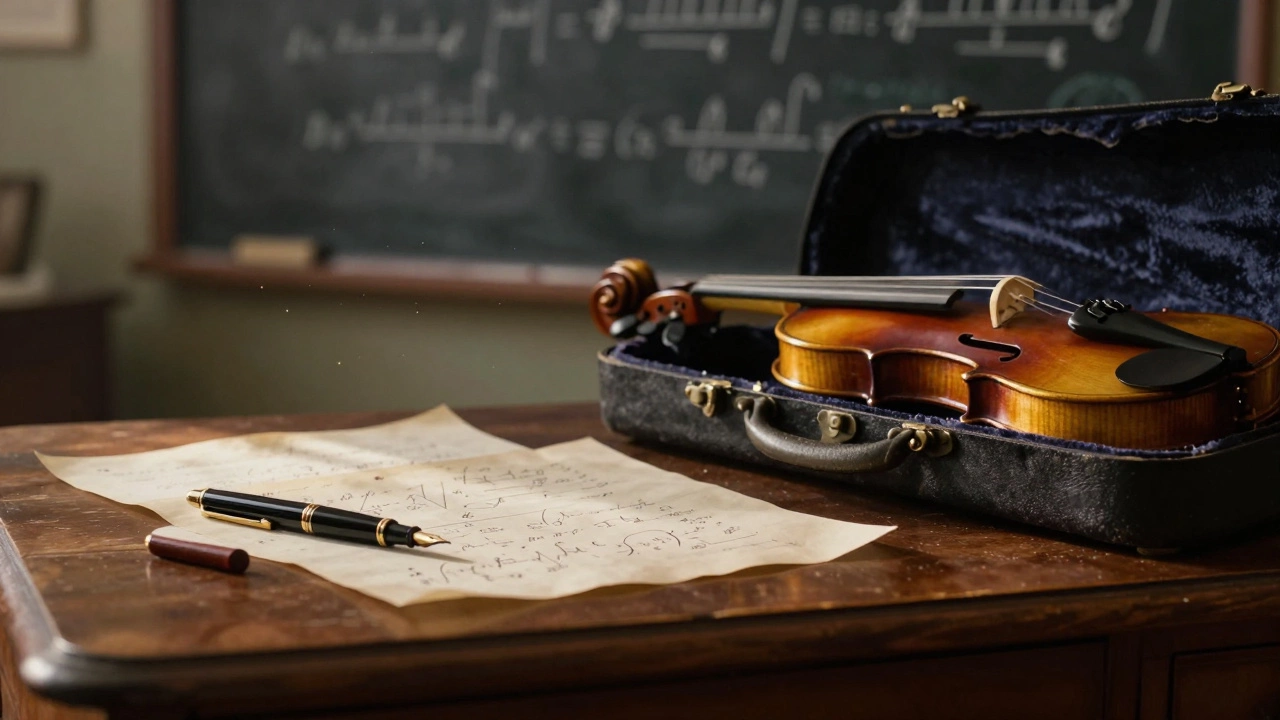
To understand why he skipped the golf course, we have to look at what actually captured his attention. Einstein practiced what some call "combinatory play." He didn't want a game with a rigid set of rules and a social hierarchy, which golf often embodies. Instead, he turned to Music. He famously said that if he weren't a physicist, he would probably be a musician. He played the violin, often using it to clear his head when he hit a wall with a mathematical problem.
He also had a deep love for Sailing. Now, sailing involves a bit of physics-wind vectors and buoyancy-but it's far more fluid than golf. Sailing allowed him to be alone with nature, whereas golf is a social contract. Einstein was known to be a bit of a loner, or at least someone who valued his solitude deeply. The social pressure of a golf foursome likely would have been a chore rather than a relaxation.
| Feature | Einstein's Hobbies (Music/Sailing) | Traditional Golf |
|---|---|---|
| Social Dynamic | Solitary or Intimate | Group-oriented / Networking |
| Structure | Fluid and Expressive | Rigid Rules and Etiquette |
| Mental State | Creative "Flow" | Tactical Calculation |
| Physicality | Low-impact / Rhythmic | Repetitive / Precision-based |
The Physics of the Swing: What He Would Have Seen
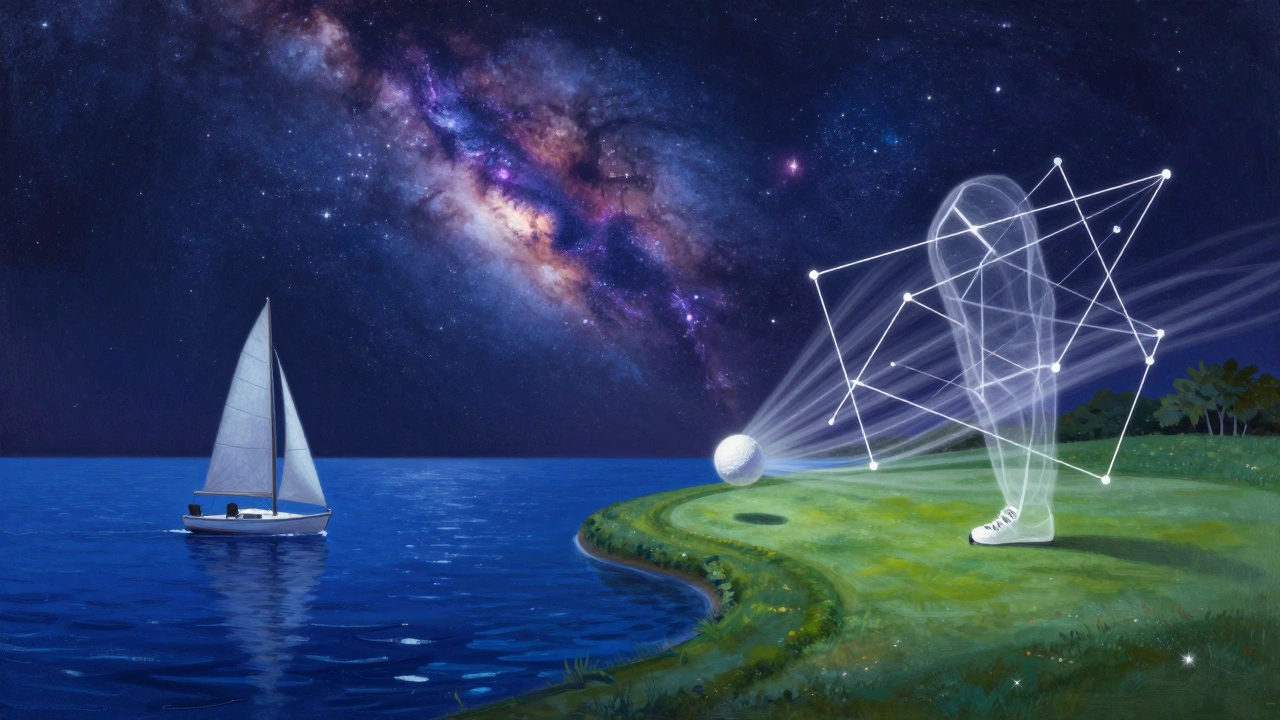
Even though he didn't play, we can speculate on how a mind like his would approach a golf swing. A golf ball's flight is a masterclass in Fluid Dynamics. The dimples on the ball are designed to create a thin turbulent boundary layer of air that clings to the ball's surface, reducing drag and allowing it to fly further. Einstein, who spent his life thinking about the behavior of light and matter, would have likely found the aerodynamics fascinating from a theoretical standpoint.
He would have noticed the Magnus effect-the phenomenon where a spinning ball curves in flight. For most golfers, a "slice" is a mistake. For Einstein, it would be a visible demonstration of pressure differences in the air. He probably would have spent more time calculating the optimal launch angle and spin rate than actually hitting the ball. When your brain is wired to question the very nature of gravity, spending four hours trying to put a small white sphere into a hole might feel a bit trivial.
Comparing the "Genius" Sport Culture
It's interesting to note that many other intellectuals did embrace the game. In the early 20th century, golf became a status symbol for the academic and political elite. It was a way to conduct business and debate policy in a relaxed setting. But Einstein always marched to his own beat. He famously wore socks only when he felt like it and ignored the fashion trends of his time. Joining a golf club would have required a level of conformity that he simply didn't possess.
Contrast this with someone like Richard Feynman, another legendary physicist who was known for his eclectic and often chaotic interests. While Feynman didn't necessarily obsess over golf, he was much more likely to engage in a wide variety of "street-level" activities. Einstein's leisure was more meditative. He needed silence and a violin, not the rhythmic thwack of a driver and the chatter of a caddie.
Why the Rumor Persists
You might wonder why this question even comes up. Part of it is the "genius trope." We love the idea of a polymath who is good at everything-someone who can solve the mysteries of the universe and then sink a 30-foot putt for birdie. It makes the genius feel more relatable. There are also plenty of stories about other scientists playing sports, which leads people to assume Einstein did too.
Additionally, the overlap between the physics community and the golf community is surprisingly large today. Many professors use the golf course as a place to discuss research. This modern trend often gets projected backward onto historical figures. But if you look at the actual timeline of his life in Germany, Switzerland, and the US, there's just no gap in his schedule that suggests a weekly round of golf.
Lessons from Einstein's Lack of Golf
There's a certain lesson in the fact that Einstein didn't play. He understood the value of total mental immersion. Whether he was playing the violin or thinking about General Relativity, he was fully present. Golf, for many, is a way to distract the mind. Einstein didn't want to distract his mind; he wanted to direct it. He used his hobbies as tools to unlock his professional work, not as an escape from it.
If you're a golfer who also loves science, you can appreciate the game as a living laboratory. You're dealing with friction, torque, and angular momentum every time you tee off. Einstein didn't need to play the game to understand the physics, and he didn't need the game to find peace. He found his peace in the harmony of a stringed instrument and the silence of his own thoughts.
Did Albert Einstein ever try to play golf?
There is no documented evidence in his personal letters, diaries, or biographies suggesting that he ever tried to play golf. His recorded hobbies were primarily musical and nautical.
What were Albert Einstein's favorite hobbies?
Einstein was an avid violinist and loved classical music, particularly Mozart and Bach. He also enjoyed sailing, which provided him with the solitude and mental space he needed for his theoretical work.
Would golf have been easy for someone with Einstein's knowledge of physics?
Not necessarily. Understanding the physics of a golf ball (like the Magnus effect and aerodynamics) is very different from the muscle memory and psychological discipline required to actually hit the ball consistently. Theoretical knowledge doesn't automatically translate to athletic skill.
Why is there a misconception that he played golf?
This often stems from the general association between "intellectuals" and "golf," as well as the human desire to imagine a genius being a master of all trades, including sports.
Did any other famous physicists play golf?
Yes, many modern scientists and professors enjoy golf as a social and strategic outlet, but Einstein himself remained a notable exception to this trend during his era.
Final Thoughts for the Curious
If you're looking for ways to "think like Einstein" on the golf course, don't focus on the textbook physics of the swing. Instead, focus on his approach to problem-solving: curiosity and a willingness to look at the problem from a completely different angle. Maybe instead of fighting your slice, you can view it as a creative challenge in trajectory. While he never stepped onto the grass, his spirit of inquiry is something every golfer can use to improve their game.