
Rugby vs American Football Identifier
How to Identify the Sport
This tool helps you distinguish between rugby and American football based on key characteristics from the article. Select the options that match the sport you're observing, then click "Identify Sport" to see which sport it is.
Select Features
Ask an American what they call rugby, and you’ll get a blank stare-or worse, they’ll say "football." But that’s not right. Not even close. In the United States, the sport known globally as rugby is called rugby. No nickname. No alias. Just rugby. And yet, most Americans don’t know it exists outside of the Olympics or the World Cup. Why? Because in the U.S., "football" means something else entirely.
It’s Not Called American Rugby
You might think Americans have a special name for rugby, like "American rugby" or "gridiron rugby." They don’t. The sport played with an oval ball, 15 players per side, and no protective pads is simply called rugby. In schools, clubs, and college teams across the country, it’s labeled "rugby" on schedules, jerseys, and field signs. The USA Rugby organization, founded in 1975, uses that name. So do the men’s and women’s national teams: the USA Eagles and USA Women’s Eagles.The confusion comes from American football. That’s the sport with helmets, shoulder pads, and stop-and-start plays. It’s the one that fills stadiums on Thanksgiving and Super Bowl Sunday. To most Americans, "football" means that. So when they hear "rugby," they don’t think of it as a cousin-it’s a foreign game. And that’s the problem.
Why Americans Don’t Recognize Rugby as Football
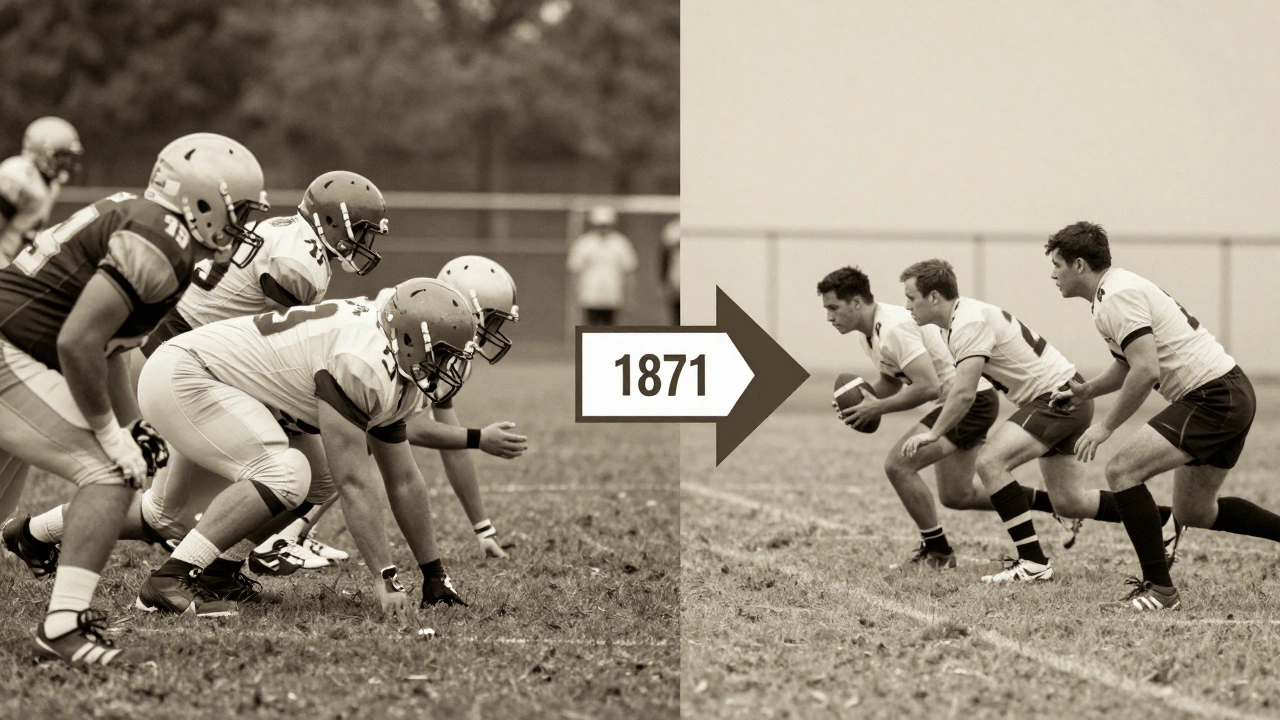
Rugby and American football share the same roots. Both evolved from football games played in 19th-century England. In 1871, rugby split into two codes: rugby union and rugby league. Around the same time, American colleges started tweaking the rules-adding forward passes, downs, and blocking-to make the game more strategic and less chaotic. By the 1900s, it had become a new sport: American football.But here’s the twist: Americans didn’t rename rugby. They renamed themselves. While the rest of the world kept "rugby" for the original game, the U.S. claimed "football" for the modified version. So now, when you watch a rugby match in Australia or England, you’re seeing the sport that American football came from. But in the U.S., that sport doesn’t have a fancy name-it just has a small following.
Rugby in the U.S.: Who Plays It?
There are about 125,000 registered rugby players in the United States, according to USA Rugby’s 2024 report. Most are in high schools and colleges. The sport is growing fastest in states like California, Texas, and New York. College rugby isn’t part of the NCAA, but over 900 college teams compete under USA Rugby’s umbrella. Women’s rugby is the fastest-growing segment, with participation up 42% since 2019.Professional rugby exists too, but it’s niche. Major League Rugby (MLR), launched in 2018, has 14 teams across the U.S. and Canada. Teams like the Seattle Seawolves and the New England Free Jacks draw crowds of 5,000 to 10,000 fans per game. That’s tiny compared to the NFL, but it’s growing. The 2024 MLR final had over 15,000 attendees-the largest crowd in league history.
What Americans Get Wrong About Rugby
Many Americans think rugby is just "football without pads." That’s not true. The rules are completely different. In rugby, you can’t throw the ball forward. You can only pass backward or laterally. Tackling is allowed, but you can’t hit the head or go high. There’s no stopping the clock after every play. Games last 80 minutes, non-stop, with only a 10-minute halftime.And the physicality? Rugby players don’t wear helmets or shoulder pads. They wear mouthguards, light headgear (optional), and sometimes padded shirts. The sport demands endurance, speed, and raw toughness. You don’t need to be 300 pounds to play. Many top players are under 200 pounds. That’s why rugby is popular among athletes from soccer, basketball, and track backgrounds.
Why the Name Matters
Calling rugby "American football" isn’t just wrong-it erases history. Rugby came first. American football is a descendant. If you call rugby "football," you’re not honoring its roots. You’re making it invisible.That’s why rugby fans in the U.S. push back. They don’t want to be confused with NFL fans. They don’t want their sport to be treated like a novelty. They want recognition. That’s why you’ll see signs at games that say: "This is rugby. Not football. Not soccer. Rugby." It’s a quiet rebellion.

How to Tell the Difference
If you’re trying to figure out which sport you’re watching, here’s how:- Rugby: Oval ball, no pads, continuous play, no downs, 15 players per side, tries worth 5 points.
- American Football: Pointed ball, full pads, stop-start play, four downs, 11 players per side, touchdowns worth 6 points.
- Soccer: Round ball, no hands (except goalie), 11 players, goals worth 1 point.
If you see players wearing no helmets and tackling without stopping the clock, you’re watching rugby. If you see men in full armor lining up for a 5-yard gain, you’re watching American football.
The Future of Rugby in America
Rugby is slowly gaining ground. The U.S. hosted the 2027 Rugby World Cup, and that’s pushing investment into youth programs, coaching, and media coverage. Streaming services like Peacock and ESPN+ now broadcast MLR games. High schools in 48 states offer rugby as a varsity sport. The women’s team won silver at the 2024 Olympic sevens tournament-their best result ever.But the biggest hurdle isn’t skill or funding. It’s perception. Until more Americans understand that rugby isn’t a version of football-it’s its own game-it’ll stay in the shadows. The name "rugby" isn’t a barrier. It’s the truth.
What Do Americans Call Rugby? The Answer Is Simple
They call it rugby. Just rugby. No fancy name. No translation. Just the real thing. The confusion isn’t about the name-it’s about awareness. And that’s changing. Slowly. But it’s changing.Do Americans call rugby "football"?
No, Americans don’t call rugby "football." They call it rugby. The sport Americans call "football" is American football-a different game with different rules, equipment, and history. Confusing the two is common, but it’s incorrect.
Is rugby popular in the U.S.?
Rugby isn’t mainstream in the U.S., but it’s growing. About 125,000 people play regularly, mostly in high schools and colleges. Major League Rugby has 14 teams, and women’s participation has jumped 42% since 2019. The 2027 Rugby World Cup being hosted in the U.S. is expected to boost interest significantly.
Is rugby the same as American football?
No. Rugby and American football share a common origin, but they’re different sports. Rugby has continuous play, no forward passes, no downs, and no protective pads. American football has stop-start plays, forward passes, downs, and full padding. The rules, scoring, and physical demands are not the same.
Why doesn’t the U.S. have a different name for rugby?
Because rugby has always been called rugby in the U.S. The name wasn’t changed because the sport never became dominant. When American football rose in popularity, it took the name "football," leaving rugby with its original name. There was no need to rename it-there just wasn’t enough demand to make it mainstream.
Can you play rugby in American high schools?
Yes. Rugby is offered as a varsity sport in over 1,000 high schools across 48 states. Many schools have both men’s and women’s teams. It’s especially popular in California, Texas, New York, and Colorado. The sport is often played in the spring, after football season ends.