Training Goal Rep Calculator
Your Recommended Protocol
Pro Tips for this Goal:
- • Focus on the mind-muscle connection.
- • Take sets close to failure (1-2 reps left).
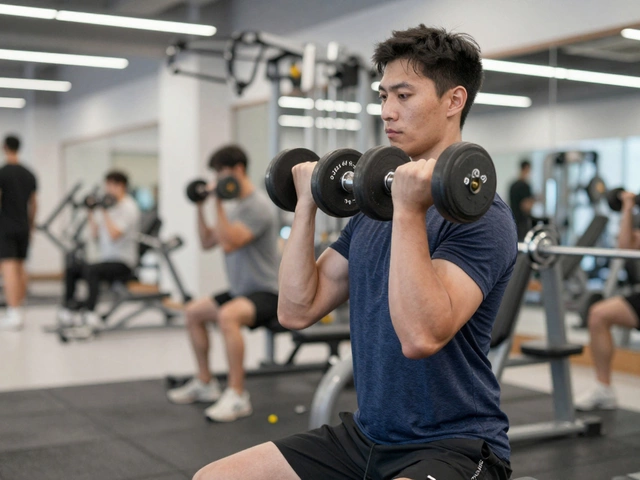
You walk into the gym, pick up a dumbbell, and do three sets of ten repetitions. It feels like a solid effort. You leave feeling accomplished. But here is the uncomfortable truth: that routine might be doing absolutely nothing for your goals. Or worse, it might be actively holding you back.
The "3 sets of 10" protocol is the default setting for most commercial gyms. It’s written on the machines. It’s what personal trainers suggest to beginners because it looks safe. But human physiology doesn’t care about what looks good on a brochure. If you want to build serious muscle (hypertrophy) or get stronger (strength), treating every exercise with the same rep count is a recipe for mediocrity.
So, is 3 sets of 10 good? The short answer is: it depends entirely on what you are trying to achieve. For some goals, it is perfect. For others, it is inefficient garbage. Let’s break down exactly when this rep range works, when it fails, and how to adjust your training to actually see results in 2026.
The Science Behind the Rep Range
To understand why 3x10 is so popular, we have to look at the two main drivers of physical change: mechanical tension and metabolic stress. When you lift a weight, you create tension in your muscles. This tension signals your body to adapt by getting bigger or stronger.
Hypertrophy is the process of increasing muscle fiber size through resistance training. Historically, fitness science taught us that high reps (8-12) were the "magic window" for muscle growth. This is where 3 sets of 10 comes from. The logic was that lower reps built strength, higher reps built endurance, and middle reps built size.
However, modern research has shifted this view. Studies published in journals like the Journal of Strength and Conditioning Research now show that muscle growth can occur across a wide spectrum of rep ranges-from as low as 5 reps to as high as 30-provided you take the set close to failure. Failure means you physically cannot complete another rep with good form.
If you do 3 sets of 10 but stop when you could have easily done 15 more, you haven’t stimulated growth. You’ve just moved air around. The rep range matters less than the intensity. That said, 10 reps is still a very efficient sweet spot for many people because it balances fatigue and volume well.
When 3 Sets of 10 Is Actually Great
There are specific scenarios where sticking to 3 sets of 10 is not just acceptable, but optimal. Knowing these will save you time and prevent injury.
- Isolation Exercises: Movements like bicep curls, lateral raises, or tricep extensions work smaller muscle groups. These muscles recover faster and don’t require heavy loads to fail. Ten reps allow you to focus on the mind-muscle connection without risking joint strain from heavy weights.
- Beginner Adaptation: If you are new to lifting, your nervous system needs to learn the movement pattern. 3x10 provides enough volume to teach your brain how to move, without the high technical demand of heavy squats or deadlifts.
- Metabolic Stress Training: Some athletes use higher reps to increase blood flow to the muscle (the "pump"). This creates metabolic waste products like lactate, which may signal growth hormones. 10 reps is a good starting point for this style.
- Rehabilitation: If you are coming back from an injury, 3x10 allows you to rebuild tendon and ligament strength gradually without placing maximal shear force on the joints.
For example, if you are doing cable flyes for your chest, 3 sets of 10 is likely better than 3 sets of 5. You aren’t trying to move a massive load; you are trying to squeeze the pecs. The moderate weight allows for a full range of motion and constant tension.
When 3 Sets of 10 Fails You
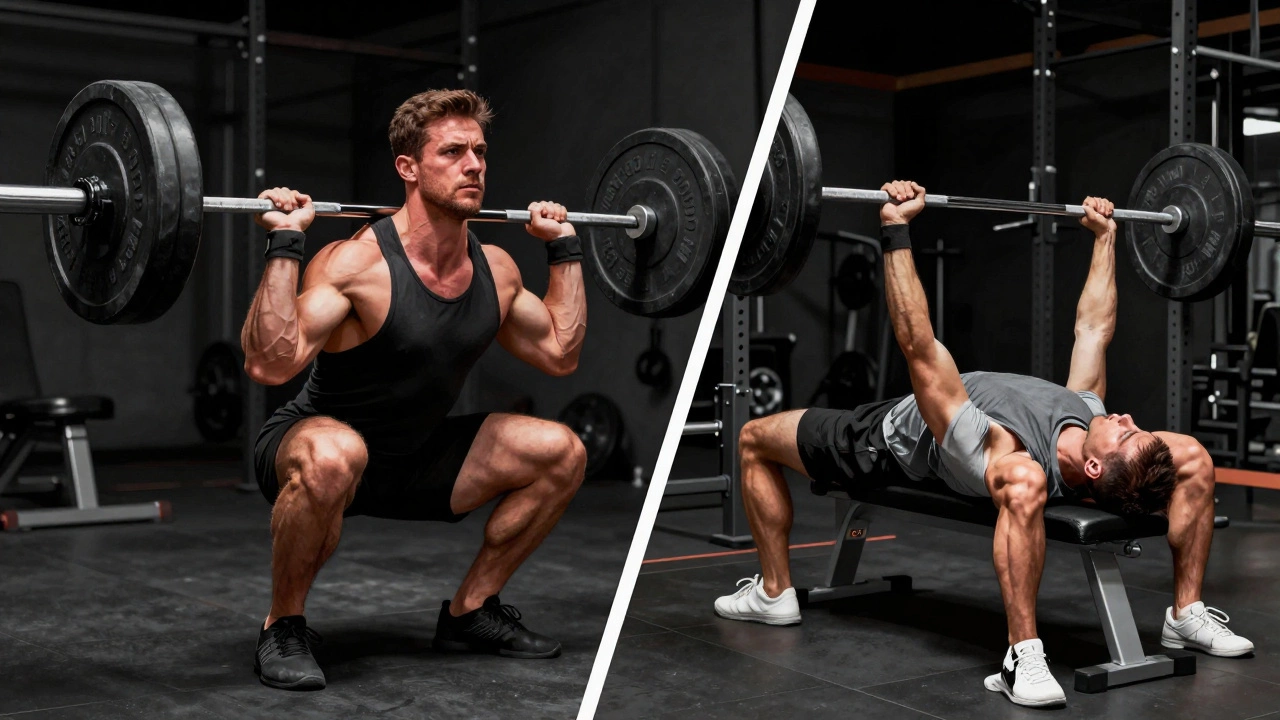
Here is where most people get stuck. They apply the 3x10 rule to compound lifts like squats, bench presses, and deadlifts. This is a mistake if your goal is maximum strength or significant mass.
Strength Training is resistance exercise focused on increasing the force production capacity of the neuromuscular system. To get stronger, you need to lift heavier loads. Heavy loads recruit high-threshold motor units-the big, powerful muscle fibers that don’t fire during lighter sets. If you only ever do 10 reps, you never fully engage these fibers.
| Goal | Optimal Rep Range | Load (% of 1RM) | Why 3x10 Falls Short |
|---|---|---|---|
| Max Strength | 1-5 reps | 85-100% | Weight is too light to stimulate neural adaptations needed for max force. |
| Muscle Size (Hypertrophy) | 6-12 reps | 67-85% | It works, but varying reps (e.g., 8s and 12s) prevents plateaus. |
| Muscular Endurance | 15+ reps | <67% | 10 reps isn't high enough to significantly improve stamina. |
If your goal is to squat 100kg, doing 3 sets of 10 with 60kg won’t help much. Your body adapts to the stress you place on it. If the stress is always moderate, the adaptation will be moderate. You need periods of heavy loading (low reps) to drive strength gains.
Conversely, if you are a runner or athlete needing muscular endurance, 10 reps might not be enough stimulus. You might need sets of 15-20 to train the muscles to resist fatigue over longer periods.
The Problem With "Always" Doing 3x10
The biggest issue with the 3x10 mindset is monotony. Your body is incredibly adaptive. Once it gets used to a certain stimulus, progress slows down. This is called the law of diminishing returns.
If you do 3 sets of 10 for bicep curls every week for six months, you will eventually hit a wall. The weight won’t go up. Your arms won’t grow. Why? Because your muscles have adapted to that specific volume and intensity.
To keep progressing, you need progressive overload. This doesn’t just mean adding weight. It means changing variables:
- Change the Reps: Try 4 sets of 8 one week, then 3 sets of 12 the next. This forces your muscles to adapt to different types of stress.
- Change the Volume: Sometimes you need more sets (4-5) to accumulate enough fatigue. Other times, fewer sets (2-3) with higher intensity work better.
- Change the Tempo: Slow down the eccentric (lowering) phase. A 3-second lower on a 10-rep set makes it feel like a 15-rep set in terms of difficulty.
Think of your training like a diet. If you eat the exact same meal every day, you might get bored, but more importantly, you might miss out on nutrients. Varying your rep ranges ensures you hit all the physiological pathways for growth.
How to Structure Your Workouts Like a Pro
Instead of blindly following 3x10, try periodization. This means planning your training in blocks. Here is a simple way to apply this in 2026:
Block 1: Strength Focus (Weeks 1-4) Focus on compound lifts (Squat, Bench, Deadlift). Use 3-5 sets of 3-5 reps. Rest 3-5 minutes between sets. Goal: Increase the weight on the bar.
Block 2: Hypertrophy Focus (Weeks 5-8) Switch to moderate loads. Use 3-4 sets of 8-12 reps. Rest 60-90 seconds. Goal: Feel the burn, maximize muscle damage and metabolic stress.
Block 3: Power/Endurance Focus (Weeks 9-12) Use lighter weights for higher reps (15-20) or explosive movements. Rest 30-60 seconds. Goal: Improve work capacity and active recovery.
This approach keeps your body guessing and prevents plateaus. It also reduces the risk of overuse injuries, which are common when you grind out the same 3x10 routine forever.
Common Mistakes to Avoid
Even if you choose the right rep range, you can still fail to see results if you mess up the execution. Here are the most common pitfalls:
- Ego Lifting: Using a weight so heavy that you can’t complete 10 reps with good form. If you’re swinging your hips on a deadlift or arching your back on a bench press, the weight is too heavy. Drop it. Form first, weight second.
- Not Going Close to Failure: If you finish a set of 10 and feel like you could have done 5 more, you didn’t stimulate growth. Aim to have 1-2 reps left in the tank (RPE 8-9). This is known as Reserve Reps in Tank (RIR).
- Ignoring Rest Times: Resting 30 seconds between heavy sets is useless. Your ATP-PC energy system needs 2-3 minutes to replenish for strength work. For hypertrophy, 60-90 seconds is usually sufficient.
- Skipping Warm-ups: Jumping straight into 3 sets of 10 cold increases injury risk. Do 1-2 light warm-up sets before your working sets.
FAQ
Is 3 sets of 10 enough to build muscle?
Yes, 3 sets of 10 can build muscle if you perform the reps with good form and take the set close to failure (meaning you could only do 1-2 more reps). However, relying solely on this rep range for all exercises may limit long-term progress. Varying your rep ranges helps prevent plateaus and targets different muscle fibers.
Should I do 3 sets of 10 for squats and deadlifts?
For general fitness, yes. For maximum strength, no. Squats and deadlifts are compound movements that benefit from heavier loads and lower reps (3-5 reps per set). Doing 10 reps with a heavy weight can compromise your form and increase injury risk. Save the higher rep ranges for accessory exercises like lunges or step-ups.
How many rest minutes should I take between sets?
Rest times depend on your goal. For strength (low reps), rest 2-5 minutes to fully recover your energy systems. For muscle growth (moderate reps), rest 60-90 seconds. For endurance (high reps), rest 30-60 seconds. Adequate rest ensures you can maintain intensity throughout your workout.
What is progressive overload?
Progressive overload is the gradual increase of stress placed on the body during exercise. It can be achieved by adding weight, increasing reps, improving form, or decreasing rest times. Without progressive overload, your body has no reason to adapt and grow stronger or bigger.
Can I mix rep ranges in one workout?
Absolutely. Many effective programs combine different rep ranges. For example, you might start with heavy squats (3x5) for strength, followed by leg presses (3x10) for hypertrophy, and finish with calf raises (3x15) for endurance. Just ensure you manage your fatigue so later exercises aren’t compromised.