Half Marathon Performance Analyzer
Enter your finish time to instantly calculate your average pace and determine where you rank among recreational and elite runners.
Analysis will appear here.
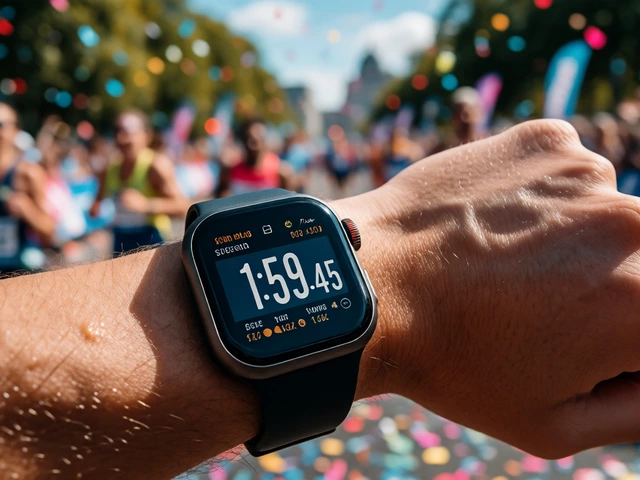
You cross the finish line, check your watch, and see 1:59:45. You did it. You broke the two-hour barrier. But is that actually good? Or are you just one of thousands who managed to limp across before the clock hit double digits?
Here’s the truth: A 2-hour half marathon (21.1km or 13.1 miles) is a solid achievement for most recreational runners. It puts you in the top tier of casual participants, but it sits comfortably below the elite and competitive amateur standards. Whether this time is "good" depends entirely on your age, gender, experience level, and what you’re comparing yourself to.
| Runner Level | Target Time | Average Pace | Who This Is For |
|---|---|---|---|
| Elite | < 1:05:00 | < 3:04 min/km | Professional athletes, national champions |
| Competitive Amateur | 1:10:00 - 1:25:00 | 3:18 - 4:01 min/km | Local club racers, serious hobbyists |
| Intermediate | 1:30:00 - 1:45:00 | 4:15 - 5:00 min/km | Experienced runners with consistent training |
| Beginner / Recreational | 1:50:00 - 2:10:00 | 5:14 - 6:09 min/km | First-time finishers, fitness-focused runners |
Where Does a 2-Hour Finish Rank?
Let’s look at the data. According to large-scale race result aggregators like Running USA and Strava’s global data, the average half marathon finishing time for men hovers around 1:50:00 to 2:00:00, while for women, it typically falls between 2:05:00 and 2:15:00. These averages include everyone from first-timers walking parts of the course to seasoned joggers.
If you finished in under two hours, you are faster than the median runner. That’s a fact. You’ve beaten the statistical middle. For a man, a sub-2 hour time often places him in the top 30-40% of all participants. For a woman, it’s an even stronger relative performance, often placing her in the top 20-30%. So yes, objectively, it is a good time. It shows you have a baseline level of cardiovascular fitness and discipline.
But here’s where context matters. If you’re a 25-year-old male who has been running three times a week for five years, a 2:00 finish might feel disappointing. In that cohort, sub-1:45 is often considered the standard for "fit." Conversely, if you’re a 50-year-old female who started running six months ago, a 2:00 finish is exceptional. Age-adjusted rankings (often called age-grading) can shift perspective dramatically. A 2:00 time for a 60-year-old man is roughly equivalent to a 1:30 time for a 20-year-old. Don’t let raw numbers ignore biology.
The Math Behind the Sub-2 Goal
To break two hours, you need to maintain an average pace of 5:41 per kilometer (or 9:09 per mile). This isn’t sprinting territory, but it’s not jogging either. It requires sustained effort. Let’s break down what this pace demands physically:
- Lactate Threshold: At 5:41/km, you are likely running near your lactate threshold. Your body is clearing lactate as fast as it produces it. Push slightly faster, and fatigue sets in rapidly.
- Heart Rate Zone: Most runners will sit in Zone 3 or low Zone 4 (70-85% of max heart rate) for the entire duration. This is sustainable but uncomfortable.
- Mental Grit: The last 5km is where races are won or lost. Holding a steady pace when your legs scream to stop requires mental resilience.
Many runners fail to break two hours not because they lack speed, but because they start too fast. If you run the first 5km at 5:15/km, you’ll pay for it in the final 5km, slowing to 6:30/km. Consistency is key. Use a GPS watch or phone app to monitor splits every 5km. Aim for negative splits-running the second half slightly faster than the first.

Age and Gender Adjustments
Comparing your time to a generic "average" ignores physiological realities. Peak aerobic capacity generally occurs in your late 20s to early 30s. After 35, VO2 max declines by about 1% per year if you don’t actively train against it. Strength also decreases, affecting running economy.
Consider these realistic targets for a sub-2 hour goal based on age groups (for healthy, trained individuals):
| Age Group | Male Target Context | Female Target Context |
|---|---|---|
| 18-29 | Standard benchmark. Many achieve sub-1:45. | Strong benchmark. Sub-1:50 is common among regular runners. |
| 30-39 | Solid achievement. Requires structured training. | Very good time. Places you well above average. |
| 40-49 | Excellent performance. Top 25% of age group. | Outstanding. Likely podium contender in local masters races. |
| 50+ | Elite-level for age. Highly impressive. | Exceptional. Rare among recreational runners. |
If you’re over 40 and hitting two hours, give yourself credit. You’re fighting natural physiological decline and still performing well. If you’re under 30 and barely scraping under two hours, there’s room for improvement through interval training and increased mileage.
How to Improve Your Time
So, you broke two hours. Now what? Do you chase 1:50? Here’s how to lower your time effectively without burning out.
Increase Weekly Mileage Gradually: Speed comes from endurance. Add 10% to your weekly volume each month until you’re comfortable running 30-40km per week. Longer easy runs build the aerobic base needed to sustain faster paces.
Add Tempo Runs: Once a week, run 20-30 minutes at your goal half-marathon pace (e.g., 5:30/km if aiming for 1:55). This teaches your body to clear lactate efficiently. Start with 15 minutes and build up.
Include Intervals: Short, fast bursts improve running economy. Try 6 x 800 meters at 5k race pace with 2-minute jogs in between. This boosts VO2 max and makes your half-marathon pace feel easier.
Strength Train: Weak glutes and core lead to form breakdown in the final kilometers. Two sessions per week focusing on squats, lunges, planks, and calf raises can prevent injury and improve efficiency.

Common Pitfalls That Ruin Times
Even fit runners miss their goals due to avoidable mistakes. Here’s what usually goes wrong:
- Starting Too Fast: Adrenaline makes you feel invincible in the first kilometer. Slow down. Trust your pacing plan.
- Neglecting Hydration: Dehydration reduces blood volume, making your heart work harder. Sip water at every aid station, especially in hot climates like Adelaide summers.
- Poor Sleep Before Race Day: One bad night’s sleep can impair reaction time and perceived effort. Prioritize rest the week leading up to the race.
- New Gear on Race Day: Never wear new shoes or clothes during a race. Blisters and chafing can slow you down significantly.
Is Breaking Two Hours Worth the Effort?
This is subjective. For some, the number on the watch doesn’t matter-they run for joy, community, or health. For others, breaking barriers provides motivation. If chasing sub-2 adds stress rather than satisfaction, reconsider your goals.
However, having a specific target gives training direction. It transforms vague "going for a run" into purposeful practice. Even if you only shave off five minutes, the process improves overall fitness, discipline, and confidence.
Is a 2-hour half marathon good for a beginner?
Yes, absolutely. For a true beginner with less than six months of consistent running, finishing under two hours is a strong result. It indicates good natural fitness and effective training. Most beginners aim to simply finish, so breaking two hours places you ahead of many first-time participants.
What is the world record for the half marathon?
As of 2026, the men's world record is held by Jacob Kiplimo at approximately 57:31, and the women's record is held by Letesenbet Gidey at around 1:02:52. These times are far beyond the reach of recreational runners, highlighting how wide the performance spectrum is.
How much faster do I need to run to get to 1:50?
To drop from 2:00 to 1:50, you need to improve your average pace by about 14 seconds per kilometer. Instead of 5:41/km, you’d need to hold 5:27/km. This is a significant jump requiring more structured speed work and higher mileage.
Does terrain affect my half marathon time?
Yes, significantly. A flat course allows for faster times compared to a hilly one. For every 10 meters of elevation gain per kilometer, expect to slow down by several seconds per km. Always compare your time to personal bests on similar courses, not just absolute numbers.
Should I use a pacing band for my first sub-2 attempt?
Yes, if available. Pacing bands help prevent starting too fast. They provide a visual reference and social accountability. If no bands exist, stick with a friend running at a similar predicted time or rely strictly on your GPS watch pace alerts.