Brazil Religious Shift Calculator
Brazil's Religious Landscape
Visualize the transition from Catholic majority to religious pluralism from 1980 to 2024
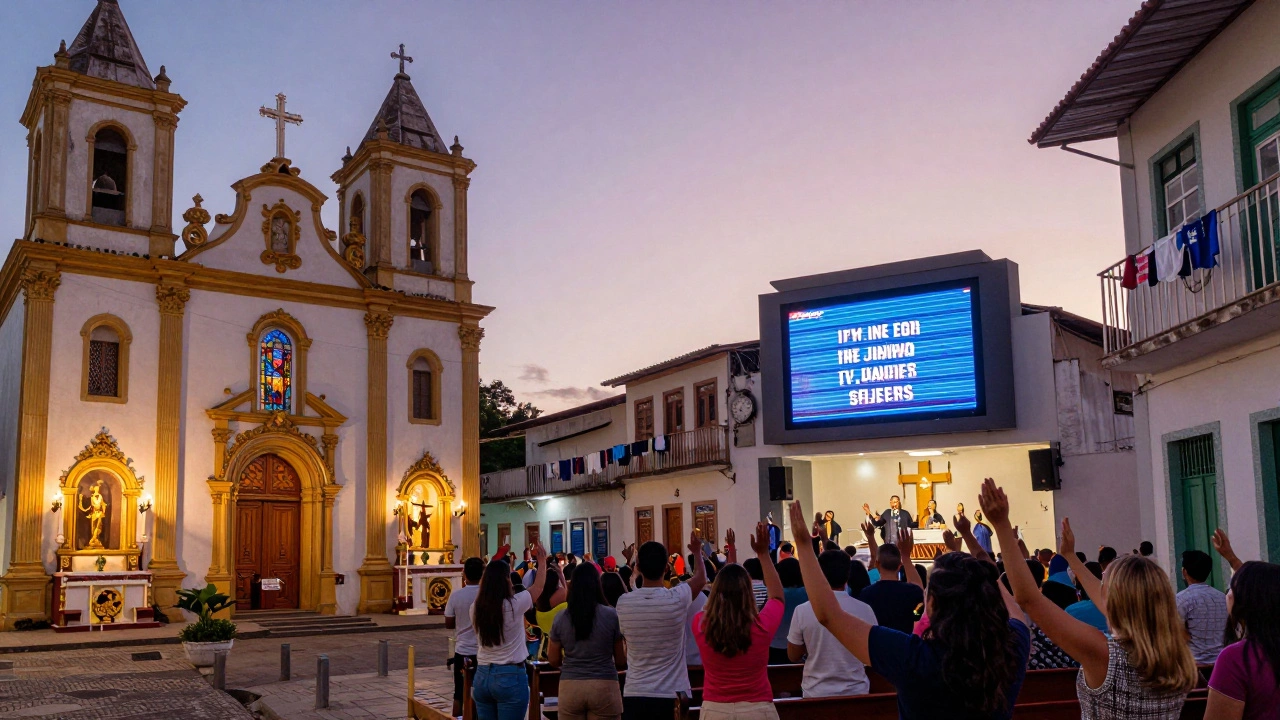
When people think of Brazil, they often picture samba, soccer, and the Amazon rainforest. But one of the most defining features of Brazilian society isn’t visible on a map-it’s religion. Over 80% of Brazilians identify as Christian, and for decades, the country has been seen as overwhelmingly Catholic. But that’s changing. In recent years, Protestantism-especially evangelical churches-has grown rapidly. So is Brazil Catholic or Protestant? The answer isn’t simple. It’s both. And the shift is reshaping politics, culture, and daily life.
Historical roots: how Catholicism took hold
Brazil became Catholic because of its colonial past. When Portugal claimed the land in the early 1500s, it brought Catholic missionaries with it. The Church wasn’t just a spiritual force-it was part of the government. Baptisms, marriages, and even land records were kept by priests. By the time Brazil gained independence in 1822, Catholicism was woven into the nation’s identity. For over 400 years, it was the only religion officially recognized. Even after the separation of church and state in 1891, Catholic traditions remained deeply embedded. Carnival, for example, started as a pre-Lenten celebration. Many Brazilian holidays still follow the Catholic calendar.
By the 1980s, over 90% of Brazilians called themselves Catholic. That number seemed permanent. But then something unexpected happened.
The rise of Protestantism: why it exploded
Starting in the 1970s and accelerating in the 1990s, Protestant churches-especially Pentecostal and neo-Pentecostal groups-began growing at an astonishing rate. Why? Because they spoke directly to people’s everyday struggles.
Unlike the formal, distant Catholic Mass, Protestant services were loud, emotional, and personal. Pastors prayed for healing, financial breakthroughs, and protection from evil. They offered hope to those stuck in poverty, violence, or corruption. In favelas (urban slums) and rural towns, these churches didn’t just preach-they built clinics, food banks, and job training programs.
By 2020, over 30% of Brazilians identified as Protestant. That’s more than 60 million people. In some cities, like Belém and Manaus, Protestants now outnumber Catholics. The largest Protestant denomination, the Assemblies of God, has over 12 million members. Another, the Universal Church of the Kingdom of God, owns TV networks, radio stations, and even a major Brazilian newspaper.
Numbers don’t tell the whole story
So is Brazil Catholic or Protestant? The latest data from the Brazilian Institute of Geography and Statistics (IBGE) in 2022 shows:
- 50.5% identify as Catholic
- 30.2% identify as Protestant
- 10.5% have no religion
- 8.8% follow other faiths (Afro-Brazilian religions like Candomblé, Spiritism, Judaism, Islam)
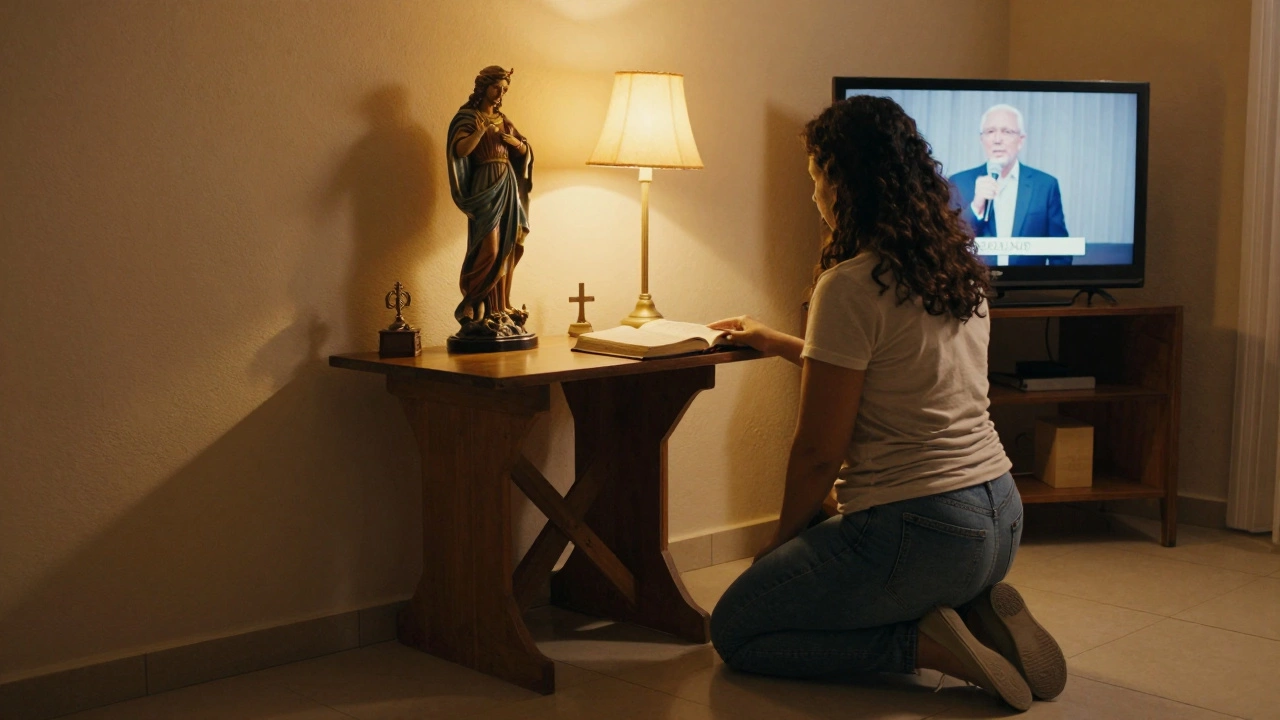
That’s a dramatic drop from the 90% Catholic peak just 40 years ago. But here’s the twist: many people who say they’re Protestant still attend Catholic baptisms, weddings, or funerals. It’s not always an either-or choice. People blend traditions. A woman might pray to Saint George for protection, then go to a Pentecostal service on Sunday to ask God for a loan. This isn’t confusion-it’s practical spirituality.
Who’s leaving Catholicism-and why
Younger Brazilians are the biggest group leaving the Catholic Church. A 2023 study from the University of São Paulo found that 62% of people under 30 who grew up Catholic no longer identify with it. Why? Three big reasons:
- They feel the Church is too rigid. Issues like birth control, divorce, and LGBTQ+ rights aren’t addressed with compassion.
- They want more personal connection. Protestant pastors often know their members by name and visit homes.
- They’re influenced by media. TV evangelists like Silas Malafaia and Edir Macedo are household names. Their messages are simple: pray, give, and God will reward you.
Meanwhile, the Catholic Church in Brazil is shrinking its presence. Dioceses have closed. Seminaries have fewer students. In rural areas, priests now travel hundreds of kilometers to serve multiple towns.
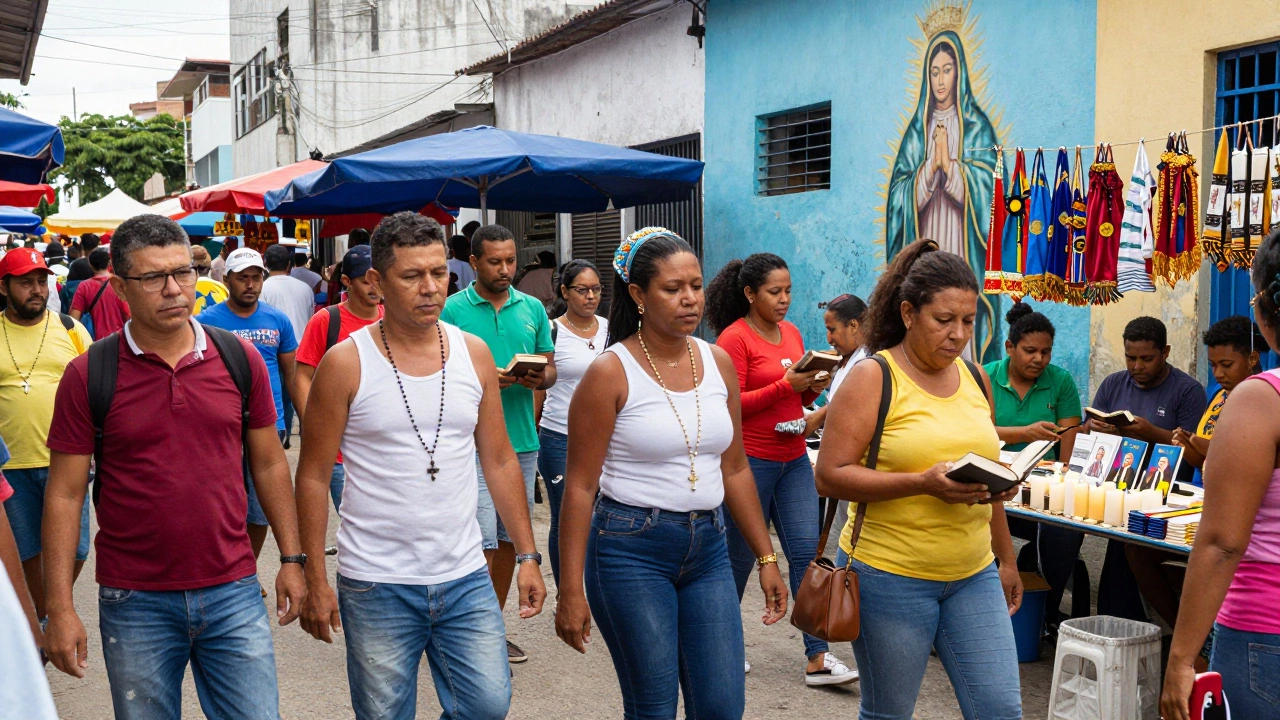
What this means for Brazil’s future
This religious shift isn’t just about church attendance-it’s changing how Brazil works.
Politically, evangelical leaders now hold over 100 seats in Congress. They’ve blocked abortion laws, pushed for religious education in public schools, and influenced presidential elections. In 2022, over 70% of evangelical voters backed the current president.
Culturally, Protestant values are showing up everywhere. You’ll find Protestant-owned businesses that close on Sundays. Schools that teach creationism. TV shows that frame success as divine favor. Even soccer teams have chaplains who lead prayers before matches.
But there’s also backlash. Critics say the rise of Protestantism is fueling intolerance. Some churches openly condemn Afro-Brazilian religions like Candomblé as “demonic.” This has led to attacks on sacred sites and increased discrimination against Black and Indigenous communities.
It’s not just about labels
Calling Brazil “Catholic” or “Protestant” misses the point. The country is becoming more pluralistic. Many people don’t fit neatly into either category. Spiritism-a belief in spirits and communication with the dead-is followed by over 3 million people. Candomblé and Umbanda, rooted in African traditions, thrive in Bahia and Rio. Even among those who say they’re Catholic, many practice rituals from these other faiths.
The real story isn’t which religion is winning. It’s that Brazilians are choosing what works for them. They mix traditions. They adapt beliefs. They use faith to solve real problems: debt, illness, fear, loneliness.
Brazil isn’t turning Protestant. It’s becoming something new: a place where religion is personal, flexible, and deeply tied to survival.
Is Brazil still the largest Catholic country in the world?
Brazil was the largest Catholic country for over a century, but it’s no longer. As of 2024, Mexico has surpassed Brazil in total Catholic population. Brazil still has the second-largest number, but the percentage of Catholics has dropped below 51%. The growth of Protestantism and secularism has shifted the balance.
Why are so many Brazilians turning to Protestant churches?
Many are drawn to Protestant churches because they offer emotional support, community, and practical help-like food, job training, and counseling. Unlike the Catholic Church, which can feel distant, Protestant pastors often live in the same neighborhoods as their members. They also emphasize personal miracles, financial blessings, and direct communication with God, which resonates with people facing poverty or uncertainty.
Do Protestants and Catholics in Brazil get along?
Relations vary widely. In many communities, families have both Catholic and Protestant members, and they coexist peacefully. But in some areas, especially where evangelical churches are growing fast, tensions have risen. Some Protestant leaders have publicly denounced Catholic traditions as “superstitions,” and there have been cases of vandalism against Catholic churches. Political influence has also deepened divisions.
Are Afro-Brazilian religions like Candomblé still practiced?
Yes, and they’re growing in visibility. Over 2 million Brazilians identify as followers of Candomblé, Umbanda, or other Afro-Brazilian faiths. These religions are especially strong in Bahia, where over 70% of the population has African ancestry. Despite facing discrimination and even violence from some Protestant groups, they’ve gained legal protections and are now taught in universities. Many Brazilians practice elements of these faiths alongside Christianity.
How has religion affected Brazilian politics?
Evangelical Christians now hold over 100 seats in Brazil’s National Congress. They’ve successfully blocked legislation on abortion, LGBTQ+ rights, and sex education. Their voting bloc is highly organized and often sways elections. In 2022, evangelical voters helped elect the current president, and their leaders now sit on key government committees. This has made religion one of the most powerful forces in Brazilian politics.