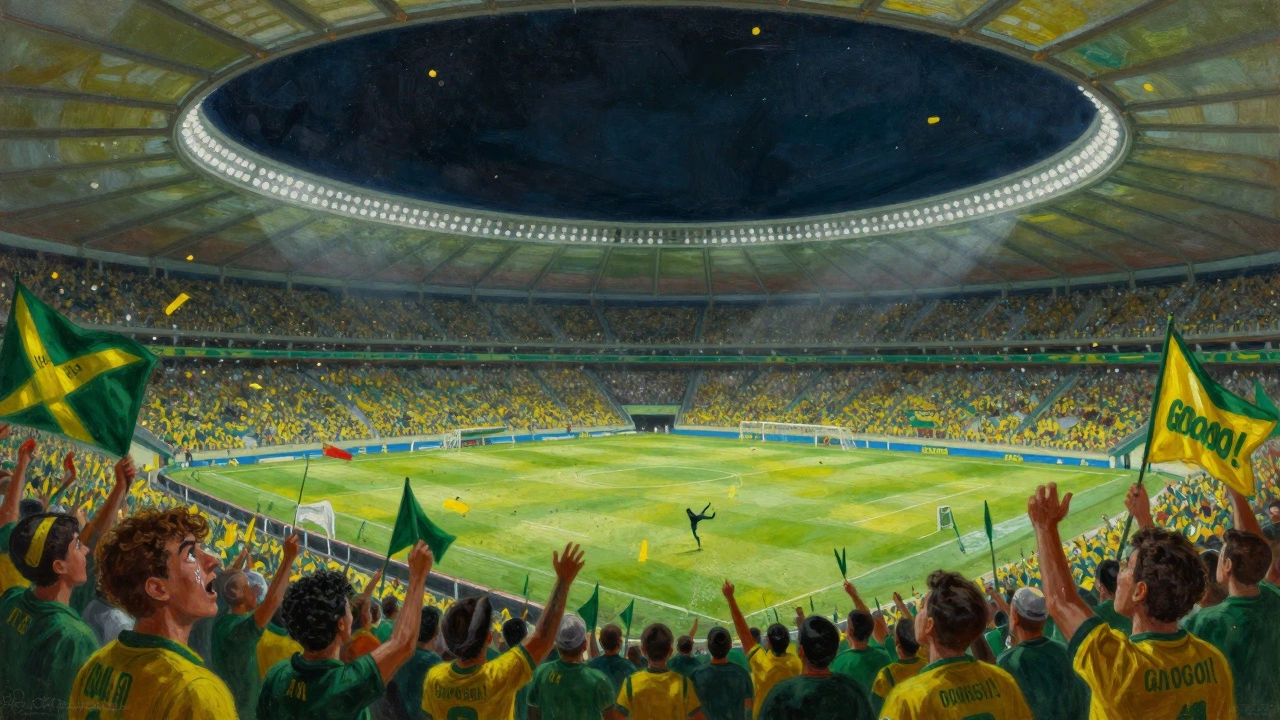
Ask a Brazilian what sport they love most, and they won’t say "soccer." They’ll say "futebol." It’s not just a translation-it’s a cultural identity. While much of the world uses the term "soccer," especially in the U.S., Canada, and Australia, Brazilians don’t just call it that. They call it futebol. And it’s far more than a word. It’s the rhythm of the streets, the sound of bare feet on concrete, the roar of a crowd in Maracanã at 8 p.m. on a Sunday.
Why "futebol" and not "soccer"?
The difference comes down to history. The sport was brought to Brazil in the late 1800s by British immigrants, especially in Rio de Janeiro and São Paulo. They played what they called "association football," shortened to "football." But Brazilians didn’t adopt the British term directly. Instead, they adapted it phonetically into Portuguese: "futebol." The "s" sound became a "t," the "t" softened, and the "o" got its natural Brazilian lilt. It stuck.Meanwhile, in countries like the U.S. and Australia, "football" was already taken-by American football and Australian rules football. To avoid confusion, people started using "soccer," a slang term derived from "association" ("assoc." → "soccer"). But in Brazil, there was never a need to rename it. There was no other kind of football dominating the scene. So "futebol" became the only word.
It’s not just a word-it’s a feeling
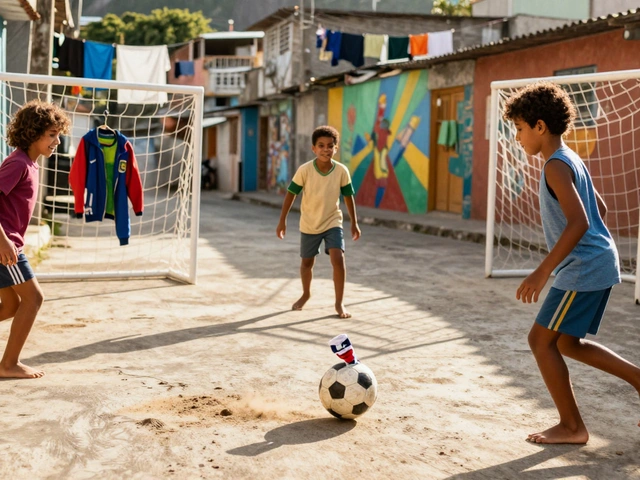
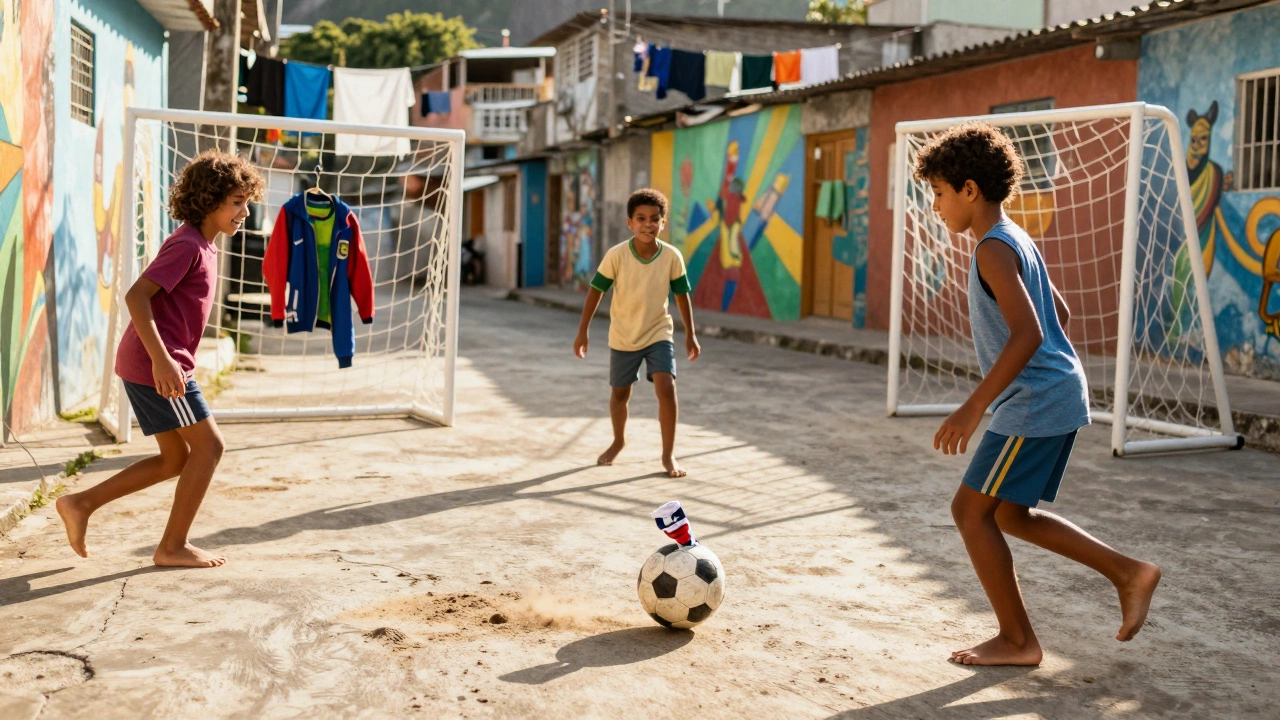
In Brazil, "futebol" isn’t a game. It’s a religion. It’s the way kids learn to control the ball before they learn to tie their shoes. It’s the reason entire neighborhoods shut down on match days. It’s the reason Pelé, Ronaldo, Neymar, and Marta are national icons-not just athletes.Walk into any small town in Minas Gerais or Bahia, and you’ll see kids playing with a crumpled sock tied up as a ball. No goals? No problem. Two jackets and a wall make a net. No referee? They argue, laugh, and start again. That’s futebol. It’s not played in stadiums alone. It’s lived in alleys, on beaches, in favelas, and on dusty fields after school.
When Brazil won the 1970 World Cup, the whole country stopped. Schools closed. Factories paused. Even criminals put down their weapons. That’s how deep futebol runs. It’s not about winning trophies. It’s about identity, pride, and belonging.
How Brazilians talk about the game
If you listen to a Brazilian fan, you’ll hear phrases you won’t find in any English soccer dictionary:- "Fazer um gol" - to score a goal
- "Dar uma caneta" - to nutmeg someone
- "Chutar na trave" - to hit the post
- "Bicicleta" - a bicycle kick
- "Carrinho" - a sliding tackle
They don’t say "goalkeeper." They say "goleiro." Not "midfielder"-"meia." Not "striker"-"atacante." The language is specific, colorful, and full of personality. Even the way they describe a bad pass is different: "passou feio"-"passed ugly."
And when a player scores a stunning goal? They don’t just cheer. They scream: "Goooool!"-with a drawn-out "o" that echoes across the city.
Why this matters outside Brazil
Knowing that Brazilians call it "futebol" isn’t just useful for travelers or language learners. It’s a sign of respect. If you’re watching a match with Brazilian friends and you say "soccer," they won’t correct you. But if you say "futebol," you instantly connect. You’re not just talking about a sport-you’re acknowledging their culture.This matters in global media too. International broadcasters like ESPN Brasil, Globo, and beIN Sports use "futebol" in all their coverage. Even English-language outlets like BBC Sport and The Guardian now use "futebol" when referring to Brazilian football to honor local terminology.
And if you’re playing FIFA or eFootball, the game itself defaults to "futebol" when you set the language to Portuguese. That’s not a bug. It’s authenticity.
Futebol vs. football: The global divide
Here’s how the terms break down around the world:| Country/Region | Common Term | Why? |
|---|---|---|
| Brazil | Futebol | Portuguese adaptation of "football"; no competing sport |
| United States, Canada, Australia | Soccer | Distinction from American/Australian football |
| United Kingdom, Germany, Mexico | Football | Original term; no other football dominates |
| Japan, South Korea | Sakkā (サッカー) | Japanese adaptation of "soccer" |
| France, Spain, Italy | Football (foot, fútbol, calcio) | Local language versions of "football" |
Notice something? The countries that use "soccer" are the ones with another dominant form of football. Brazil? No such conflict. So they kept the original name-and made it their own.
What happens when Brazilians play abroad?
When Brazilian players move to Europe or North America, they don’t switch terms. Neymar doesn’t say "I’m playing soccer for PSG." He says "futebol." Same with Vinícius Jr., Casemiro, or Marta. They bring the word with them. And over time, fans around the world start using it too.In fact, in cities like London, Toronto, and Los Angeles, you’ll hear Brazilian expats and their kids say "futebol" even when speaking English. It’s become part of their identity. It’s not a language barrier-it’s a cultural bridge.
Final thought: Language is more than words
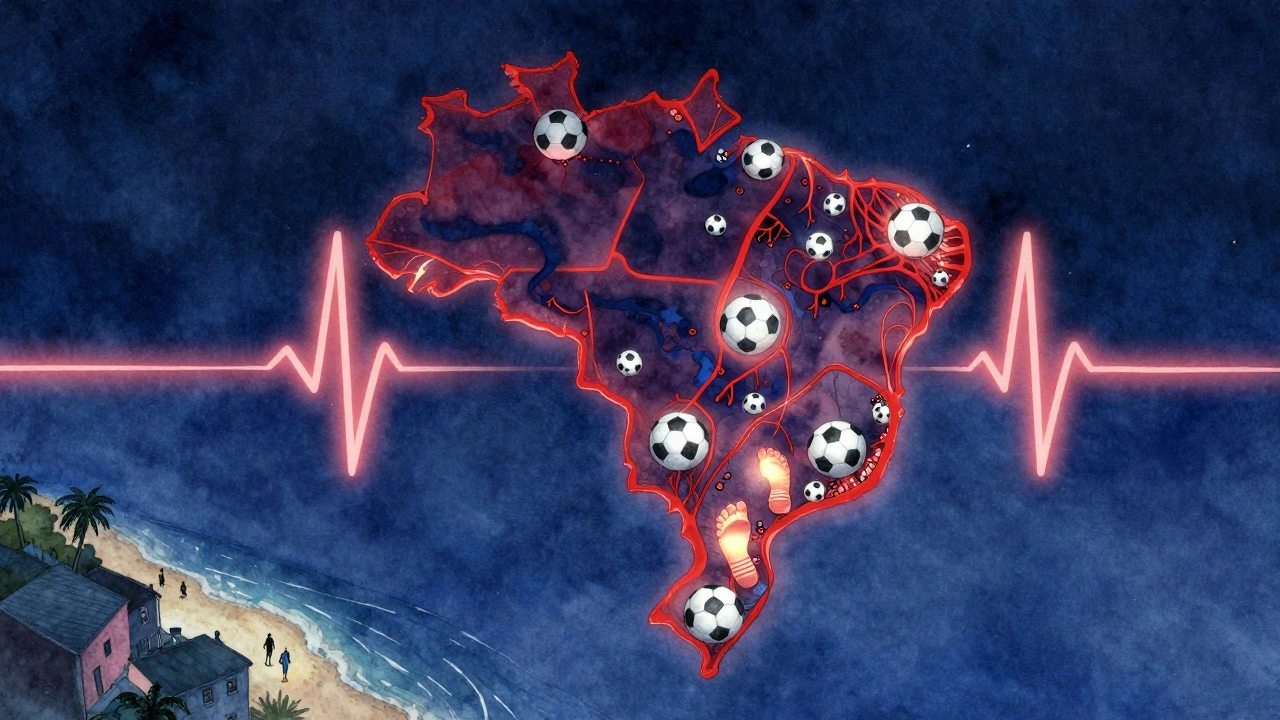
The fact that Brazilians call it "futebol" isn’t just trivia. It’s a reminder that sports aren’t just played-they’re lived, felt, and named in ways that reflect culture, history, and emotion. "Soccer" is a label. "Futebol" is a heartbeat.Next time you watch a Brazilian match, listen for the chant. Hear the "Goooool!" Echoing through the stands. That’s not just a goal. That’s futebol.
Do Brazilians ever say "soccer"?
Rarely, and only when speaking English with foreigners. In everyday life, they always say "futebol." Even Brazilian kids who grow up in the U.S. or Australia will say "futebol" at home or with friends. It’s part of their heritage.
Is "futebol" used in other Portuguese-speaking countries?
Yes. Portugal, Angola, Mozambique, Cape Verde, and other Lusophone nations all use "futebol." It’s the standard term across the entire Portuguese-speaking world, not just Brazil.
Why doesn’t Brazil use "football" like the UK?
Because Portuguese doesn’t pronounce "football" the same way. The word "futebol" is the natural phonetic adaptation of "football" into Portuguese. Brazilians didn’t reject "football"-they translated it into their own language, just like the French say "football" but pronounce it "foo-tbohl."
Is "futebol" the same as "football" in rules and gameplay?
Absolutely. "Futebol" follows the exact same rules as football worldwide, governed by FIFA. The only difference is the name and the passion behind it. The game is identical-just played with a different soul.
Can I say "soccer" in Brazil without offending anyone?
No one will get angry if you say "soccer." But you’ll sound like a tourist. If you want to blend in or show respect, say "futebol." It’s a small word with big meaning-and Brazilians notice when you make the effort.