Athletics Equipment Compliance Checker
Check Your Equipment Against Competition Rules
Verify if your gear meets World Athletics standards for competition. Enter event details and equipment specifications below.
When you think of athletics, you probably picture sprinters exploding out of blocks or long jumpers soaring through the air. But behind every powerful performance is a set of tools designed for one thing: maximizing speed, strength, and precision. Athletics isn’t just about raw talent-it’s about the right gear working in perfect sync with the athlete. So what exactly is used in athletics? Let’s break it down by event, because each discipline demands its own specialized equipment.
Running Events: Shoes, Blocks, and Timing
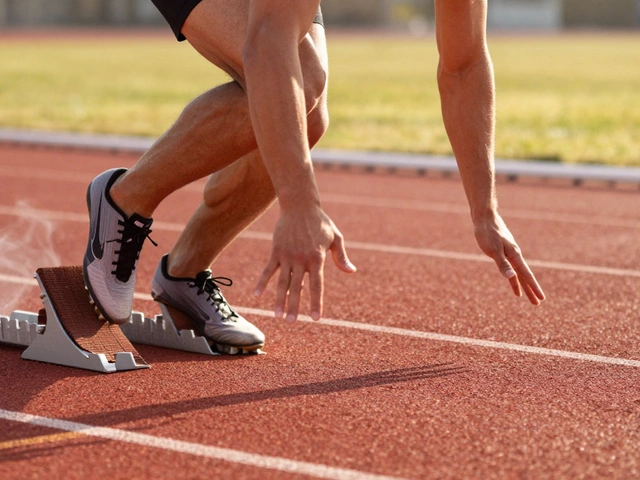
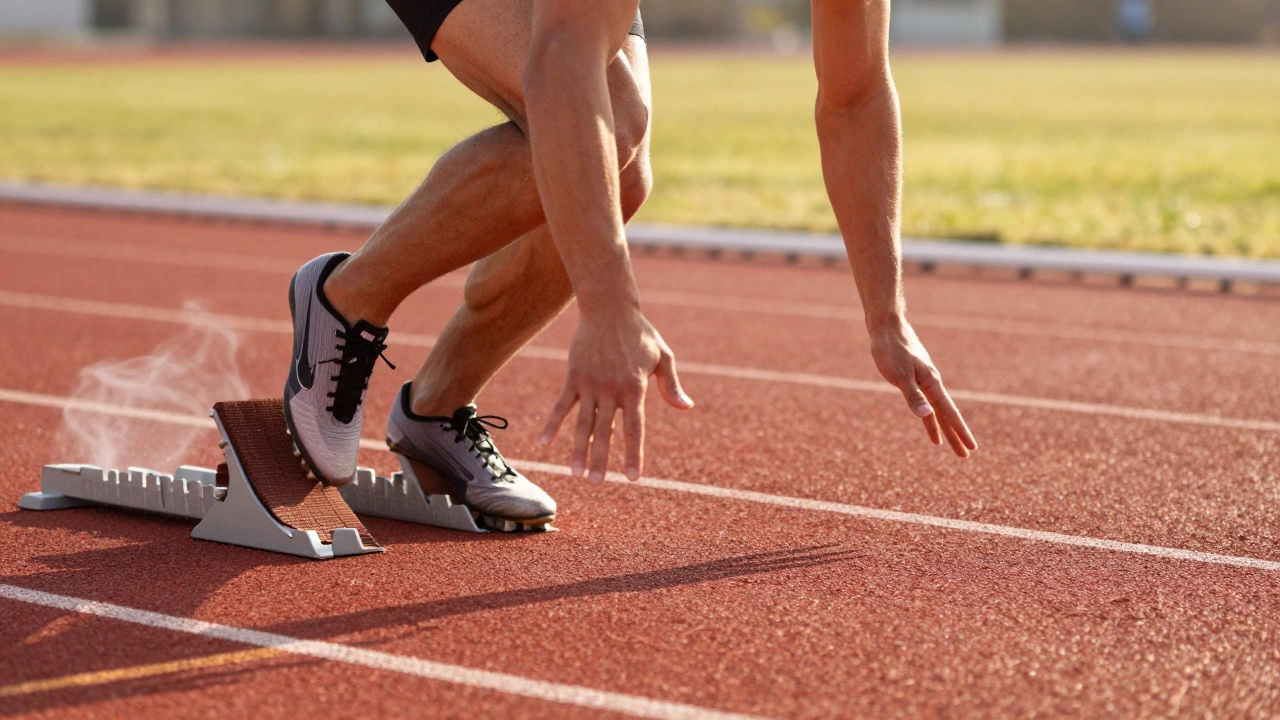
At first glance, running seems simple: put on shoes and go. But even the most basic sprint requires precision gear. Sprinters wear athletics spikes-lightweight shoes with removable metal or ceramic pins on the sole. These spikes dig into the track for maximum grip during acceleration. The number and placement of spikes vary: 4 to 6 for sprints, fewer for middle-distance runners. Distance runners often skip spikes entirely, opting for cushioned racing flats that reduce impact over miles.
Starting blocks are non-negotiable for races under 400 meters. These adjustable metal or plastic platforms let athletes push off with explosive power. They’re set at angles based on the runner’s body type and stride. Without them, reaction time suffers. And timing? That’s handled by electronic systems-photo-finish cameras and pressure-sensitive start pads that record splits down to the thousandth of a second.
Jumping Events: The Science of Flight
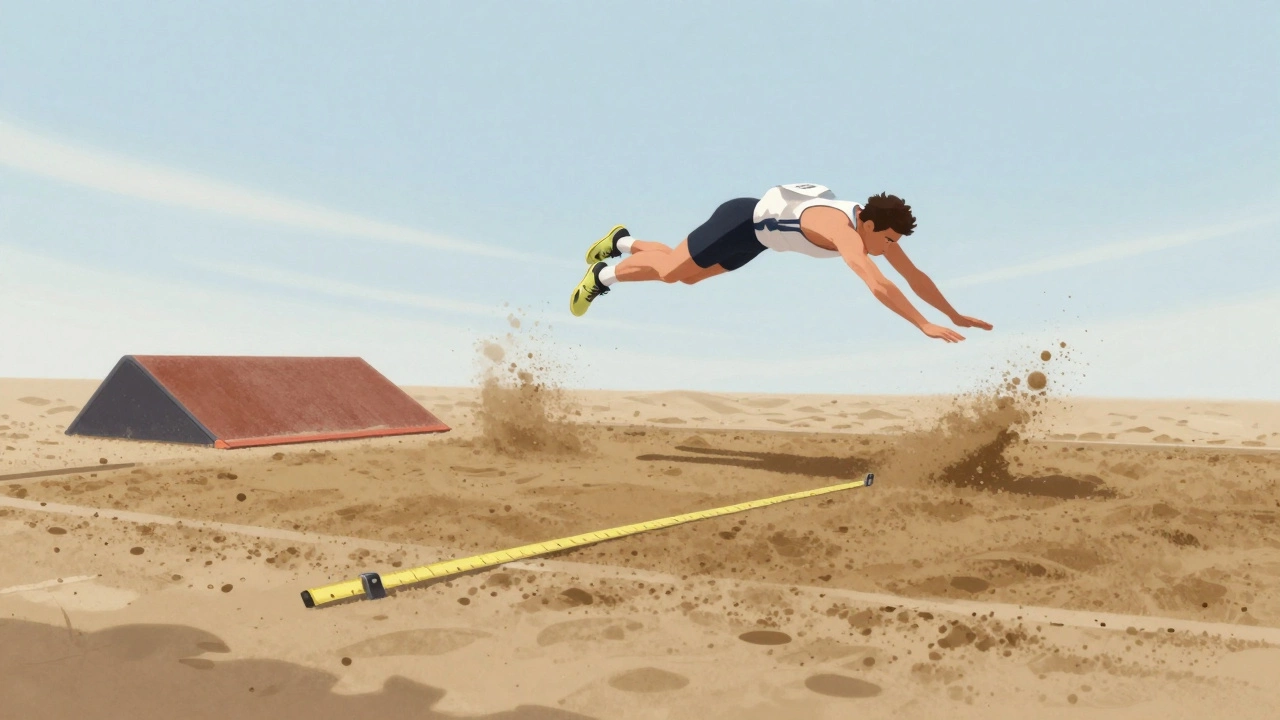
Jumping events look like pure athleticism, but they’re deeply technical. Long jumpers and triple jumpers need a runway marked with precise measurements, a take-off board (usually a rubber strip embedded in the track), and a sand pit that’s carefully raked to ensure consistent landings. The pit isn’t just dirt-it’s a blend of fine sand and clay that absorbs impact without being too soft or too hard.
High jumpers use a different setup. They don’t need a pit; instead, they land on thick foam mats. The bar is made of fiberglass or carbon fiber, flexible enough to bend under pressure but strong enough to stay level. It’s held in place by adjustable standards, often with safety clips to prevent it from falling forward if hit. Some athletes use foam landing pads behind the bar for extra safety during practice.
Throwing Events: Tools Designed for Distance
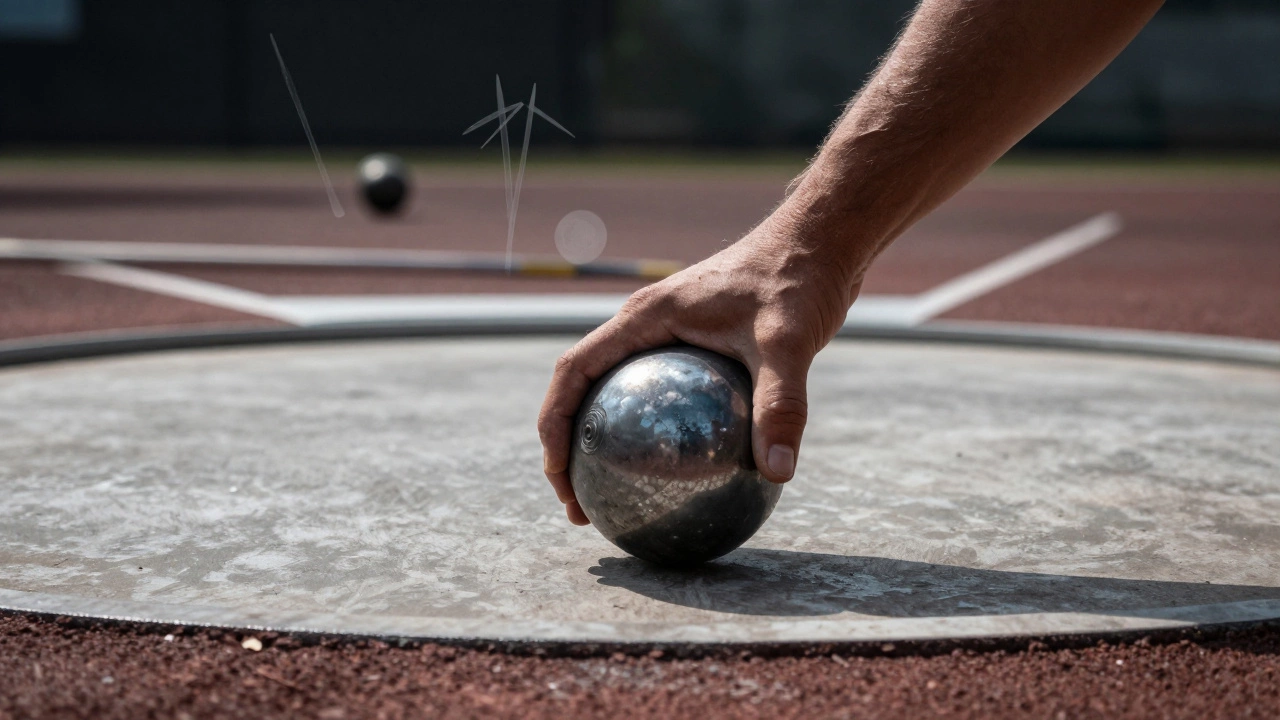
Throwing events are all about leverage and technique, and the equipment reflects that. The shot put is a heavy metal ball-men use 7.26 kg, women use 4 kg. It’s not smooth; it has a slightly textured surface for grip. The throwing circle is a 2.135-meter diameter steel ring, and athletes must exit from the back half after the throw. No stepping on the toe board-that’s a foul.
The javelin is a long, spear-like object made of metal or fiberglass, with a sharp tip and a cord grip. Men’s javelins weigh 800 grams and are 2.6-2.7 meters long; women’s are 600 grams and 2.2-2.3 meters. The rules are strict: the javelin must land tip-first to count. It’s designed to cut through air, not fly like a dart.
The discus is a heavy circular plate, usually made of wood with a metal rim. Men’s discs weigh 2 kg; women’s are 1 kg. Athletes spin in a 2.5-meter circle before releasing it. The landing sector is marked with angled flags to show valid throws. Then there’s the hammer-a metal ball attached to a steel wire and handle. It weighs 7.26 kg for men, 4 kg for women. The spin and release require immense control, and the cage around the throwing area keeps spectators safe.
Hurdles and Relays: Precision Gear for Speed
Hurdles might look like simple bars on stands, but they’re engineered to fall forward if hit. That’s intentional. They’re made of lightweight aluminum or fiberglass and designed to minimize injury. Olympic hurdles are 91.4 cm tall for men (110m hurdles) and 76.2 cm for women (100m hurdles). The spacing between them is exact: 8.5 meters for men’s 110m, 8.5 meters between the first and last hurdles in the 400m race.
Relay races rely on the baton-a hollow, smooth tube, usually aluminum or plastic, 30 cm long and 13 mm in diameter. It has no markings, so runners feel for it by touch. The exchange zone is 20 meters long, and the baton must be passed within it. If it’s dropped, the runner picks it up-no help from teammates. Timing is everything.
Other Essentials: What Athletes Carry
Beyond event-specific gear, there’s a list of universal items. Compression shorts or tights reduce muscle vibration. Lightweight, moisture-wicking singlets or tops keep athletes cool. Some wear compression sleeves for arm support, especially in throwing events. Ankle braces are common for jumpers and sprinters with past injuries.
Track officials use handheld timers, wind gauges (to measure speed of wind during sprints and jumps), and measuring tapes for long jump and throw distances. Laser distance measurers are now standard-they’re accurate to within a millimeter. Video replay systems help judges confirm fouls or record performances.
Even the track itself is equipment. Modern synthetic tracks are made of polyurethane or rubberized material. They’re shock-absorbent, non-slip, and designed to return energy. The color? Usually red or blue. Why? High contrast makes it easier for athletes to see their lane lines and for TV cameras to track motion.
What’s Not Used (And Why)
Not everything you’d assume is allowed. No weightlifting belts in throwing events-those aren’t permitted. No gloves for javelin or discus-grip must be direct. No electronic timing devices worn by athletes-timing is handled externally. No headphones during races-distraction and safety rules ban them. Even the type of socks matters: thin, seamless socks are preferred to avoid blisters and reduce bulk.
Equipment rules are set by World Athletics, the global governing body. They update specs every few years based on new materials and safety data. For example, in 2023, the javelin’s center of gravity was slightly adjusted to reduce excessive distance and improve landing safety.
How Gear Changes With Skill Level
Beginners don’t need pro-level gear. A track shoe with decent grip works fine for learning starts. A foam javelin is used in schools instead of metal ones. High school discus weights are lighter. As athletes progress, they upgrade-custom spikes, personalized grip tape on the hammer handle, or a custom-fit throwing glove for discus.
Elite athletes often work with equipment specialists. A sprinter might spend weeks testing 12 different spike configurations before the Olympics. A thrower might have their hammer handle wrapped in a specific tape pattern based on sweat patterns and grip pressure. It’s not magic-it’s data.
Final Thought: Equipment Is an Extension of the Athlete
The best gear doesn’t make you faster-it helps you perform at your peak. A well-tuned spike lets a sprinter push harder without slipping. A properly weighted shot put lets a thrower focus on technique, not grip. In athletics, equipment isn’t optional. It’s part of the training, part of the strategy, part of the victory.
What is the most important piece of equipment in athletics?
There’s no single answer-it depends on the event. For sprinters, it’s the spikes and starting blocks. For throwers, it’s the implement itself (shot put, discus, etc.). For jumpers, it’s the take-off board and landing surface. But if you had to pick one universal piece, it’s the track. Without a proper surface, every other piece of gear loses its effectiveness. Modern synthetic tracks are engineered to return energy, reduce injury, and improve performance across all disciplines.
Can I use regular running shoes for athletics?
For casual practice or beginner training, yes. But for competition, especially in sprints, hurdles, or jumps, regular running shoes lack the grip and responsiveness of spikes. Spikes give you traction you can’t get from foam soles. If you’re serious about improving, investing in event-specific shoes is worth it. Many clubs offer rental spikes for newcomers.
Are there rules about what gear I can wear?
Yes. World Athletics has strict rules. For example, spikes must not exceed 12 mm in length. No electronic devices worn on the body during races. Clothing must not be transparent or overly revealing. In field events, athletes can’t wear gloves on throwing hands. All gear must be approved for competition-some high-tech materials or designs get banned if they give an unfair advantage.
Why do some athletes use tape on their hands or legs?
Tape is used for grip, support, or injury prevention. Throwers often wrap their fingers or wrists to improve hold on the javelin or hammer. Sprinters might tape their ankles to stabilize joints under high stress. It’s not for show-it’s functional. The tape is usually rigid, non-stretch athletic tape, not the flexible kind used for minor sprains.
How often is athletics equipment updated?
Equipment specs are reviewed every 3-5 years by World Athletics. Changes usually come from safety concerns or technological advances. For example, in 2021, the javelin’s center of gravity was moved back slightly to reduce flight distance and make landings safer. Spikes have also evolved-carbon fiber plates in some racing shoes are now banned in certain events. The goal is to keep competition fair and safe, not to favor new tech.