
Personal Gym Schedule Builder
Your Recommended Weekly Schedule
Walking into the gym with no plan is like driving without a map. You might end up somewhere interesting, but mostly you’ll just waste gas and time. A lot of people show up at the gym, stare blankly at the machines, and do whatever looks easy in the moment. That’s why they stay stuck. The secret isn’t working harder; it’s working smarter. A good gym schedule turns random effort into measurable progress.
The best schedule depends entirely on your life. If you work nine-to-five and have two kids, a six-day bodybuilding split won’t work. If you’re a student with flexible hours, a four-day full-body routine might be too slow. We need to look at what actually works for real humans, not magazine models who spend twelve hours a day in the weight room.
The Golden Rule: Consistency Beats Perfection
Before we pick days or exercises, let’s talk about the most important factor: showing up. Research from the American College of Sports Medicine (ACSM) shows that consistency is the biggest predictor of long-term success. It doesn’t matter if your plan is slightly imperfect if you stick to it for months. It matters more than having a ‘perfect’ plan you abandon after three weeks because it was too hard.
- Start small: If you’ve been sedentary, start with two or three days a week. Don’t jump straight into five days. Your joints and nervous system need time to adapt.
- Be realistic: Look at your calendar. Are you free on Tuesdays and Thursdays? Then make those your heavy lifting days. Don’t schedule workouts when you know you’ll be tired from work.
- Track it: Write down your workouts. Seeing a streak of completed sessions is incredibly motivating.
A good gym schedule fits into your life, not the other way around. If your schedule requires you to skip dinner with your family every Thursday night, it’s not sustainable. Find a rhythm that you can keep for years, not just weeks.
Choosing Your Training Split
Once you know how many days you can train, you need to decide how to spread out your muscle groups. This is called your 'split.' Here are the three most effective options for most people.
| Split Type | Frequency | Best For | Pros | Cons |
|---|---|---|---|---|
| Full Body | 2-3 days/week | Beginners, busy professionals | High frequency per muscle, simple planning | Longer sessions, less focus on specific muscles |
| Upper/Lower | 4 days/week | Intermediate lifters | Balanced recovery, good volume | Requires four distinct days |
| Push/Pull/Legs (PPL) | 5-6 days/week | Advanced lifters, aesthetics focus | High specialization, frequent training | High fatigue, needs lots of gym time |
Full Body is a training style where you work all major muscle groups in every session. It’s fantastic for beginners because it teaches movement patterns quickly. You hit squats, presses, and rows three times a week. This frequency helps you learn faster. If you only squat once a week, you only get one chance to improve that skill. Three chances are better.
Upper/Lower splits divide your week into upper body days and lower body days. This allows for more intensity since you aren’t exhausting your whole body in one go. You can lift heavier on bench press because your legs aren’t fried from squats an hour earlier. It’s a sweet spot for many people who want to build muscle but still have weekends free.
Push/Pull/Legs is a popular split that groups muscles by function: pushing (chest, shoulders, triceps), pulling (back, biceps), and legs. This is great if you love being in the gym. But be careful. Six days a week is a lot. If you miss a day, the whole schedule shifts. It’s rigid. Make sure you enjoy training that much before committing.
Structuring the Weekly Calendar
Let’s put this into practice. Here is how a typical week looks for each split. Remember, rest days are part of the schedule. They are not skipped days; they are growth days. Your muscles grow when you sleep, not when you lift.
The 3-Day Full Body Example
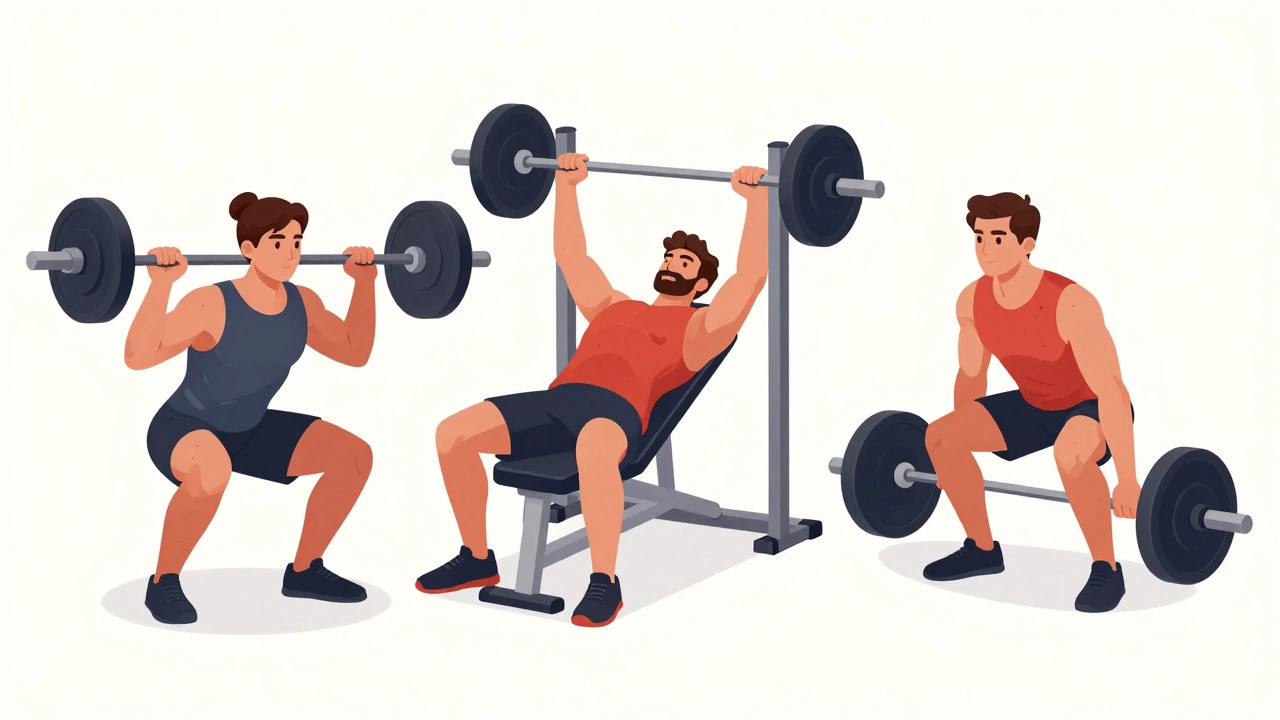
- Monday: Squats, Bench Press, Rows, Core
- Tuesday: Rest or Light Cardio
- Wednesday: Deadlifts, Overhead Press, Pull-ups, Calves
- Thursday: Rest
- Friday: Lunges, Dumbbell Press, Face Pulls, Abs
- Saturday/Sunday: Active Recovery (walking, hiking) or Total Rest
This schedule gives you at least one rest day between sessions. This is crucial. Training chest twice in a row without rest leads to injury and poor performance. Always leave a gap.
The 4-Day Upper/Lower Example
- Monday: Lower Body Focus (Squat heavy)
- Tuesday: Upper Body Focus (Bench heavy)
- Wednesday: Rest
- Thursday: Lower Body Focus (Deadlift/Hinge heavy)
- Friday: Upper Body Focus (Pulling heavy)
- Saturday: Optional light activity
- Sunday: Rest
This structure balances stress. You aren’t hitting quads hard on Monday and then again on Tuesday. You give them 72 hours to recover before Thursday. This is key for strength gains.
Adding Cardio and Mobility
A good gym schedule isn’t just weights. Ignoring your heart health is a mistake. Cardio improves blood flow, which helps deliver nutrients to your muscles during recovery. It also keeps your joints lubricated.
You don’t need to run marathons. Add 15-20 minutes of low-intensity steady state (LISS) cardio after your weights. Or do it on your rest days. Walking on an incline treadmill is perfect. It doesn’t tax your central nervous system like sprinting does. You can walk while listening to a podcast and still recover from your leg day.
Mobility work is equally important. Tight hips lead to bad back pain. Spend five minutes before every workout doing dynamic stretches. Leg swings, arm circles, and hip openers prepare your body for load. After the workout, static stretching helps calm your nervous system. Think of it as turning off the engine slowly rather than slamming it into park.
Progressive Overload: The Engine of Growth
Your schedule is the container, but progressive overload is the fuel. Without getting stronger over time, you’re just exercising, not training. Progressive overload means gradually increasing the demand on your body.
How do you do this? Simple:
- Add weight: Can you bench press 135 lbs for 8 reps? Next week, try 140 lbs.
- Add reps: Stuck at 135 lbs? Try to do 9 reps instead of 8.
- Improve form: Control the weight slower. More tension equals more growth.
- Reduce rest: Shorten rest periods between sets to increase density.
Write these numbers down. If you don’t track your lifts, you don’t know if you’re improving. A good gym schedule includes a logbook. Use a notebook or an app. See your numbers go up over months. That visual proof keeps you motivated when motivation fades.

Common Mistakes to Avoid
Even with a great plan, people sabotage themselves. Watch out for these traps.
Too much volume: Doing ten exercises for chest is useless. Quality beats quantity. Three hard sets of compound movements will build more muscle than twenty sets of isolation junk. Keep sessions under 60-75 minutes. Cortisol spikes after that, which breaks down muscle.
No periodization: You can’t max out every week. Plan deload weeks. Every 4-6 weeks, take a week where you lift lighter weights for fewer reps. This prevents burnout and injuries. It’s like pressing the reset button on your nervous system.
Ignoring sleep: You can’t out-train a bad night’s sleep. Aim for 7-9 hours. Growth hormone is released during deep sleep. If you cut corners here, your gym schedule fails. Period.
Adjusting for Life Changes
Life happens. You get sick. Work gets crazy. Family events pop up. A rigid schedule breaks under pressure. A flexible schedule bends. If you miss a Tuesday workout, don’t panic. Don’t try to cram it into Wednesday. Just move the whole week forward by one day. Or skip it and resume Thursday. Consistency over months matters more than consistency over days.
If you travel, pack resistance bands. Do a bodyweight routine in your hotel room. Squats, pushups, lunges. It’s not perfect, but it maintains the habit. Returning to the gym after a two-week break is much harder than maintaining momentum with subpar workouts.
How many days a week should I go to the gym?
For most people, 3 to 4 days a week is ideal. Beginners benefit from 3 days of full-body workouts. Intermediate lifters often prefer 4 days using an upper/lower split. Going more than 5 days requires advanced recovery strategies and may lead to overtraining if not managed carefully.
Is it better to train in the morning or evening?
It depends on your body clock and schedule. Some studies suggest strength peaks in the late afternoon due to higher body temperature. However, morning workouts ensure you get it done before life interferes. Choose the time you can stick to consistently. Consistency is more important than timing.
Should I do cardio on rest days?
Yes, light cardio on rest days is beneficial. It promotes blood flow and aids recovery without adding significant stress. Activities like walking, cycling, or swimming at a low intensity are perfect. Avoid high-intensity interval training (HIIT) on rest days as it can hinder muscle repair.
How long should a gym session last?
Aim for 45 to 75 minutes. This includes warm-up, main lifting, and cool-down. Sessions longer than 90 minutes often result in diminishing returns and increased cortisol levels. Focus on intensity and quality of reps rather than duration. Efficient training yields better results than marathon sessions.
Can I change my gym schedule mid-cycle?
You can adjust, but avoid changing everything at once. If your current schedule isn't working, tweak one variable: reduce volume, change split type, or add rest days. Drastic changes confuse your body and make progress tracking difficult. Small adjustments based on feedback are more effective.