Ask any rugby player what the hardest position is, and you’ll get a dozen different answers. Some say the prop. Others swear by the lock. Then there’s the scrum-half, the fly-half, the number eight - each one carries its own brutal weight. But if you’ve ever watched a full 80 minutes of top-level rugby, you know one truth: the hardest position isn’t just about strength or speed. It’s about endurance, precision, and surviving chaos - over and over again.
The Prop: The Engine of the Scrum
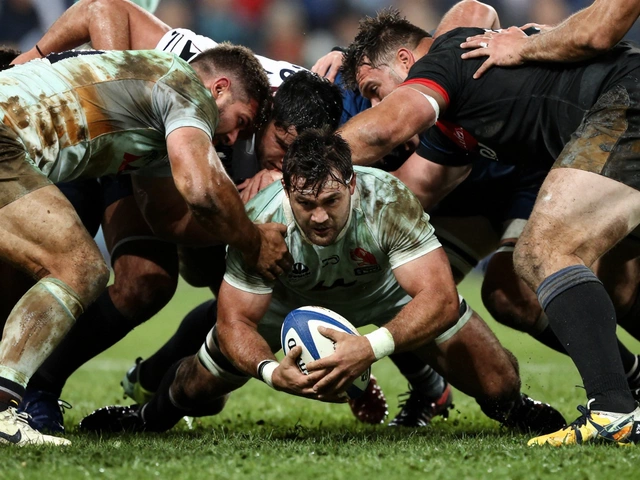
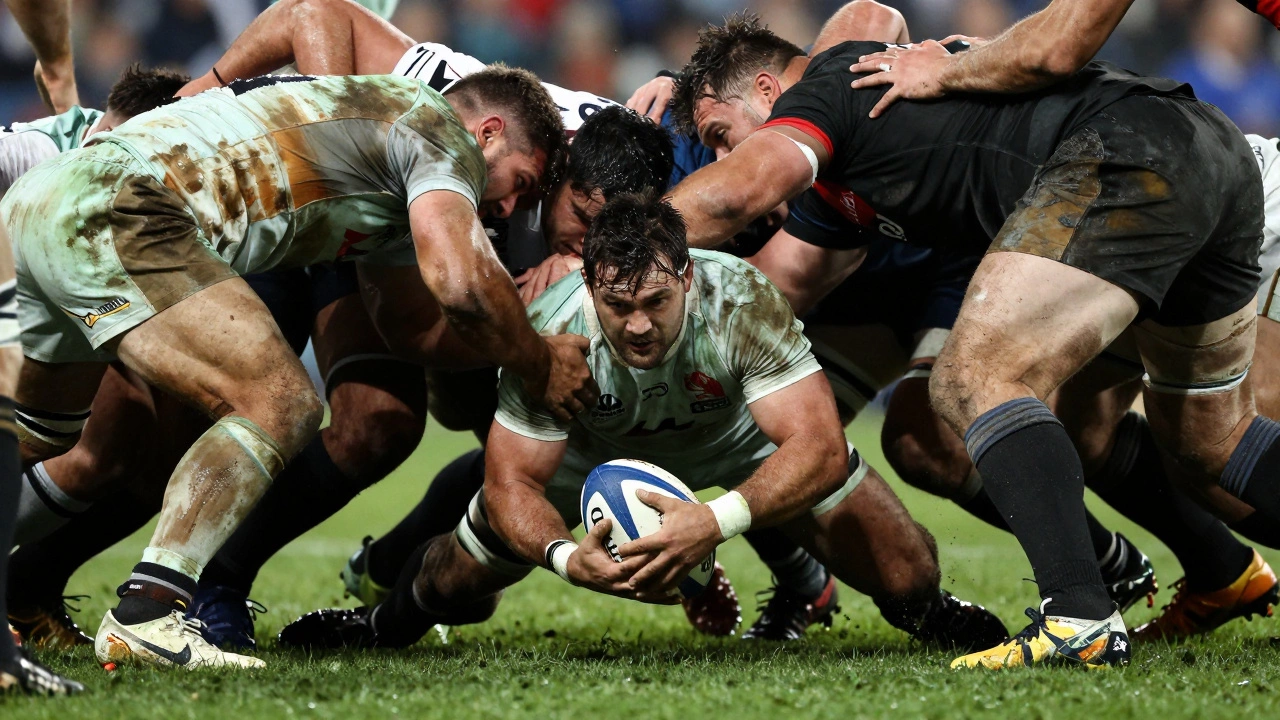
The prop wears the number 1 or 3. They’re the guys who look like they’ve been carved out of granite. Their job? To anchor the scrum. In a packed scrum, each prop takes on over 1,000 kilograms of force - that’s the weight of a small car - and holds it steady while the hooker strikes for the ball. One slip, one misalignment, and the whole scrum collapses. Referees penalize it instantly. No second chances.
But the scrum is only the start. After the set piece, the prop is expected to make tackles, carry the ball into heavy traffic, and keep running for 70 minutes. Their legs burn from constant low-body engagement. Their shoulders take constant impact. By the end of the match, many props can barely lift their arms. They don’t get the glory. No highlight reels of them scoring tries. But without them, the whole machine grinds to a halt.
The Lock: The Airborne Workhorse
Locks are the tallest players on the field, usually over six feet five inches. Their main job? Jump in the lineout. But here’s the catch: they’re not just leaping. They’re being lifted by two forwards, then shoved into the air by the opposition’s jumpers. They need to catch the ball cleanly, often while being wrestled by two or three opponents. One wrong move, and they land awkwardly - broken collarbones and torn ACLs are common.
Then they come down. And immediately, they’re in the scrum, pushing with everything they’ve got. In open play, they’re the primary ball-carrier in tight channels. They tackle bigger players. They clear out rucks. They cover ground like a linebacker. And they do it all while being the most visible target on the field. If you’re a lock, you’re expected to be strong, agile, and mentally sharp - all while absorbing punishment that would break most people.
The Scrum-Half: The Brain Under Fire
Think of the scrum-half as the quarterback of rugby. They’re the link between the forwards and the backs. They feed the ball into the scrum, retrieve it from rucks, and decide when to pass, kick, or run. Sounds simple? Try doing that while being tackled by three players who weigh 200 pounds each.
Scrum-halves are small - often under 180 pounds - but they’re in every single play. They’re the first to arrive at the ruck, the last to leave. They get smashed. They get stepped on. They get kicked. And they have to stay calm. One bad pass, one delayed decision, and the whole attack collapses. They need elite reflexes, perfect timing, and nerves of steel. In a high-stakes match, they might make 40+ passes, 20+ tackles, and 15+ ruck entries. And they do it all while running 8-10 kilometers in 80 minutes.
There’s no position where a single mistake costs the game more often. One missed pass in the 78th minute? That’s a try for the other team. No second chances. No timeouts. Just pressure.
The Fly-Half: The Silent Leader
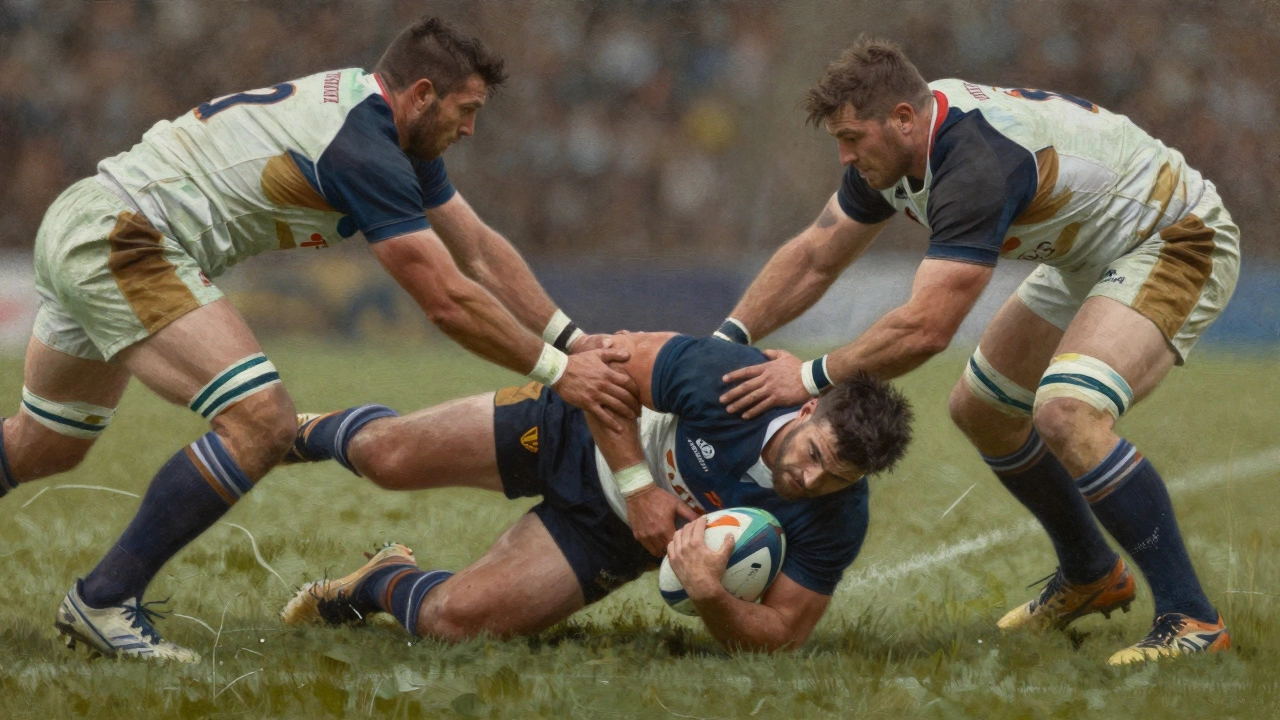
The fly-half (number 10) is the playmaker. They receive the ball from the scrum-half and decide the next move. Do they kick for territory? Do they pass to the center? Do they run through the line? Their decisions shape the entire game.
But here’s the twist: they’re also the most exposed player on the field. They’re the first target for the opposition’s defense. They’re hit hard, often from blind sides. They need to be accurate passers, strong kickers, quick thinkers, and brave runners. In elite rugby, fly-halves make 5-7 tactical kicks per game. Each one must be placed perfectly - too short, and the opposition recovers. Too long, and it’s a turnover. One wrong decision, and the team loses momentum.
They don’t just play. They lead. They talk. They organize. They’re the on-field coach. And they do it while being the most targeted player in every defensive set.
The Number Eight: The Hybrid Monster
The number eight is the glue between the forwards and the backs. They pick up the ball from the base of the scrum and either run it themselves or feed it to the scrum-half. They’re expected to be strong enough to break tackles, fast enough to chase down kicks, and technical enough to bind and drive in the scrum.
In modern rugby, the number eight is one of the most physically demanding roles. They cover more ground than any other forward - often over 10 kilometers in a match. They’re involved in 20+ tackles. They carry the ball 10-15 times. They’re in every ruck. They’re the last line of defense on kick returns. And they have to do it all while maintaining perfect positioning in set pieces.
What makes it harder? The role has evolved. Ten years ago, number eights were mostly power runners. Now, they’re expected to be playmakers, defenders, and ball-carriers - all at once. The best number eights in the world, like Siya Kolisi or Tendai Mtawarira, are the ones who can switch between roles mid-play without missing a beat.
Why the Scrum-Half Wins - Barely
Let’s be clear: every position in rugby is brutal. But if you measure difficulty by volume of action, mental load, physical punishment, and margin for error - the scrum-half is the hardest.
They’re the only player who touches the ball on almost every single phase. They’re the first to arrive and the last to leave every ruck. They’re constantly under physical threat. They make decisions in less than a second. And their mistakes are immediate, visible, and game-changing.
Think about it: a prop might have a bad scrum, but the team can recover. A lock might miss a lineout, but the scrum-half can still kick for touch. A fly-half might misread a defense - but the scrum-half is the one who delivered the ball to them in the first place.
The scrum-half doesn’t just play the game. They control its rhythm. They’re the heartbeat. And if their pulse drops for even a moment, the whole team stumbles.
What About the Backs? Aren’t They Easier?
Some think the outside backs - wingers and fullbacks - have it easy. They just run and score, right? Wrong.
Wingers need blazing speed, but they also need to be solid tacklers. One missed tackle in the 75th minute? That’s a try. Fullbacks are the last line of defense. They catch high kicks under pressure, organize the backline, and often make the decisive break. But they’re not the hardest. Why? Because they’re not in every single play. They don’t touch the ball as often. They don’t face constant physical punishment.
The scrum-half is the only player who can’t afford to rest. Not even for a second.
Real-World Evidence
In the 2023 Rugby World Cup, scrum-halves averaged 92 touches per match - more than any other position. They covered 9.3 kilometers on average, the highest among forwards. And according to data from World Rugby’s injury surveillance program, scrum-halves suffered the highest rate of concussions per 1,000 player-hours among all positions - higher than props, locks, or even fly-halves.
Why? Because they’re constantly in the thick of it. They’re the ones getting stomped on at the ruck. They’re the ones getting tackled from behind. They’re the ones making split-second calls while their body is screaming to stop.
Final Verdict
There’s no easy position in rugby. Every role demands sacrifice. But if you’re looking for the single hardest job on the field - the one that requires the most skill, the most endurance, and the most mental toughness - it’s the scrum-half.
They don’t get the biggest contracts. They don’t headline the ads. But without them, rugby doesn’t work. They’re the quiet engine. The invisible glue. The one who makes everything else possible.
Is the prop the hardest position because of the scrum?
The prop is one of the hardest because of the sheer physical toll of the scrum - absorbing over 1,000 kg of force repeatedly - but their job doesn’t end there. They must also carry the ball, make tackles, and keep running. Still, they’re not in every single phase of play like the scrum-half, who touches the ball on nearly every single move. The scrum-half’s constant exposure to high-pressure decisions and physical punishment gives them the edge in overall difficulty.
Why do scrum-halves get injured so often?
Scrum-halves are involved in every ruck, often being the first player in and the last out. They’re frequently tackled from blind sides, stepped on, or hit while bending over to pick up the ball. Data from the 2023 Rugby World Cup shows they suffer the highest concussion rate per 1,000 player-hours of any position. Their size makes them vulnerable, and their role forces them into high-risk situations constantly.
Can a smaller player play scrum-half successfully?
Absolutely. Most elite scrum-halves are under 180 pounds - think Aaron Smith (175 lbs) or Antoine Dupont (170 lbs). Speed, agility, and decision-making matter more than size. But they need to be exceptionally tough. Their job isn’t about power - it’s about precision under pressure. Smaller players survive by being smarter, faster, and more unpredictable.
Do fly-halves have it easier than scrum-halves?
No. Fly-halves make high-stakes decisions and face heavy tackles, but they don’t touch the ball as often. Scrum-halves are involved in 80-100 phases per match. Fly-halves might be involved in 40-50. The scrum-half’s workload is relentless - they’re in every single breakdown, every ruck, every restart. Their mental fatigue is higher because they’re the first to react.
Is the number eight harder than the scrum-half?
The number eight is physically brutal - covering more ground than any forward and carrying the ball frequently. But their role is more predictable. They’re not making split-second decisions on every play. The scrum-half’s job requires constant adaptation. One moment they’re feeding the scrum, the next they’re dodging a tackle, then passing under pressure. The mental load and frequency of action make the scrum-half’s role harder overall.