Tennis Score Simulator
Simulate a tennis game to see how scores are announced. Click the buttons to award points to the Server or Receiver.
Quick Reference Guide
| Score State | Announcement | Meaning |
|---|---|---|
| 0-0 | Love All | No points scored yet. |
| 15-15 | Fifteen All | Both players have one point. |
| 30-30 | Thirty All | Pivot point: Next point decides lead or Deuce path. |
| 40-40 | Deuce | Tied at three points. Must win by two (Standard). |
| Advantage Server | Ad-In | Server needs one more point to win. |
| Advantage Receiver | Ad-Out | Receiver needs one more point to win. |
You're watching a match, the crowd is buzzing, and suddenly the umpire announces "Deuce." If you've ever wondered why they don't just say "30-all" or "40-all," you aren't alone. The question how do you say 30/30 in tennis trips up a lot of new fans and players because standard counting logic doesn't apply here. In tennis, when both players have won three points each, reaching the score of 30-30, it isn't called "thirty-thirty." It’s still called "Thirty-All." But if you are asking about the specific term for when the game gets tied at the critical point after 40-40, that’s where things get interesting.
Let's clear up the confusion immediately. There is no special name for 30-30 other than "Thirty-All." However, the moment the score moves from 40-40 (which is also called "Forty-All" initially) to a tie that requires two consecutive points to win, it becomes Deuce. This guide breaks down exactly how tennis scoring works, why 30-30 sounds like any other score, and what happens when the game hits the deadlock known as Deuce.
The Basics of Tennis Scoring
To understand why 30-30 is said the way it is, you first need to grasp the unique numbering system used in tennis. Unlike basketball or soccer, where points add up linearly (1, 2, 3), tennis uses a quirky sequence: 15, 30, 40, Game. Yes, you read that right. There is no "20" or "50" in tennis scoring.
Here is the progression for a single player winning points in a game:
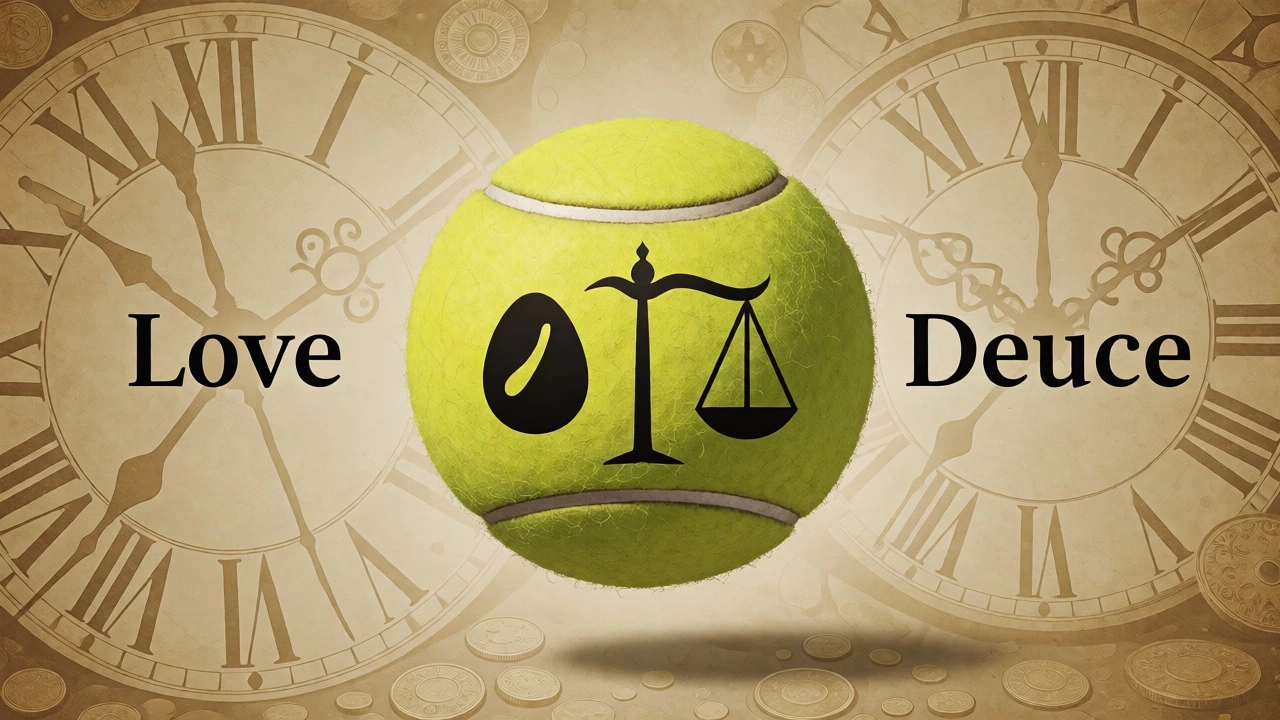
- 0 Points: Called "Love." This likely comes from the French word "l'oeuf," meaning egg, which looks like a zero.
- 1 Point: Called "Fifteen." Historically, this may have come from clock faces, where moving the hand from 12 to 3 represented a quarter hour (15 minutes).
- 2 Points: Called "Thirty." Moving the hand from 3 to 6 on the clock face.
- 3 Points: Called "Forty." This is the big jump. Why not forty-five? Linguists believe "forty" was simply easier to pronounce than "forty-five" over long matches, or it relates to historical gambling stakes.
- 4 Points: Winning the game (provided you lead by two points).
So, when both players have won two points each, the score is 30-30. You announce this as "Thirty-All." It is straightforward. No special jargon applies until the next stage.
What Happens at 40-40?
The real confusion usually stems from what happens after 30-30. If Player A wins the next point, the score becomes 40-30. If Player B then wins the next point, the score is 40-40. At this exact moment, the terminology shifts dramatically.
While you can technically say "Forty-All," almost every official umpire, broadcaster, and player will call it Deuce. This term signals that the game has entered a state of deadlock. From this point on, neither player can win the game with just one more point. They must win two points in a row.
| Score State | Standard Term | Meaning |
|---|---|---|
| 0-0 | Love All | No points scored yet. |
| 15-15 | Fifteen All | Both players have one point. |
| 30-30 | Thirty All | Both players have two points. Next point decides if someone reaches Advantage or Deuce. |
| 40-40 | Deuce | Tied at three points. Must win by two. |
| Advantage Server | Ad-In | Server needs one more point to win. |
| Advantage Receiver | Ad-Out | Receiver needs one more point to win. |
Understanding Advantage and Deuce
Once the score hits Deuce, the mental game intensifies. Let's look at the mechanics. Suppose you are serving and the score is Deuce. You win the next point. You haven't won the game yet. Instead, you have gained the Advantage, often abbreviated as "Ad."
If you are the server, this is called "Ad-In" because the advantage is inside your court. If you win the very next point, you win the game. But if you lose that next point, the score goes back to Deuce. It resets. This cycle can theoretically go on forever, though modern tournaments sometimes use a "No-Ad" format to speed things up.
In a No-Ad format, played mostly in doubles or lower-level events, the player who wins the point at Deuce wins the game instantly. There is no Advantage phase. This removes the psychological pressure of having to win two points in a row but changes the strategic dynamics significantly.
Why Do We Use These Weird Numbers?
People constantly ask why tennis doesn't just use 1, 2, 3, 4. The history is fuzzy, but there are a few leading theories that experts generally accept.
The most popular theory involves medieval French courts. Tennis originated in France, and early versions were played indoors using hands rather than rackets. Some historians suggest that betting was involved, and bets were placed in increments of 15 coins. As play progressed, scores accumulated in these chunks. Another theory links it to astronomical clocks. In the 12th century, clocks had four quadrants marked 15, 30, 45, and 60. Since announcing "forty-five" was cumbersome during fast-paced play, it got shortened to "forty." Over centuries, the language stuck, even as the actual mechanics of the sport changed entirely.
Regardless of the origin, the tradition persists because it adds a layer of ritual to the sport. Saying "Love-All, Fifteen-Love, Thirty-Love, Game" has a rhythm that "Zero-One, Zero-Two" simply lacks.
Common Mistakes New Players Make
If you are starting out, you might make some common verbal errors. Here is how to avoid them:
- Saying "Twenty": Never say twenty. After fifteen, the next number is thirty. Always.
- Confusing Sets and Games: Remember, 30-30 refers to points within a single game. It does not affect the set score (e.g., 6-4). Keep track of games separately.
- Ignoring the Two-Point Rule: At Deuce, remember that one point never ends the game. You always need a two-point margin unless playing No-Ad.
- Mispronouncing Love: It’s pronounced like the emotion "love," not "lav." Simple, but worth noting for non-native speakers.
Practical Tips for Watching and Playing
If you are watching a match, listen for the umpire's cadence. When the score is 30-30, the tension builds because the next point determines whether we head toward a quick end or a long battle at Deuce. If the server wins that point, it's 40-30. If the receiver wins, it's 30-40 (or "Break Point" if the receiver is trying to break serve).
For players, understanding the psychology of 30-30 is crucial. It is often considered the "pivot point" of a game. Losing the point at 30-30 puts you behind at 30-40, giving your opponent a chance to close out the game. Winning it puts you ahead at 40-30, putting pressure on them. Many coaches teach players to treat the point at 30-30 with higher intensity than earlier points because the risk/reward ratio spikes here.
Related Concepts in Tennis Scoring
Once you master 30-30 and Deuce, you'll encounter other terms quickly. Break Point occurs when the receiver has a chance to win the game while the server is serving. For example, if the score is 30-40, the receiver has a break point. If they win that point, they win the game.
Then there is the Match Point, which is similar but applies to winning the entire match, not just a game. And finally, the Golden Point rule, used in some professional leagues like the ATP Finals, where the receiver chooses which side of the court to receive the serve on the deciding point of a set (when the set is tied 6-6).
Understanding these layers helps you appreciate the complexity of tennis. It’s not just about hitting the ball over the net; it’s about navigating a complex linguistic and strategic framework built over hundreds of years.
Is 30-30 the same as Deuce?
No. 30-30 means both players have two points. Deuce occurs when both players have three points (40-40). At 30-30, the next point can lead directly to a game-winning opportunity (40-30 or 30-40), whereas at Deuce, you must win two points in a row.
Why is 0 called Love in tennis?
The most accepted theory is that it comes from the French word "l'oeuf," meaning egg. An egg resembles the shape of a zero. English speakers adapted the pronunciation to "love" over time.
What happens if the score stays at Deuce forever?
In traditional scoring, the game continues until one player wins two consecutive points. This can last many minutes. In some formats, like Fast4 tennis or certain doubles matches, a "No-Ad" rule is used where the next point after Deuce decides the game winner immediately.
Can I say Forty-Forty instead of Deuce?
Technically, yes, but it is rare. Umpires and broadcasters almost exclusively use the term "Deuce" once the score hits 40-40. Using "Forty-Forty" might confuse viewers or sound amateurish in a formal setting.
Does the 30-30 score matter strategically?
Yes. 30-30 is a critical juncture. Winning the point gives you a lead (40-30) and puts pressure on your opponent. Losing it puts you behind (30-40) and gives your opponent a chance to win the game. Many players elevate their focus specifically at this score.