Running Shoe Fit Calculator
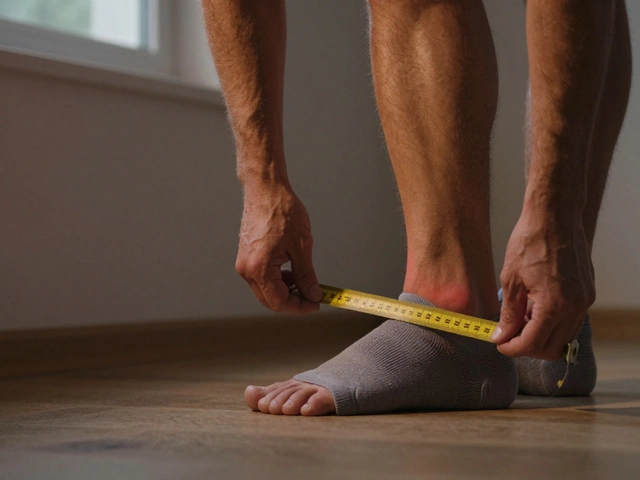
Your Foot Measurements
Results & Recommendations
Wearing running shoes a half size too big might seem harmless-after all, you can always tighten the laces, right? But if you’ve ever felt your foot sliding forward during a sprint, or noticed bruised toenails after a long run, you’re not just unlucky. You’re dealing with a common, avoidable mistake that can turn your runs into pain sessions.
Why Shoe Size Matters More Than You Think
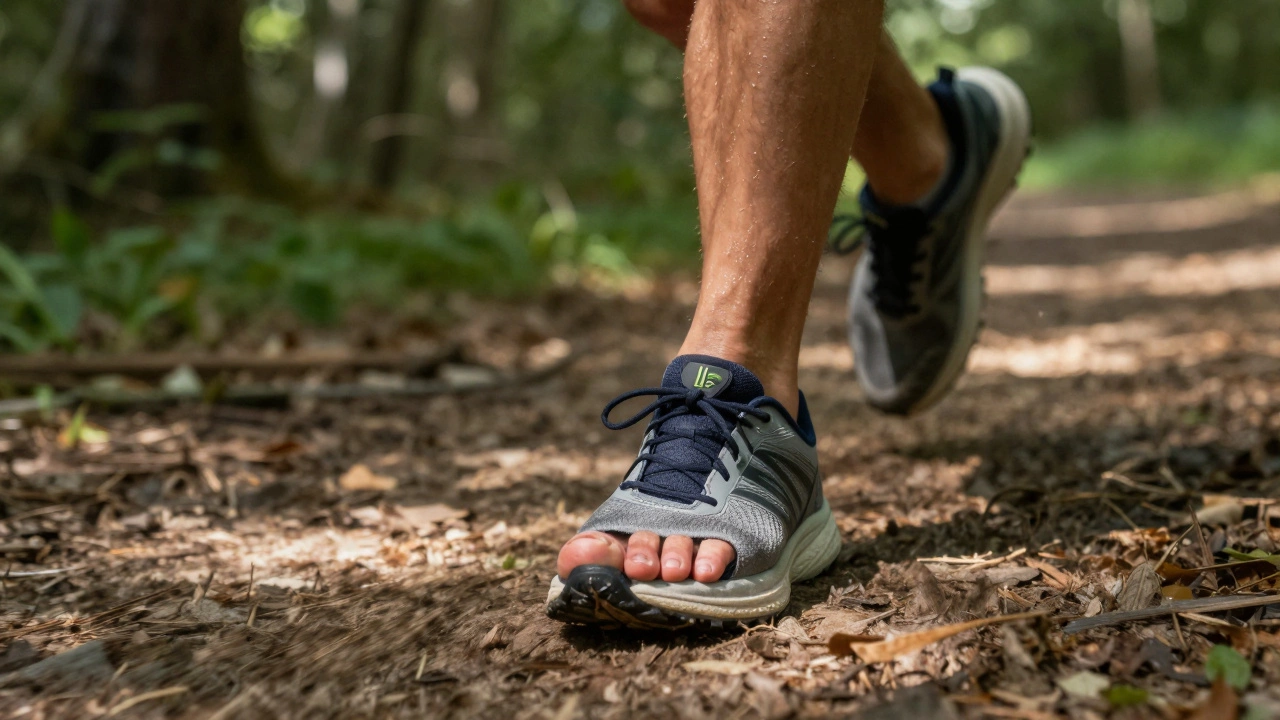
Your feet aren’t static. They expand when you run. Every step you take sends pressure through your foot, and your toes naturally slide forward. In fact, studies from the American Podiatric Medical Association show that your foot can swell up to half a size during a single run, especially in warm weather or after 30 minutes of continuous motion. If your shoes are already a half size too big, that swelling pushes your foot even further into the toe box.
That’s not just uncomfortable-it’s dangerous. Your toes slam into the front of the shoe. Over time, that leads to black toenails, bruised nail beds, or even permanent deformities like hammertoes. And it’s not just your toes. A loose shoe means your heel slips, your arch isn’t supported properly, and your ankle rolls more than it should. All of this increases your risk of plantar fasciitis, stress fractures, and ankle sprains.
What Happens When Your Shoes Are Too Loose
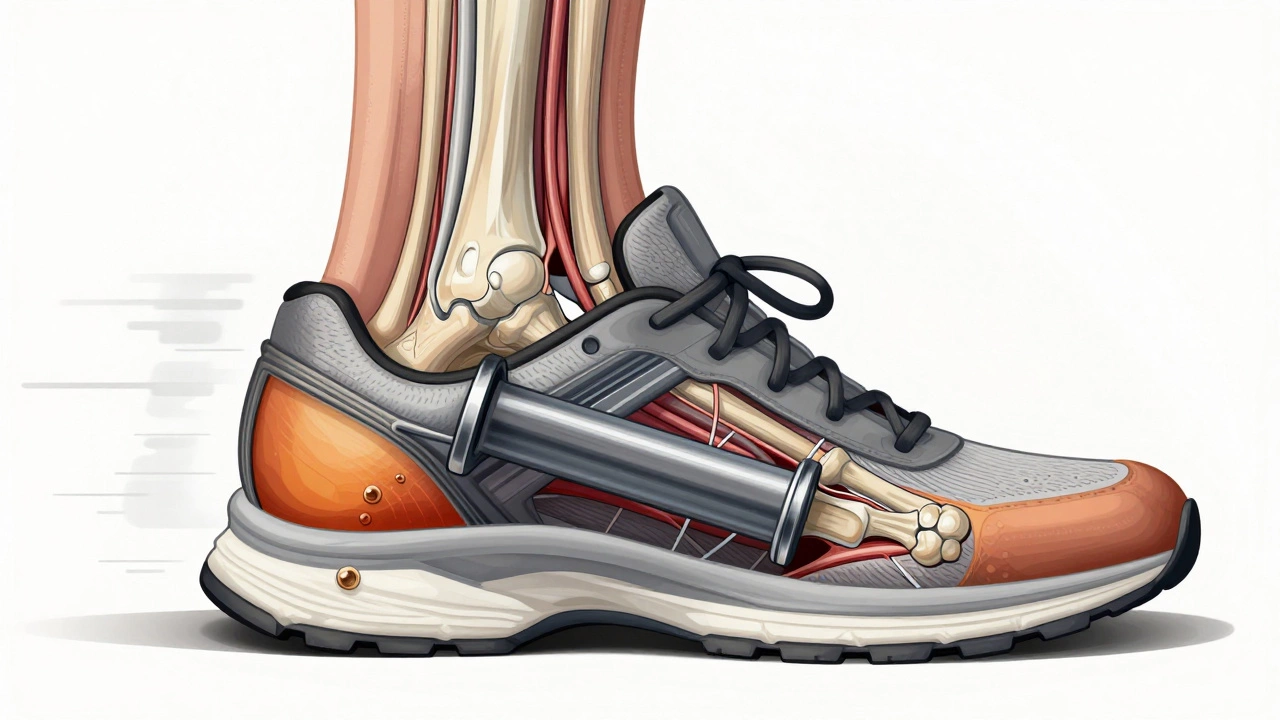
Think of your foot as a piston inside a cylinder. If the cylinder is too wide, the piston rattles. That’s exactly what happens in oversized shoes. Your foot moves around, which means your muscles and tendons have to work overtime just to keep your foot stable. This isn’t just inefficient-it’s exhausting. Runners who wear shoes a half size too big often report feeling like they’re fighting their shoes halfway through a run.
Here’s what else goes wrong:
- Blistering: Your heel slips, rubs, and creates friction. The skin breaks down, and blisters form-often on the Achilles tendon or the side of the heel.
- Reduced energy return: Shoes are designed to snap back with each step. When your foot shifts inside, that energy is lost to movement, not forward motion.
- Altered stride: To compensate for instability, your body changes how you land. You might start landing heavier on your heel, or gripping with your toes. Both habits lead to long-term strain.
- Wear and tear: Shoes that are too big wear unevenly. The heel cup collapses, the midsole compresses unevenly, and the outsole wears down faster on one side.
How to Tell If Your Shoes Are Too Big
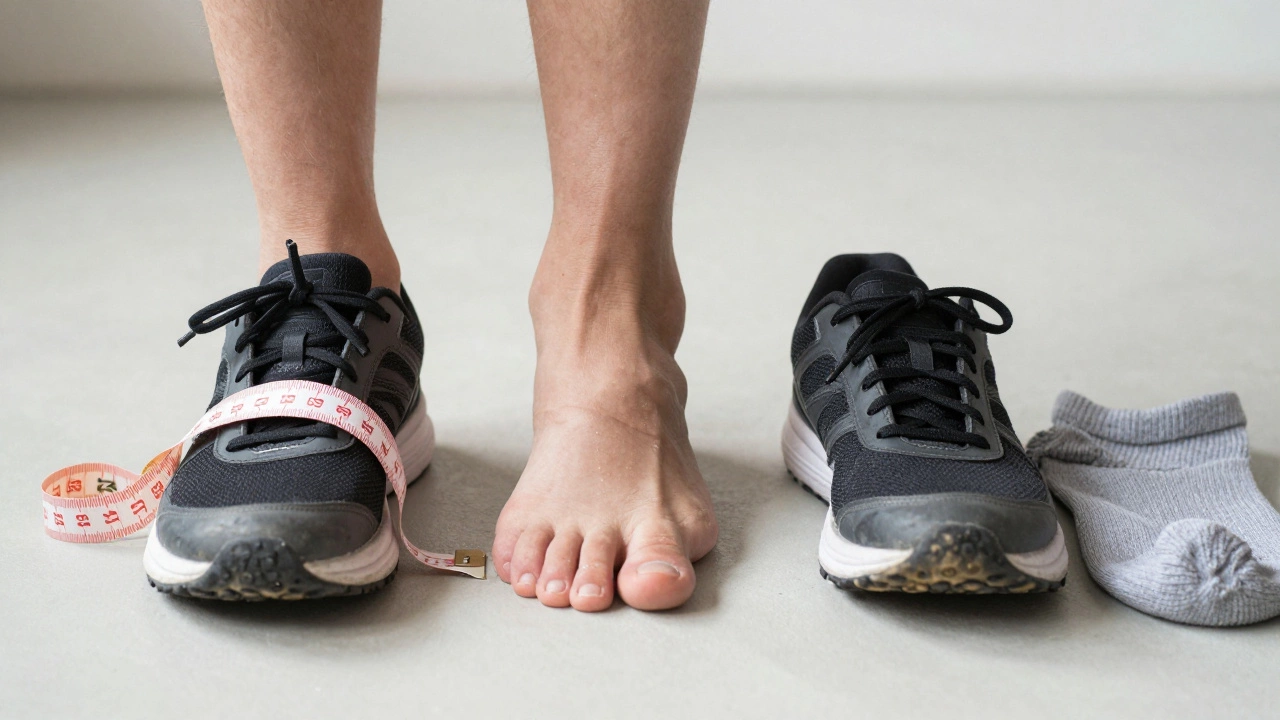
You don’t need a measuring tape to know if your shoes are the wrong size. Try this simple test:
- Put your shoes on with the socks you run in.
- Tie them as tightly as you normally would.
- Stand up and press your big toe into the front of the shoe.
- Can you wiggle your toes? If your toes are pressed against the front, the shoe is too small. If you can slide your foot forward easily, it’s too big.
- Now, stand on a hard floor and run in place for 10 seconds. Does your heel lift? Does your foot slide? If yes, the fit is wrong.
Here’s another clue: if you’ve ever bought running shoes because they felt “roomy” or “comfortable,” you might be in trouble. Comfort doesn’t mean space-it means support. A well-fitting shoe should feel snug around the midfoot and heel, with just enough room in the toe box for your toes to spread slightly.
What’s the Right Fit? A Real-World Guide
Most experts agree: you need about a thumb’s width of space between your longest toe and the front of the shoe. That’s roughly 3/8 to 1/2 inch (10-12 mm). This isn’t about comfort-it’s about function. That space gives your foot room to expand without slamming into the toe box.
Here’s what that looks like in practice:
- If you’re a size 9 in casual shoes, you might be a size 9.5 in running shoes.
- Women who wear size 7 in flats often need size 7.5 or 8 in running shoes.
- Don’t assume your shoe size is the same across brands. A Nike size 9.5 is not the same as an Asics or Brooks.
And here’s a truth many runners ignore: your foot size changes over time. After 30, your arches flatten. After pregnancy, your feet can widen. After a long injury recovery, your foot might not be the same shape. If you haven’t been fitted in the last year, you’re probably wearing the wrong size.
What to Do If You Already Bought Shoes a Half Size Too Big
Don’t toss them. Don’t just keep wearing them. Here’s what actually works:
- Use heel locks: Try the heel-lock lacing technique. This pulls the heel snug and stops slippage. It’s not perfect, but it helps.
- Insert a full insole: A memory foam or gel insole can take up extra space. Look for ones designed for running-thin, supportive, and not too bulky.
- Wear thicker socks: A pair of moisture-wicking, padded running socks can fill the gap. Avoid cotton. It holds moisture and stretches out.
- Try a toe spacer: Silicone toe sleeves can help reduce forward sliding and protect your nails.
These are fixes, not solutions. The best move? Return them. Most running stores have 30- to 90-day return policies, even if you’ve worn them. Don’t let pride keep you in pain.
When Bigger Might Be Okay
There’s one exception: ultra-runners and trail runners. Some people run 50K or more and prefer a slightly larger shoe to accommodate foot swelling over hours. But even then, they don’t go a full size up-they go a half size, and they use performance insoles and lacing techniques to lock everything in.
And if you have wide feet? Don’t size up to get width. Get a wide version. Brands like Brooks, New Balance, and Altra make D, 2E, and 4E widths. Sizing up for width just creates instability. You’ll still get heel slippage and toe jamming.
Final Verdict: Is It Bad?
Yes, it’s bad. Not always catastrophic, but consistently risky. Wearing running shoes a half size too big doesn’t just make you slower-it makes you more likely to get hurt. It’s not a minor issue. It’s the kind of small mistake that leads to months off the trail because of a stress fracture or chronic heel pain.
Running shoes are precision gear. They’re not sneakers. They’re not sandals. They’re engineered to support your body through thousands of impacts. If you’re not giving them the right fit, you’re sabotaging your own performance-and your health.
Get fitted. Test them. Run in them. If they slide, they’re wrong. Don’t wait for pain to tell you. Your feet will thank you.
Can I just tie my shoes tighter if they’re half a size too big?
Tying shoes tighter might help with heel slippage, but it won’t fix the main problem: your foot sliding forward. Tight laces can cause pressure on the top of your foot, leading to nerve pain or numbness. It also doesn’t restore the cushioning and support your shoe was designed to give. You’re trading one problem for another.
Should I size up for wider feet?
No. If your feet are wide, buy a wide version (like 2E or 4E) from brands that offer them. Sizing up for width means you’ll get extra length, which causes your heel to slip and your toes to jam. Wide shoes give you the right width without the extra length. Always try them on before buying.
Do running shoes stretch over time?
Some materials, like mesh, stretch a little-maybe 1/8 of an inch. But the structure of the shoe, especially the heel cup and midsole, doesn’t stretch. You can’t rely on stretching to fix a poor fit. If the shoe feels too big on day one, it’ll still be too big after 10 miles.
Is it better to go half a size up or down?
Half a size up is usually better than half a size down-just barely. A shoe that’s too tight can cause blisters, black toenails, and nerve damage. A shoe that’s half a size too big is less dangerous, but still risky. The goal is to find the size where your toes have a thumb’s width of space and your heel doesn’t slip. That’s the sweet spot.
How often should I get fitted for running shoes?
Every 12 to 18 months, or after any major life change-pregnancy, injury, weight loss/gain, or if you’ve been running more than 20 miles a week. Your feet change. So should your shoes.