Golf History Explorer & Quiz
Mid-18th Century: James Ogilvie invents the wooden-headed club, replacing iron ones and improving playability.
1754: The Society of St Andrews Golfers (later R&A) codifies the first standardized set of rules.
Late 19th Century: Old Tom Morris revolutionizes course design, equipment, and greenkeeping at St Andrews and Prestwick.
1895: The first US Open is held, marking golf's expansion into a global phenomenon.
Question 1 of 3
Who is widely considered the "Father of Modern Golf" for his work in course design and standardization?
You’re standing on the first tee, club in hand, staring down a fairway that stretches into the distance. It’s a ritual repeated by millions around the world every single day. But have you ever stopped to wonder who actually started this whole madness? When people ask who is the father of golf, they aren’t just looking for a name in a dusty textbook. They want to know how a game played with sticks and balls on Scottish beaches evolved into the multi-billion dollar industry we see today.
Here’s the tricky part: there isn’t one single person who invented golf out of thin air. Unlike basketball, which James Naismith literally created in a gymnasium in 1891, golf grew organically. It was a collective effort spanning centuries. However, if you force historians to pick one individual who shaped modern golf more than anyone else, most will point to Tom Morris Sr., better known as Old Tom Morris. He didn’t invent the sport, but he engineered its structure, rules, and course design in a way that defined it for generations.
| Figure | Role | Contribution | Era |
|---|---|---|---|
| Old Tom Morris | Professional Golfer & Course Designer | Standardized equipment, designed iconic courses like Muirfield | Late 19th Century |
| James Ogilvie | Clubmaker | Invented the wooden-headed club, replacing iron ones | Mid-18th Century |
| The Royal and Ancient Golf Club | Governing Body | Codified the rules of golf | Established 1754 |
The Myth of the Single Inventor
Let’s clear up the biggest misconception right away. No one sat down at a desk and drew up the blueprint for golf. The game likely descended from older stick-and-ball games like kolven in the Netherlands or camica in France. These games involved hitting a ball toward a target using a curved stick. By the 15th century, these activities had migrated to Scotland, where they merged with local traditions to form what we now recognize as golf.
Why did it take root in Scotland specifically? Look at the geography. The coastal links land in places like St Andrews offers firm, undulating terrain that naturally creates challenging play without needing heavy landscaping. The wind is constant, the ground is hard, and the grass grows in patches. This environment forced players to adapt their techniques, leading to the unique shot-making skills that define the sport. So, while no single person is the "inventor," the Scottish landscape is arguably the co-author of the game.
Enter Old Tom Morris: The Architect of Modern Golf
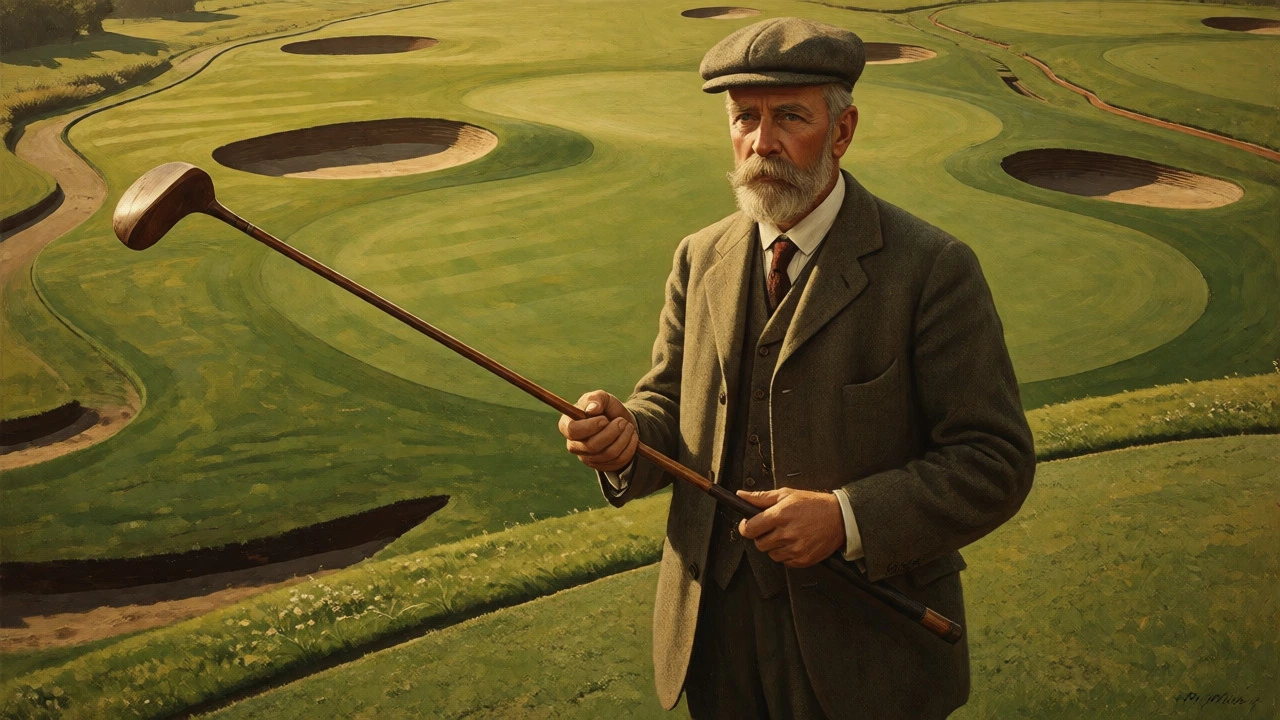
If you want to understand why golf looks the way it does today, you need to look at Old Tom Morris. Born in 1821 in St Andrews, he wasn’t just a player; he was an entrepreneur, a groundskeeper, and a visionary. Before him, golf was often chaotic. Courses were poorly maintained, clubs were inconsistent, and rules varied wildly from town to town.
Morris changed everything. He became the greenkeeper at Prestwick and later at St Andrews, introducing systematic maintenance practices. He realized that keeping the greens fast and the fairways trimmed required specific tools and labor schedules. He also revolutionized club design. Working with his brother, he helped transition from long-nosed woods to the more balanced shapes we use today. More importantly, he designed over 60 courses across the UK. His designs emphasized strategy over brute strength, rewarding accuracy and placement. If you play a course today that asks you to carry a bunker off the tee or lay up short of water, you’re experiencing Morris’s philosophy.
The Evolution of Equipment and Rules
You can’t talk about the father of golf without talking about the gear. Early golfers used crude implements-essentially bent branches. The real turning point came when James Ogilvie, a clubmaker from Leith, began attaching wooden heads to shafts in the mid-1700s. This innovation allowed for greater power and control, making the game accessible to more people beyond the aristocracy.
But equipment alone doesn’t make a sport. You need rules. In 1754, a group of gentlemen formed the Society of St Andrews Golfers, which later became the Royal and Ancient Golf Club of St Andrews. They drafted thirteen basic rules. While these seem simplistic compared to today’s rulebook, they provided the first standardized framework. This standardization allowed players from different regions to compete fairly, fostering the growth of competitive golf.
From Links to Global Phenomenon
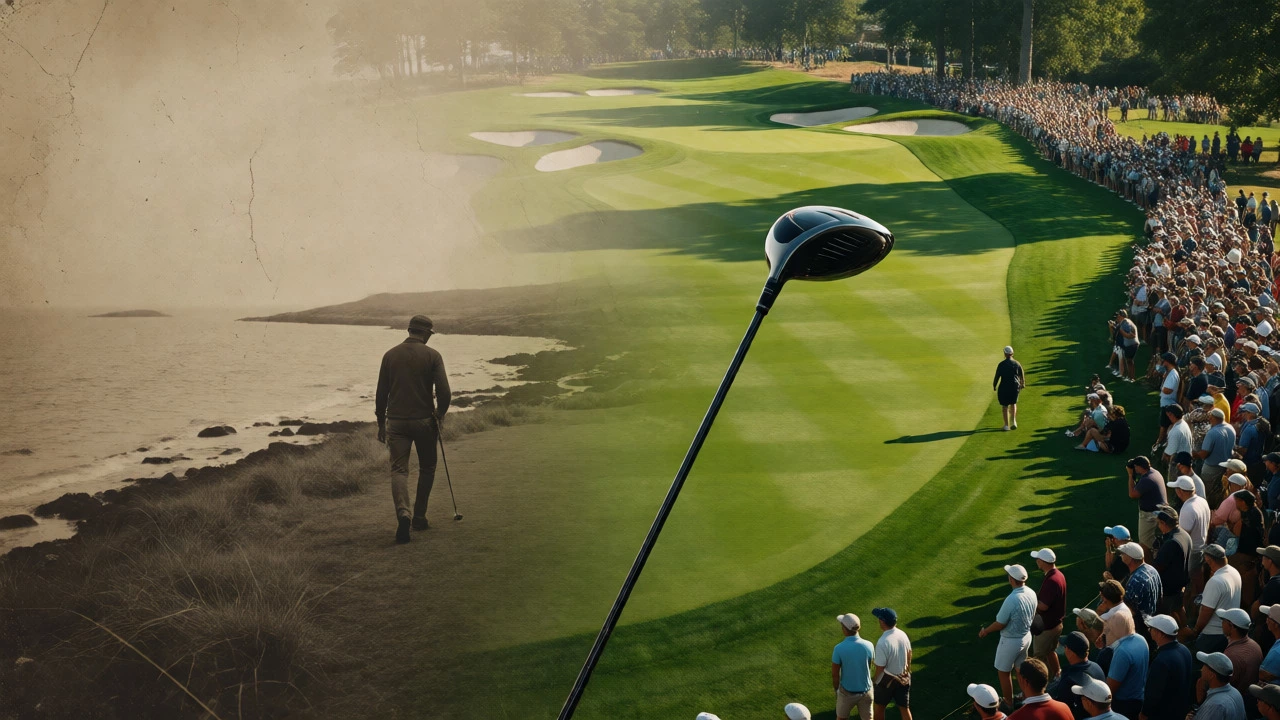
So, how did a niche Scottish pastime become a global obsession? A big part of it was exportation. British soldiers and merchants took golf with them to India, South Africa, and eventually the United States. The first US Open was held in 1895, signaling that golf had crossed the Atlantic and taken hold. By the early 20th century, legends like Bobby Jones and Walter Hagen were turning golf into spectator entertainment.
This shift from participatory leisure to televised spectacle changed the economic model of the sport. Courses became destinations. Equipment manufacturers became giants. And the question of "who started it" became less about a single inventor and more about honoring the lineage of those who refined it.
Why Does This Matter Today?
Knowing the history helps you appreciate your round. When you walk onto a links-style course, remember that you’re walking on land that shaped the game. When you grip your driver, think about the centuries of trial and error that led to its current shape. Understanding that golf wasn’t invented by one genius but cultivated by many passionate individuals-from the anonymous shepherds of Scotland to the meticulous designs of Old Tom Morris-adds depth to the experience.
It also highlights the importance of stewardship. Just as Morris cared for the turf, modern golfers are tasked with preserving the integrity of the game. Whether you’re a beginner struggling with your swing or a veteran breaking 80, you’re part of a continuous chain of players stretching back hundreds of years. That’s a pretty cool thought to keep in mind next time you step up to the ball.
Did Tom Morris Sr. invent golf?
No, Tom Morris Sr. did not invent golf. The game existed for centuries before his birth in 1821. However, he is often called the "Father of Modern Golf" because he significantly shaped its professional standards, course design principles, and equipment technology during the late 19th century.
Where was golf invented?
While stick-and-ball games existed elsewhere, the version of golf recognized today originated in Scotland during the Middle Ages. The coastal links lands of East Lothian and Fife provided the natural terrain necessary for the game's development.
Who wrote the first rules of golf?
The first written rules were established in 1744 by the Company of Gentlemen Golfers (later the Honourable Company of Edinburgh Golfers) for a competition at Leith. The Royal and Ancient Golf Club of St Andrews later codified and expanded these rules in 1754.
Is there a woman considered a pioneer of golf?
Yes, Lady Margaret Stewart is often cited as the first female golfer, playing in the 16th century. Later, figures like Issette Pearson helped establish women's golf clubs in the late 19th century, paving the way for the LPGA.
How did Old Tom Morris influence course design?
Morris introduced strategic bunkering, proper drainage systems, and distinct green complexes. He moved away from simple hole placements to designs that required risk-reward decisions, influencing architects like Harry Colt and Alister MacKenzie.