Rugby History Timeline
Click on a year in the timeline below to learn about the pivotal moments in rugby's history.
The Origins of Rugby
Click any point on the timeline above to discover how a schoolyard game became a global sport named after a small town in Warwickshire.
Ever wondered why we call it rugby? It’s not because of a type of ball, a specific play, or even a famous player. It’s named after a place. Specifically, a small town in Warwickshire, England, and the school that sits there. If you’ve ever watched a match and thought, "This game has nothing to do with a village," you’re right. But the connection is real, and it dates back to the early 19th century.
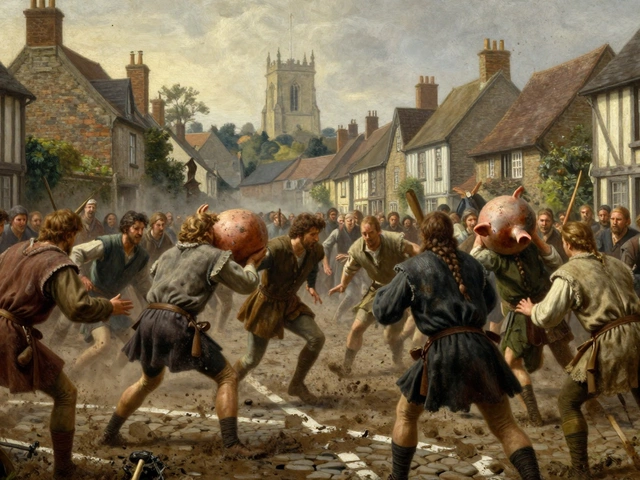
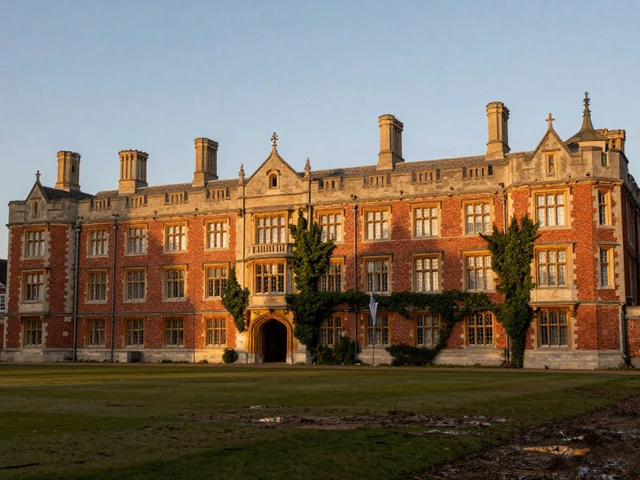
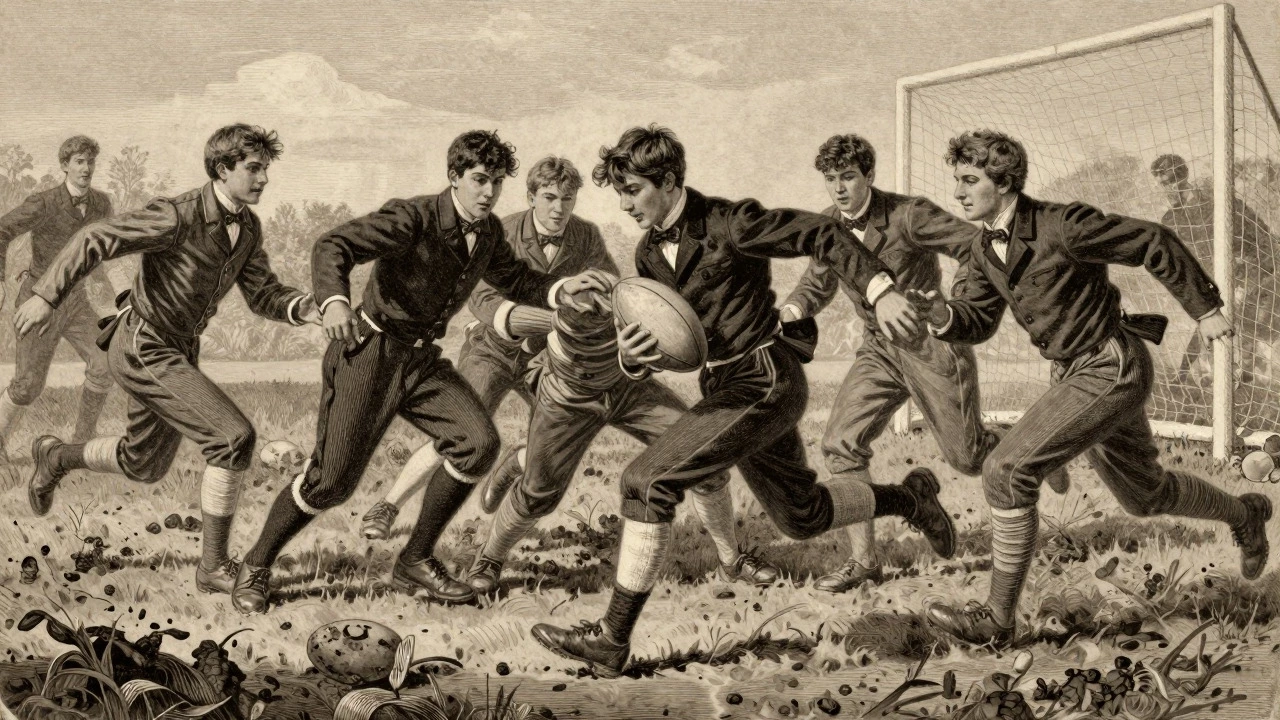
The story starts at Rugby School, a prestigious independent day and boarding school for boys located in Rugby, Warwickshire, England. Founded in 1567 by Lawrence Sheriff, the school became a hub for physical education in the Victorian era. Before standardized rules existed, football games were played all over Britain, but they varied wildly from one school to another. At Rugby School, students developed their own version of the game, which eventually gave the sport its name.
The Legend of William Webb Ellis
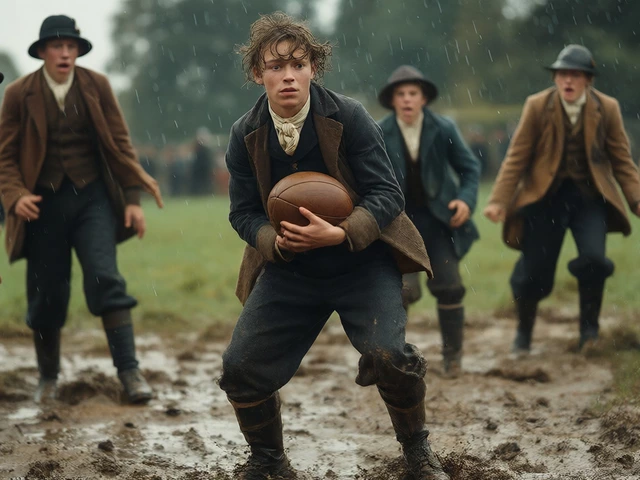
You’ve probably heard the story about William Webb Ellis, a student at Rugby School who allegedly picked up the ball and ran with it in 1823. According to tradition, during a match against Shrewsbury School, Ellis broke the rules of the time (which favored kicking) by picking up the ball and running toward the goal. This act supposedly inspired the creation of the modern game of rugby.
For decades, this story was accepted as fact. A statue of Ellis stands on the school grounds, and his name is etched into the history books. However, historians have debated the accuracy of this legend for quite some time. While Ellis did exist and was indeed a student at Rugby School, there is no contemporary record proving he invented the handling of the ball. It’s more likely that the practice of carrying the ball had already been common among students there before 1823. Nevertheless, the legend stuck, and it cemented the link between the school and the sport.
From School Grounds to National Sport
The transition from a schoolyard game to a formalized sport happened gradually. In 1845, Rugby School published its first set of written rules. These rules allowed players to handle the ball, pass it backward, and kick it forward. This distinction separated it from association football (soccer), which strictly prohibited handling.
As former students, known as Old Rugbeians, went on to other schools and universities, they brought their version of the game with them. They formed clubs and organized matches, spreading the rules across England. By the 1860s, the game was popular enough that different regions began to disagree on how it should be played. This disagreement led to the split between Rugby Union, the code of rugby that allows only backward passes and emphasizes team cohesion and Rugby League, a faster-paced code of rugby that limits tackles per possession. Despite the split, both codes retained the name "rugby" because of their shared heritage at Rugby School.
Why Not Just Call It 'Football'?
In the UK, the word "football" originally referred to any game involving a ball and feet. As handling became more prominent in the Rugby School version, the need for a distinct name grew. Other sports like cricket and rowing also emerged from school traditions, but rugby was unique in that its name was directly tied to the location where it evolved. You don’t see "Eton Football" or "Harrow Cricket" becoming global brands in the same way, but "Rugby" did because the school’s influence was so dominant in shaping the rules.
The name stuck internationally as British expatriates took the game to New Zealand, Australia, South Africa, and France. In these countries, the sport adapted to local conditions and cultures, but the name remained unchanged. Today, when you hear "rugby fixtures" scheduled for the weekend, you’re hearing echoes of a 19th-century schoolboy breaking the rules in Warwickshire.
The Evolution of the Name
Over time, the term "rugby" has expanded beyond just the sport. We have rugby boots, rugby balls, and even rugby-style clothing. The name has become a brand synonymous with toughness, teamwork, and tradition. Interestingly, the name has also influenced other aspects of culture. For instance, the phrase "rugby league" vs. "rugby union" is a technical distinction that most casual fans understand intuitively, even if they can’t explain the historical reasons behind the split.
It’s worth noting that while the name comes from the town, the town itself didn’t invent the sport out of thin air. The game evolved through years of informal play, rule adjustments, and cultural exchange within the school community. The name is a testament to the power of institutional identity in shaping global sports.

Comparison: Rugby vs. Association Football Origins
| Sport | Origin Location | Key Historical Figure | Naming Reason | First Written Rules |
|---|---|---|---|---|
| Rugby | Rugby School, Warwickshire | William Webb Ellis (legendary) | Named after the school/town | 1845 |
| Association Football (Soccer) | London, England (FA founded 1863) | No single inventor; codified by FA | Distinguished from rugby by banning handling | 1863 |
This table highlights how the two major forms of football diverged. While soccer got its name from the governing body (The Football Association), rugby kept its geographical root. This difference in naming reflects how each sport established its identity: soccer through regulation and standardization, rugby through heritage and school tradition.
Modern Relevance of the Name
Today, the name "rugby" carries significant weight in the sporting world. When teams announce their rugby fixtures, scheduled matches in professional rugby competitions, fans instantly recognize the context. The name evokes a sense of history and prestige. It connects modern players to the legacy of those who first played the game on the muddy fields of Rugby School. Even as the sport evolves with new tactics and technologies, the name remains a constant anchor to its origins.
So, next time you watch a match, remember that the name isn’t arbitrary. It’s a tribute to a specific place and time where a group of schoolboys decided that running with the ball was better than just kicking it. That simple decision changed the landscape of global sports, and the name "rugby" is the lasting reminder of that moment.
Is William Webb Ellis really the inventor of rugby?
Probably not. While he is credited in legend, historians believe the practice of handling the ball was already common at Rugby School before 1823. His role is symbolic rather than factual.
Why is it called rugby and not something else?
It is named after Rugby School in Rugby, Warwickshire, where the game’s distinctive rules were developed and codified in the 19th century.
When were the first official rugby rules written?
The first set of written rules for rugby was published by Rugby School in 1845.
What is the difference between Rugby Union and Rugby League?
Rugby Union allows unlimited tackles and backward passes, while Rugby League limits tackles to six per possession and is generally faster-paced. Both originated from the same school-based game.
Did the town of Rugby invent the sport?
Not exactly. The sport evolved at Rugby School, which is located in the town of Rugby. The name refers to the institution and its surrounding area, not just the geography alone.