Yoga vs Pilates: Which One Is Right For You?
Select the goals that matter most to you right now to find out which practice fits your needs.
Yoga
Ancient practice focusing on mind-body connection, breath control, and mindfulness.
- ✔ Superior for stress reduction
- ✔ Best for deep stretching/flexibility
- ✔ Low cost (just a mat)
Pilates
Physical system focused on precision, control, and core strength without spiritual components.
- ✔ Better for lean muscle definition
- ✔ Excellent for posture correction
- ✔ Ideal for targeted rehabilitation
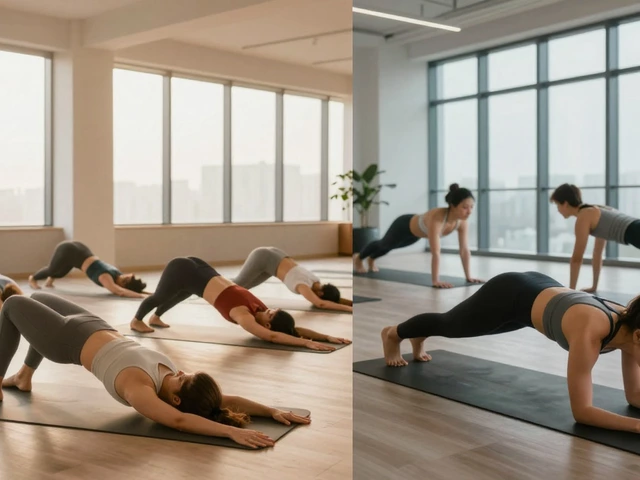
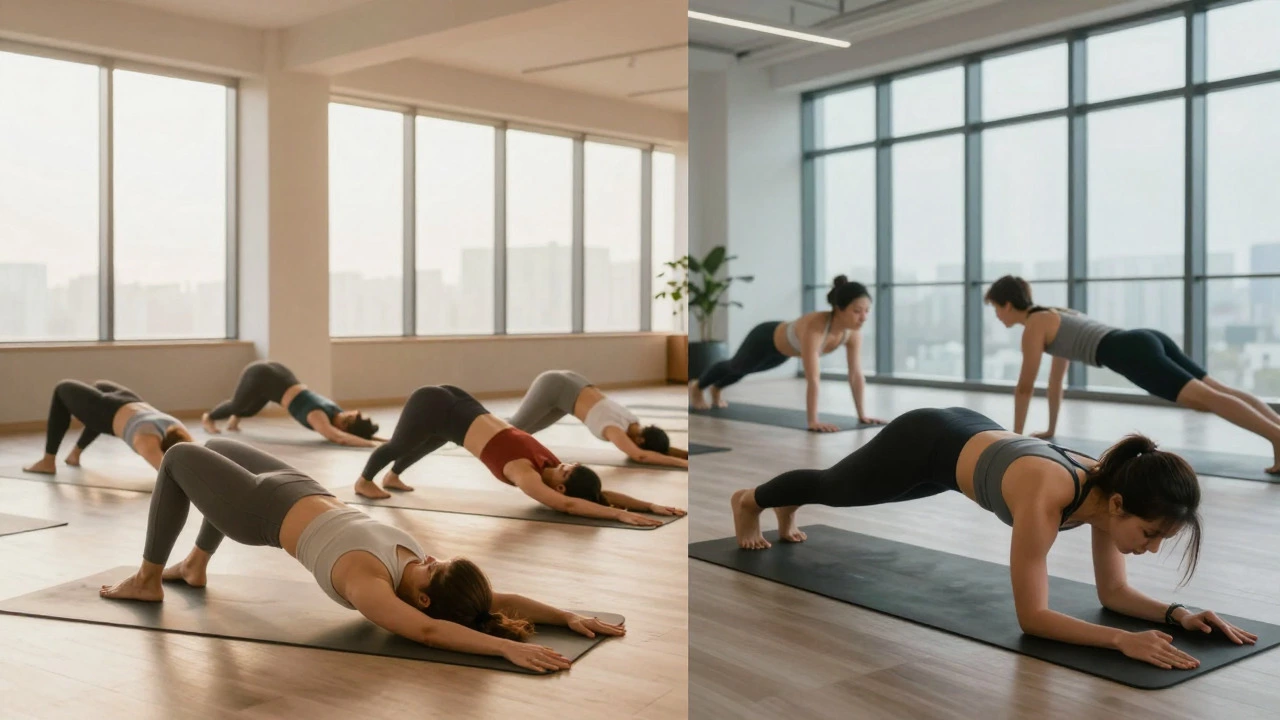
You’ve probably seen the mats lined up in studios across Adelaide. One side is doing downward dogs; the other is holding plank variations with intense focus. Both promise better bodies, less stress, and more energy. So, which one actually delivers? The short answer is that neither is universally "better." It depends entirely on what your body needs right now.
If you want to melt away anxiety and improve your range of motion, yoga might be your best bet. If your goal is to build lean muscle, fix posture issues, and strengthen your core without heavy weights, Pilates is a low-impact exercise method developed by Joseph Pilates that focuses on core strength, stability, and controlled movements. Let’s break down exactly how they differ so you can pick the right tool for the job.
The Core Philosophy: Flow vs. Control
To understand why these practices feel different, you have to look at where they come from. Yoga is an ancient practice rooted in Indian philosophy. It connects physical movement (asanas) with breath control (pranayama) and mindfulness. The goal isn’t just a fit body; it’s a balanced mind-body connection. You’ll often find yourself holding poses while focusing inward, trying to quiet mental chatter.
Pilates, on the other hand, was created in the early 20th century by Joseph Pilates, a German-born physical trainer who developed his system originally called 'Contrology' to rehabilitate injured dancers and soldiers. It is purely physical. There is no spiritual component. The focus is on precision, control, and efficiency of movement. Every repetition matters. You aren’t trying to empty your mind; you are hyper-focused on engaging specific muscles, particularly the deep abdominal muscles known as the transverse abdominis.
This fundamental difference shapes everything else. In a yoga class, you might flow through a sequence like Vinyasa, a dynamic style of yoga that links breath with movement in a continuous flow, moving from pose to pose smoothly. In a Pilates session, you might perform ten precise repetitions of a single exercise, ensuring perfect form each time before moving on.
Strength and Muscle Tone: What Actually Changes?
Let’s talk about results. If you’re looking for visible muscle definition and functional strength, Pilates has a slight edge. Because it emphasizes resistance-either through your own body weight or specialized equipment like the Reformer, a Pilates machine with a sliding carriage and springs that provides variable resistance for strengthening exercises-it builds lean muscle mass effectively. It targets the small stabilizer muscles that support your joints, leading to a toned appearance without bulk.
Yoga, a holistic practice involving physical postures, breathing techniques, and meditation aimed at improving physical health and mental clarity also builds strength, but differently. Holding poses like Warrior II or Chair Pose requires significant muscular endurance. Over time, this improves overall tone and joint stability. However, yoga is generally less effective at building raw power or significant muscle hypertrophy compared to Pilates or weightlifting. Think of yoga as building a foundation of stability, while Pilates adds the structural reinforcement.
| Benefit | Yoga | Pilates |
|---|---|---|
| Core Strength | Moderate (stability focus) | High (targeted activation) |
| Flexibility | High (deep stretching) | Moderate (functional range) |
| Muscle Toning | Lean endurance | Defined strength |
| Stress Reduction | Very High | Moderate |
| Bone Density | Moderate (weight-bearing poses) | Low (non-weight bearing) |
Flexibility and Mobility: Stretching It Out
If tight hamstrings or a stiff lower back are your main complaints, yoga is likely the superior choice. Yoga sequences are designed to take joints through their full range of motion. Styles like Hatha, a gentle style of yoga that focuses on basic postures and alignment, ideal for beginners hold stretches for longer periods, allowing connective tissues to lengthen safely. This leads to improved flexibility that carries over into daily life, making tasks like tying shoes or reaching high shelves easier.
Pilates improves mobility too, but in a different way. It focuses on functional flexibility-the ability to move efficiently without restriction. By strengthening the muscles around your hips and shoulders, Pilates creates space for movement. You might not end up touching your toes as easily as after a hot yoga class, but your spine will feel more agile and your movements more coordinated. For athletes who need explosive speed and agility, this type of mobility is often more valuable than passive stretching.
Mental Health and Stress Relief
Here is where the gap widens significantly. Yoga is widely recognized for its mental health benefits. The combination of rhythmic breathing, mindful movement, and often a calming studio environment activates the parasympathetic nervous system-the "rest and digest" mode. Regular practitioners report lower levels of cortisol, the stress hormone. If you’re dealing with anxiety, insomnia, or general burnout, a Yin Yoga, a slow-paced style of yoga where poses are held for several minutes to target deep connective tissues class can feel like therapy.
Pilates offers mental benefits primarily through concentration. The precision required keeps your mind focused on the present moment, which can be a form of active meditation. It reduces stress by providing a sense of accomplishment and bodily awareness. However, it lacks the explicit breathing and meditation components that make yoga a powerhouse for mental wellness. You’ll leave Pilates feeling physically refreshed and mentally sharp, but not necessarily spiritually centered.
Injury Prevention and Rehabilitation
Both practices are excellent for injury prevention, but they serve different populations. Pilates is a staple in physical therapy clinics worldwide. Its focus on core stability and proper alignment makes it ideal for rehabilitating back pain, knee injuries, and shoulder impingements. Because the movements are low-impact and highly controlled, you can modify exercises to suit almost any limitation. If you have chronic pain or are recovering from surgery, a certified Pilates instructor can tailor a program to heal you safely.
Yoga also aids rehabilitation, particularly for joint health and balance. Weight-bearing poses help maintain bone density, which is crucial for preventing osteoporosis. Balance poses like Tree Pose improve proprioception-your body’s ability to sense its position in space-reducing fall risk in older adults. However, some advanced yoga poses can be risky if done incorrectly, especially for those with existing joint issues. Always inform your instructor about any injuries before starting.
Equipment and Accessibility
One practical consideration is cost and accessibility. Basic yoga requires only a mat. You can find free videos online or attend community classes. While props like blocks and straps are helpful, they aren’t mandatory. Pilates, however, often involves expensive equipment. Reformer machines can cost thousands of dollars, which drives up class prices. A typical Pilates reformer class in Adelaide might cost $30-$50, whereas a group yoga class could be $15-$25. That said, Mat Pilates, a version of Pilates performed on a mat using only body weight and small props like resistance bands is much more affordable and accessible, offering many of the same benefits without the machinery.
Which One Should You Choose?
Don’t think of this as an either/or decision. Many people thrive by combining both. Here’s a quick guide to help you decide where to start:
- Choose Yoga if: You want to reduce stress, improve flexibility, learn mindfulness, or prefer a slower, more meditative pace.
- Choose Pilates if: You want to build core strength, improve posture, tone muscles, or recover from an injury.
- Try Both if: You want a well-rounded fitness routine that addresses strength, flexibility, and mental health.
Start with a beginner class in each. Pay attention to how your body feels afterward. Do you feel energized and strong? Or calm and stretched? Your body will tell you what it needs. Consistency matters more than perfection, so pick the practice you enjoy enough to stick with long-term.
Can I do yoga and Pilates on the same day?
Yes, absolutely. Many athletes combine them for a balanced routine. A common approach is to do Pilates in the morning for core activation and strength, followed by yoga in the evening for stretching and relaxation. Just ensure you allow enough time between sessions for recovery if both workouts are intense.
Is Pilates better than yoga for weight loss?
Neither is a magic bullet for weight loss, as diet plays the largest role. However, vigorous styles of yoga like Ashtanga or Power Yoga can burn more calories per session than traditional Pilates. Pilates builds lean muscle, which boosts your metabolism over time. For sustainable weight management, combine either practice with cardiovascular exercise and a healthy diet.
Do I need special equipment for Pilates?
Not necessarily. Mat Pilates uses only your body weight and perhaps a resistance band or small ball. These classes are widely available and affordable. Reformer Pilates requires specialized machines found in studios, which increases the cost but offers greater resistance and variety. Start with Mat Pilates to see if you enjoy the method before investing in reformer classes.
Which is safer for beginners?
Both are safe when taught by qualified instructors. Hatha or Restorative yoga classes are gentle and focus on alignment, making them great for newcomers. Introductory Pilates classes also emphasize form and modification. Avoid advanced vinyasa flows or complex reformer routines until you have built a base level of strength and understanding of your body’s limits.
How quickly will I see results?
Most people notice improvements in flexibility and stress levels within two to four weeks of regular practice. Visible changes in muscle tone and posture typically take eight to twelve weeks of consistent effort. Remember that consistency is key-aim for two to three sessions per week of whichever practice you choose.