Boxing Violence Calculator
This tool calculates cumulative punch impact based on:
- Punch force (1,000+ lbs per punch)
- Number of rounds
- Punch frequency per round
Based on 2023 University of Sydney research showing measurable brain changes after 5+ years of competition.
Estimated Impact
Ask someone if a boxing match is a fight, and you’ll get two answers. One says yes-of course it is. Two bodies hitting each other with gloved fists? That’s a fight. The other says no-it’s a sport, regulated, scored, and safe. So which is it? The truth isn’t in the extremes. It’s in the middle.
What Makes a Fight a Fight?
A fight, in everyday language, means conflict. It’s two people clashing-angry, uncontrolled, no rules. A bar brawl. A street argument that turns physical. It’s unpredictable. It’s dangerous. It ends when one person gives up, passes out, or runs away.
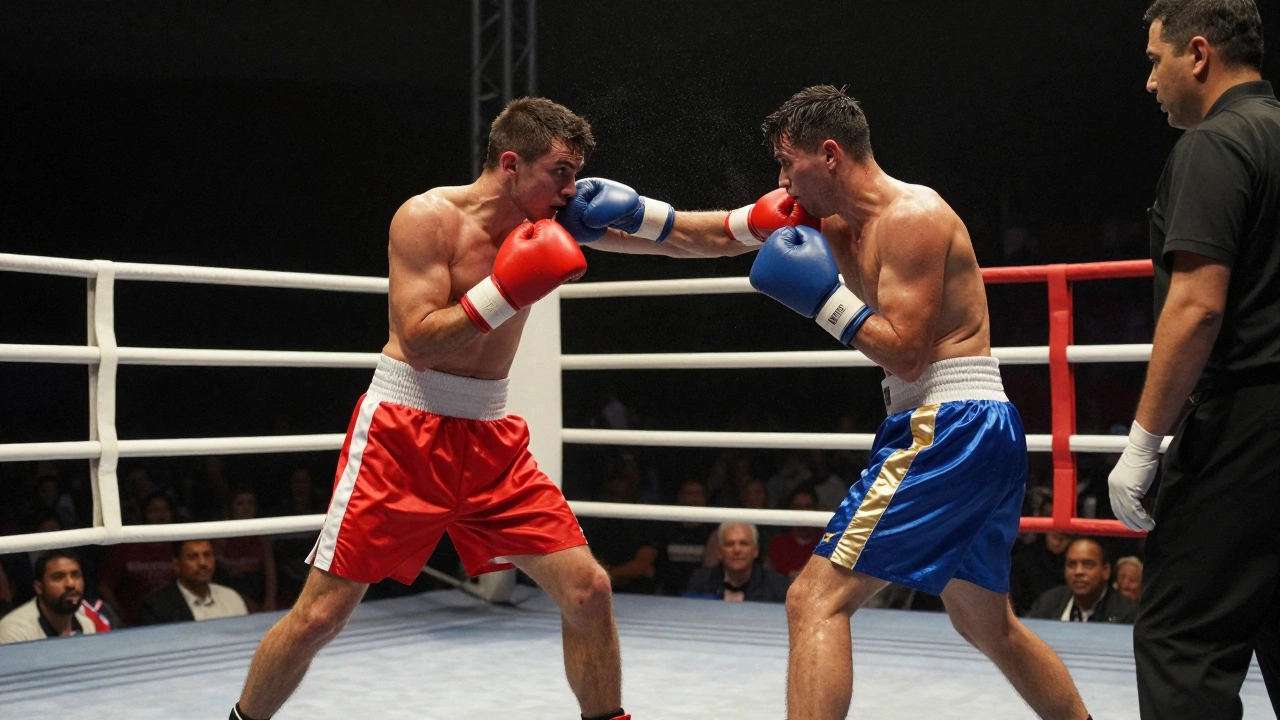
A boxing match? It starts with a bell. It ends with a bell. There are judges. There are referees. There are weight classes. There are rounds. Fighters wear padding. They train for months. They sign contracts. They get paid. They follow rules that say: no low blows, no headbutts, no hitting behind the ear. If you break them, you get warned. Or disqualified.
So if a fight is chaos, boxing is structure. But the structure doesn’t erase the violence. It channels it. The goal is still to land cleaner, harder, more effective punches than your opponent. The goal is still to make them quit-or be unable to continue.
Boxing Wasn’t Always This Clean
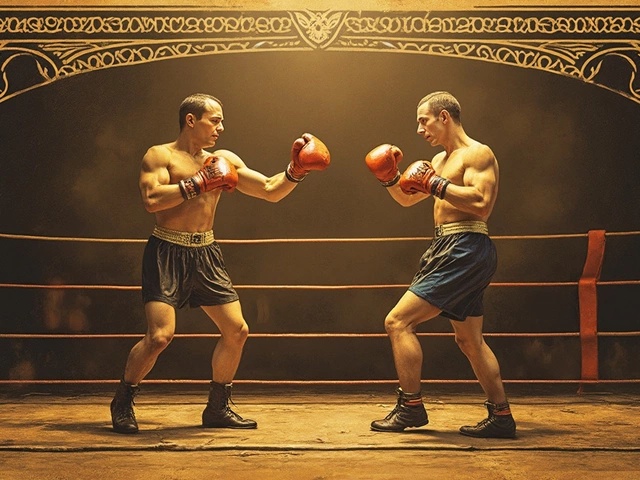
Centuries ago, bare-knuckle boxing was exactly what you’d call a fight. No gloves. No time limits. Fighters fought until one couldn’t stand. Some matches lasted over 100 rounds. Deaths happened. No one called it a sport back then-they called it a contest of endurance.
The Marquess of Queensberry Rules, introduced in 1867, changed everything. Gloves became mandatory. Rounds were timed. Knockdowns had a 10-second count. That’s when boxing started looking less like a brawl and more like a regulated contest. But even then, it was brutal. Fighters broke hands. They lost teeth. They suffered brain trauma.
Today’s boxing is safer, yes. But the core hasn’t changed: you hit, you get hit, and you try to make your opponent stop.
The Science Behind the Violence
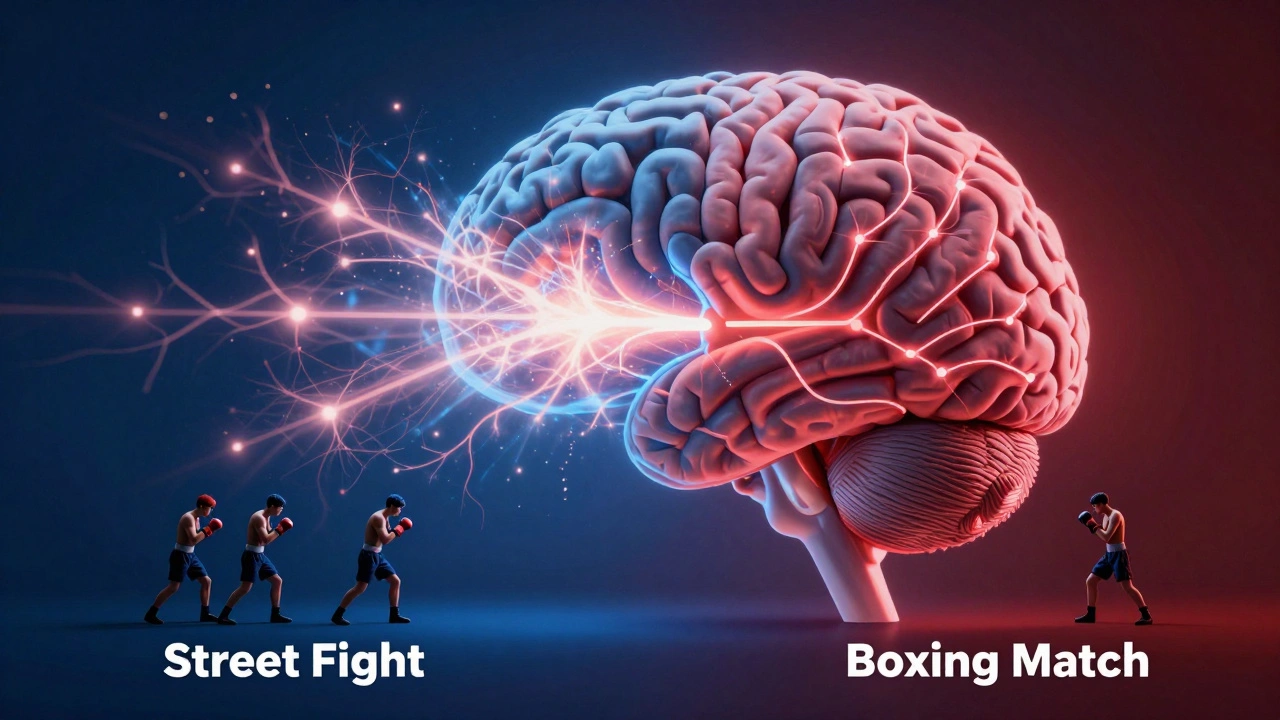
Studies show that a professional boxer’s punch can deliver over 1,000 pounds of force. That’s enough to fracture a skull. In 2023, a study from the University of Sydney’s Brain and Mind Centre found that boxers who competed for more than five years showed measurable changes in brain structure-similar to early-stage traumatic brain injury in non-athletes.
And yet, the sport continues to grow. Why? Because the violence isn’t random. It’s controlled. It’s intentional. It’s respected. Fighters don’t just throw wild swings. They use footwork, timing, defense. They read their opponent like a chess player reads the board. A well-placed jab can end a round. A perfect hook can end a career.
That’s not just fighting. That’s art. But it’s still violence. You can’t separate the technique from the damage.

Legal and Cultural Definitions
Legally, a boxing match is not classified as assault. In Australia, under the Crimes Act 1900, consent to participate in a regulated sport removes criminal liability. That’s why boxers can’t sue each other for injuries sustained in the ring-unless there’s gross misconduct, like an illegal punch after the bell.
But outside the ring? If two people start throwing punches in a parking lot with no referee, no gloves, and no rules? That’s assault. Same action. Different context.
Culturally, we treat boxing differently than street fights. We watch it on TV. We cheer for it. We call fighters warriors. We honor their discipline. We don’t call them criminals. That’s because the system around boxing-training, licensing, medical checks, commissions-gives it legitimacy.
Why Does This Distinction Matter?
It matters because people confuse the two. Parents worry their kid will learn to be violent by boxing. Coaches fear the sport encourages aggression. Critics say it glorifies brutality.
But look at youth boxing programs in Adelaide. Kids as young as eight train in gyms with padded floors and strict conduct rules. They learn respect. They learn control. They learn how to take a hit without losing their composure. Many of them never fight in a ring. They train for discipline, not destruction.
Boxing doesn’t create violence. It gives structure to it. It teaches people how to channel aggression into something productive. That’s why you’ll find former boxers working as teachers, security guards, or mentors. They didn’t learn to fight-they learned to manage conflict.
So Is a Boxing Match a Fight?
Yes. But not the kind you think.
It’s a fight with rules. A fight with consequences. A fight with preparation. A fight with dignity.
It’s not a barroom brawl. It’s not a domestic dispute. It’s not random violence. It’s a highly skilled, physically demanding, emotionally intense contest where two people agree to test their limits under strict supervision.
Calling it just a fight ignores the training, the strategy, the culture. Calling it not a fight ignores the blood, the bruises, the risk.
The answer isn’t yes or no. It’s both. And that’s what makes boxing so powerful.
What Happens When the Rules Break Down?
When a boxer ignores the referee’s stoppage? That’s when the line blurs. When a fighter throws a punch after the bell? That’s when the sport turns ugly. When a promoter pushes untrained fighters into the ring? That’s when boxing becomes dangerous-not because of the sport, but because of the people running it.
The best boxing organizations-like the Australian Boxing Federation-require medical clearances, mandatory sparring limits, and concussion protocols. They monitor fighters’ records. They suspend those who ignore safety.
But not all do. That’s why amateur boxing exists. To protect. To teach. To filter out the chaos.
Boxing vs Other Combat Sports
Compare boxing to MMA. In MMA, you can kick, grapple, choke. It’s more varied, but also more chaotic. In boxing, the rules are simpler: only fists above the waist. That simplicity makes it harder. You can’t escape a punch by taking the fight to the ground. You have to stand and trade.
That’s why boxing is often called the sweet science. It’s not about overwhelming force. It’s about precision. Timing. Patience. The best boxers don’t win by landing the most punches-they win by landing the right ones.
That’s why you see older fighters, slower, less explosive, still winning. They’ve learned how to read the fight before it happens.
Final Thought: It’s About Intent
Intent defines the action.
A street fight is about anger. A boxing match is about mastery.
One seeks to hurt. The other seeks to outthink.
One ends with regret. The other ends with respect.
So yes-a boxing match is a fight. But it’s a fight that asks more of you than just strength. It asks for courage, discipline, and intelligence. And that’s why, after all these years, it still holds its place.
Is boxing considered a violent sport?
Yes, boxing involves physical violence-punches are meant to land and cause impact. But it’s regulated violence. Unlike street fights, it follows strict rules, uses protective gear, and is overseen by officials. The violence is controlled, intentional, and part of a structured competition, not random aggression.
Can boxing be dangerous even with rules?
Absolutely. Even with gloves, headgear (in amateur bouts), and medical checks, boxing carries risks. Repeated head trauma can lead to chronic traumatic encephalopathy (CTE), and knockouts can cause concussions. Professional fighters undergo regular neurological testing, but the physical toll remains. That’s why many fighters retire early and why amateur programs limit sparring intensity.
Why do people train in boxing if it’s not for fighting?
Most people train in boxing for fitness, stress relief, or discipline-not to compete. The sport builds core strength, cardio, coordination, and mental toughness. Many gyms focus on bag work and drills, not sparring. You don’t need to fight to benefit from boxing training.
Is boxing more dangerous than other sports?
In terms of acute injury risk, boxing is up there with rugby and American football. But in long-term neurological impact, it ranks higher than most. Studies show boxers have a higher rate of brain changes than athletes in non-contact sports. However, modern safety protocols have reduced fatalities by over 70% since the 1980s.
Are boxing matches fixed or scripted?
Fixed fights happen rarely, but they’re not part of the sport’s design. Professional boxing has strict oversight from athletic commissions. Referees, judges, and medical staff are licensed. Suspicious outcomes are investigated. While corruption has occurred in the past-especially in the 1980s and 90s-today’s systems make large-scale fixing extremely difficult and risky.