Boxing Scorecard Simulator
In professional boxing, three judges score each round using the Ten-Point Must System. The winner of the round gets 10 points. The loser typically gets 9. If there is a knockdown or severe dominance, scores can be 10-8 or 10-7. Use this tool to simulate how close fights are decided.
Final Decision
You’ve probably seen the clips: two fighters circling each other in a square ring, throwing punches while thousands of people scream. But if you’re new to the sport, it can look like chaos. Who won? Why did they stop? What’s with all those bells?
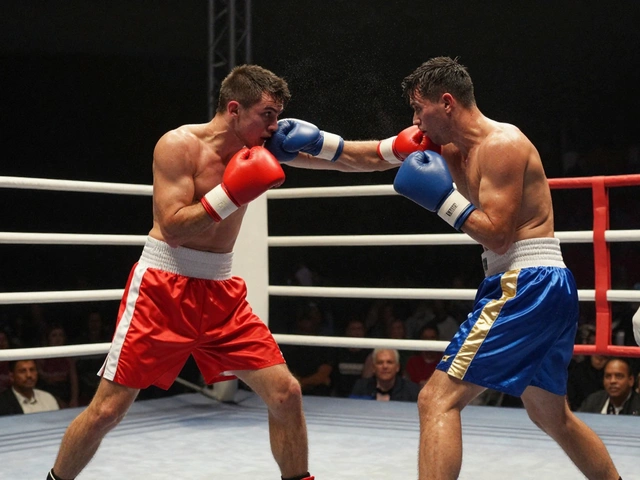
Boxing is a combat sport involving two opponents who fight using their fists within a roped-off square ring for a predetermined number of rounds. It’s not just about hitting hard; it’s a strategic battle of movement, defense, and timing. If you want to understand what’s actually happening when the bell rings, you need to know the structure of the contest, the scoring system, and the ways a fight can end. This guide breaks down exactly what constitutes a boxing match, stripping away the confusion so you can enjoy your next viewing without checking Twitter for an explanation every thirty seconds.
The Basic Structure: Rounds and Time Limits
At its core, a boxing match is divided into segments called Rounds. In professional boxing, a standard bout lasts between 3 and 12 rounds. Each round typically lasts three minutes, followed by a one-minute rest period where corners (the team supporting the fighter) give advice and water.
Why the variation in length? It depends on the stakes. A local club fight might be four rounds. An undercard preliminary bout is often six rounds. Main events, especially those for world titles, usually go the full twelve rounds. Amateur boxing, which you see at the Olympics, uses different timings-often three rounds of three minutes for men and women, though this has evolved recently to align more closely with pro standards for safety and entertainment.
Here is how the time works:
- Professional Men: Up to 12 rounds (3 minutes each).
- Professional Women: Up to 10 rounds (2 minutes each is common, but some jurisdictions allow 3-minute rounds for title fights).
- Olympic/Amateur: Typically 3 rounds (3 minutes each), with headgear often required depending on the specific tournament rules.
The clock starts when the referee says "Box!" and stops immediately when the bell rings. If a fighter gets knocked down, the referee counts them out. If they don’t get up before ten, the fight ends. If they do, the clock resumes after a mandatory eight-count pause to ensure they are fit to continue.
How Do You Win? The Four Ways to Victory
This is the part that confuses most newcomers. There isn’t just one way to win. In fact, there are four primary outcomes, plus a few rare ones. Understanding these helps you appreciate the drama.
| Outcome Type | Description | Common Scenario |
|---|---|---|
| Knockout (KO) | Fighter is knocked down and cannot rise before the referee counts to ten. | A clean power punch lands flush on the jaw or temple. |
| Technical Knockout (TKO) | The referee, doctor, or corner stops the fight because a fighter cannot safely defend themselves, even if they aren't unconscious. | A fighter is taking too much punishment or has a bad cut that impairs vision. |
| Decision (Unanimous/Majority/Split) | The fight goes the distance, and judges score cards determine the winner. | Both fighters survive all scheduled rounds without a stoppage. |
| Draw (Majority/Split/Unanimous) | Judges score the fight evenly, resulting in no winner. | Close competition where neither fighter clearly dominates enough rounds. |
Knockouts are the headline grabbers. When a fighter hits the canvas and doesn’t get up, it’s over. But Technical Knockouts (TKOs) are far more common. A TKO happens when the referee decides one fighter is no longer able to intelligently defend themselves. This is a safety measure. Just because a fighter is standing doesn’t mean they should keep fighting. If they are absorbing heavy shots without responding, the ref steps in.
Then there are decisions. If the bell rings for the final round and both men are still standing, three judges decide the winner based on their scorecards. This leads us to the most controversial aspect of modern boxing: the scoring.
The Scoring System: How Judges Decide the Winner
Most professional bouts use the Ten-Point Must System. This means the judge must award 10 points to the winner of the round and 9 or fewer to the loser. The idea is simple: the better fighter gets the 10. But "better" is subjective.
Historically, volume punching (landing more punches) was favored. Today, effective aggression and damage matter more. Here is what judges are supposed to look for, according to major sanctioning bodies like the WBC, WBA, IBF, and WBO:
- Clean Punches: Did the punch land squarely on the front or side of the head or torso? Glancing blows count less.
- Effective Aggression: Is the fighter moving forward and landing punches? Walking behind a jab doesn’t count as aggression if you aren’t landing.
- Ring Generalship: Who controls the pace and position of the fight? Cutting off the ring matters.
- Defense: Slipping punches and blocking effectively prevents damage.
If a fighter knocks their opponent down during a round, they automatically win that round 10-8. If they knock them down twice, it could be 10-7. These deductions are huge. In a close fight, a single knockdown can swing the result.
Why do we get controversial decisions? Because judges sit in different corners. One might value volume, another might value impact. Without instant replay or computerized scoring in most leagues, human error is inevitable. As a viewer, try to pick a fighter and track their success. You’ll likely disagree with the official result sometimes-that’s part of the culture.
Weight Classes: Why Size Matters
You wouldn’t expect a jockey to play rugby against a prop. Same logic applies here. Boxers compete in specific weight classes to ensure fair competition. If you step into the ring, you must weigh in at or below the limit for your category the day before the fight.
There are 17 recognized weight classes in professional boxing, ranging from Minimumweight (105 lbs / 47.6 kg) to Heavyweight (no upper limit). Between these extremes lie divisions like Featherweight, Lightweight, Welterweight, Middleweight, and Light Heavyweight.
Why so many? Because a few pounds make a massive difference in power and speed. A lightweight who moves up to welterweight might have a size advantage, but lose speed. Moving down to featherweight might make them faster, but weaker. Fighters spend weeks cutting weight to hit their target. If they miss weight, they might face fines, lose a portion of their purse, or even forfeit the title if it’s a championship bout.
The Gear and The Ring: Essential Components
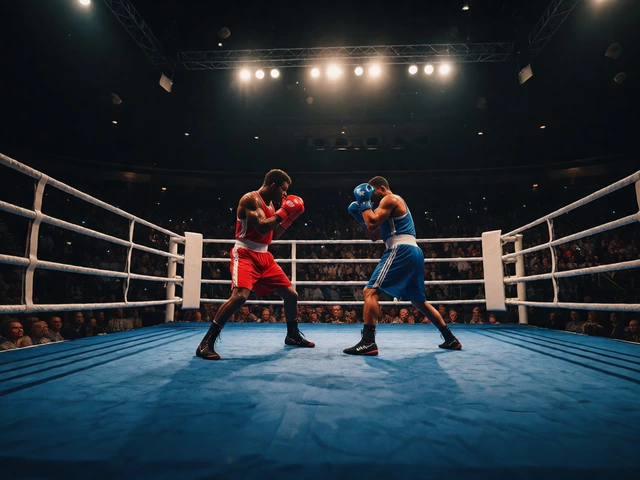
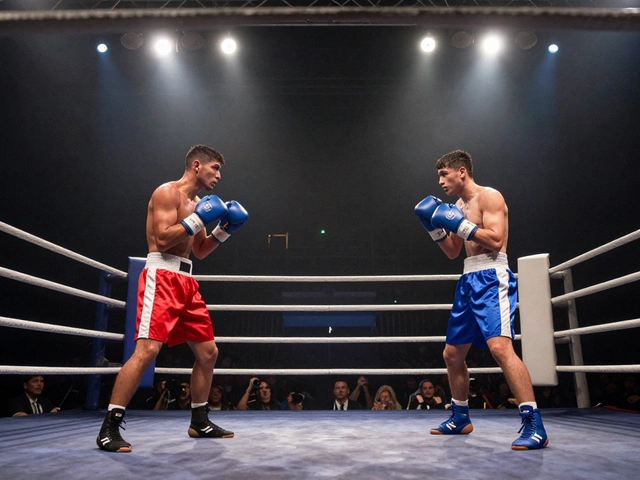
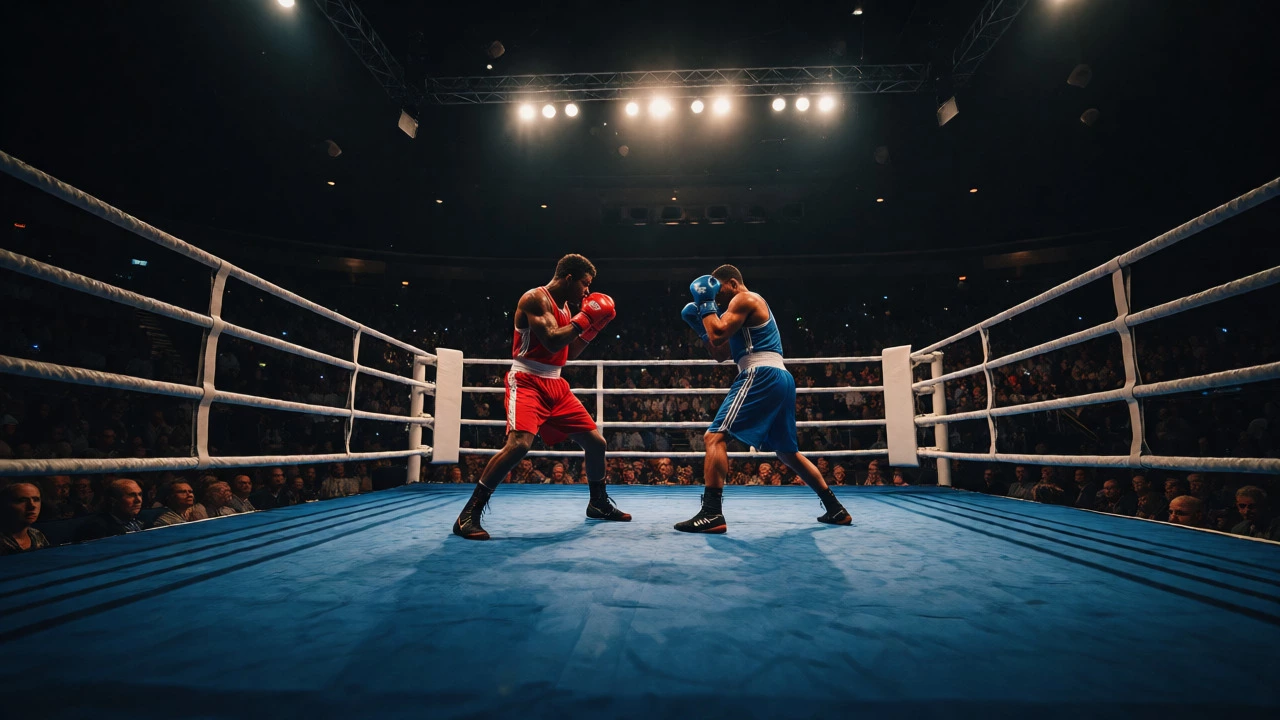
A boxing match isn’t fought in an empty field. It takes place in a Ring, a raised platform enclosed by ropes. Standard professional rings are 20 feet by 20 feet inside the ropes. The surface is padded to protect fighters from falls.
The equipment is strictly regulated for safety:
- Gloves: Usually 8 oz for lighter weights and 10 oz for heavier weights in pro fights. They protect the hand and reduce facial cuts.
- Mouthguard: Mandatory. Protects teeth and reduces concussion risk by stabilizing the jaw.
- Hand Wraps: Cotton tape wrapped around hands and wrists before putting on gloves. Prevents broken metacarpals.
- Headgear: Common in amateur/Olympic boxing, rarely used in pro fights since the 1980s due to increased rotational force risks.
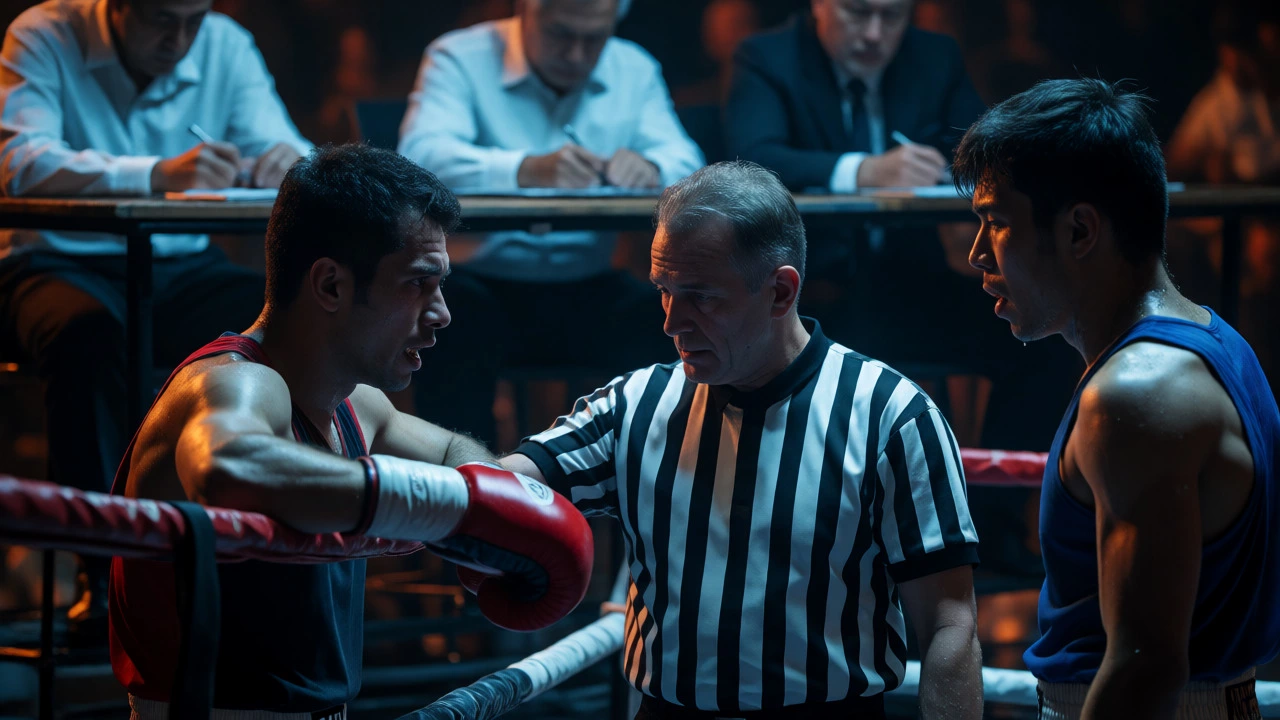
Referees wear black-and-white striped shirts. Their job is twofold: enforce rules and protect fighters. They can deduct points for fouls like holding, low blows, or hitting after the bell. If a fighter commits a foul, the opponent gets a break, and the offender loses points. Too many fouls can lead to disqualification.
Strategies: Styles Make Fights
Not all boxers fight the same way. Recognizing styles adds depth to your viewing experience. Generally, fighters fall into a few archetypes:
- Out-boxers: Use reach and footwork to stay away, landing long-range jabs and straights. Think Floyd Mayweather or Tyson Fury.
- Swarmer/In-fighters: Get inside the opponent’s range, throwing short hooks and uppercuts. Mike Tyson was the ultimate example.
- Brawler/Puncher: Relies on raw power and durability, often trading punches rather than avoiding them. George Foreman fits here.
- Boxer-Puncher: A hybrid. Can box from distance but has the power to hurt you up close. Manny Pacquiao or Canelo Alvarez.
When you watch a match, look for the clash of styles. Does the out-boxer land his jab consistently? Or does the swarmer slip past it and land body shots? That dynamic creates the narrative of the fight.
Final Thoughts on Watching Your First Fight
Boxing is slow at first glance but fast upon closer inspection. Don’t just watch the hands; watch the feet. Footwork dictates positioning. Watch the shoulders; telegraphing a punch gives your opponent a split-second warning. And remember, the scoreboard isn’t always right. Trust your eyes, but respect the complexity of the sport.
If you’re ready to dive deeper, look into the history of legendary rivalries like Ali vs. Frazier or Hagler vs. Hearns. Those matches defined eras and show how tactics evolve. For now, you know the rules, the rounds, and how winners are picked. Next time the bell rings, you’ll see the chess match behind the violence.
How long is a professional boxing match?
A professional boxing match typically consists of 3 to 12 rounds. Each round lasts three minutes, with a one-minute rest period between rounds. Championship fights usually go the full 12 rounds, while non-title bouts may be shorter, such as 6 or 8 rounds.
What is the difference between a KO and a TKO?
A Knockout (KO) occurs when a fighter is knocked down and fails to rise before the referee counts to ten. A Technical Knockout (TKO) happens when the referee, doctor, or fighter's corner stops the fight because the fighter is unable to continue safely, even if they haven't been knocked unconscious.
How are boxing matches scored?
Most professional matches use the Ten-Point Must System. Three judges score each round, awarding 10 points to the winner and 9 or fewer to the loser. Criteria include clean punching, effective aggression, ring generalship, and defense. Knockdowns result in point deductions, often making a round 10-8.
Can a boxing match end in a draw?
Yes, a boxing match can end in a draw. This happens when the judges' scorecards result in an equal number of points for both fighters. Draws can be unanimous (all judges agree on a tie), majority (two judges score a tie, one scores a winner), or split (judges disagree widely, resulting in a tie overall).
What are the main weight classes in boxing?
There are 17 recognized weight classes in professional boxing, starting from Minimumweight (105 lbs) up to Heavyweight (unlimited). Popular divisions include Featherweight (126 lbs), Lightweight (135 lbs), Welterweight (147 lbs), Middleweight (160 lbs), and Light Heavyweight (175 lbs). Fighters must weigh in at or below their class limit.